Laser distance sensors have become indispensable tools in modern industrial automation, offering unparalleled precision, speed, and reliability for non-contact measurement. Their integration with Programmable Logic Controllers (PLCs) forms the backbone of countless advanced control and monitoring systems. This article explores the technical principles, integration methodologies, and practical applications of laser sensors within PLC-based architectures.
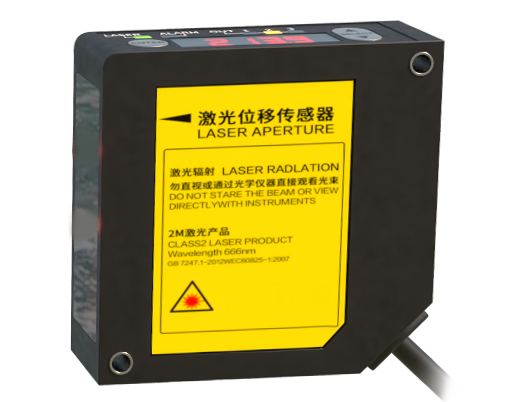
At its core, a laser distance sensor operates by emitting a laser beam towards a target. The time-of-flight (ToF) or phase-shift principle is then used to calculate the distance based on the reflected light. These sensors provide high-resolution, real-time data on position, displacement, thickness, or presence detection. When paired with a PLC, this data transforms into actionable intelligence for automated decision-making.
The integration process typically involves connecting the sensor's output to a PLC input module. Most modern laser sensors offer analog outputs (4-20 mA or 0-10 V) or digital communication protocols like IO-Link, PROFINET, EtherNet/IP, or Modbus TCP/IP. Analog signals are straightforward, where a specific current or voltage value corresponds to a measured distance, read by the PLC's analog input card. Digital protocols, however, enable richer data exchange, including device parameters, status information, and diagnostic data, facilitating smarter and more maintainable systems.
Within the PLC program, engineers develop logic to process the incoming sensor data. This involves scaling the raw input values to engineering units (e.g., millimeters), implementing filtering algorithms to reduce noise, and setting comparison functions to trigger outputs. For instance, a simple ladder logic routine might compare the measured distance against a setpoint. If the distance exceeds a maximum threshold, the PLC can command a robotic actuator to adjust its position or trigger an alarm on the Human-Machine Interface (HMI).
The applications are vast and span numerous industries. In automotive manufacturing, laser sensors integrated with PLCs ensure precise gap and flush measurement between body panels. In packaging, they control fill levels by measuring the height of material inside containers. On conveyor systems, they detect object presence and size for sorting and routing. In palletizing robots, they provide feedback for accurate pick-and-place operations. Furthermore, in logistics, they enable dimensioning systems for warehouse management.
Key advantages of this integration include enhanced accuracy, leading to improved product quality and reduced waste. The high response speed of laser sensors allows for faster cycle times in production lines. Their non-contact nature eliminates mechanical wear and enables measurement of delicate, hot, or moving objects. Centralized control via the PLC simplifies system architecture, allowing for seamless coordination with other actuators, drives, and safety systems. Predictive maintenance is also enhanced, as digital sensors can report contamination levels or declining performance to the PLC.

However, successful implementation requires careful consideration. Environmental factors like ambient light, dust, steam, or highly reflective surfaces can interfere with laser measurements. Selecting sensors with appropriate laser classes, housing ratings (IP67/IP69K), and filtering capabilities is crucial. Proper mounting, alignment, and calibration are essential during installation. The PLC program must also include robust error-handling routines to manage sensor faults or communication losses gracefully.
In conclusion, the synergy between laser distance sensors and PLCs is a powerful enabler of Industry 4.0 and smart factory initiatives. It bridges the gap between precise physical measurement and flexible digital control. By delivering micron-level accuracy at high speeds directly into the control loop, this combination drives efficiency, quality, and intelligence in automated processes. As communication protocols evolve and sensors become even smarter, this integration will continue to be a fundamental pillar of advanced industrial automation, paving the way for more adaptive and interconnected manufacturing ecosystems.