In today's rapidly evolving industrial landscape, green laser sensor manufacturers are at the forefront of technological innovation, driving advancements in precision measurement, automation, and quality control. Green laser sensors, operating at wavelengths around 532 nanometers, offer distinct advantages over traditional red lasers, including higher visibility, improved resolution in certain materials, and reduced interference in various environments. This has led to their widespread adoption across sectors such as automotive manufacturing, electronics, aerospace, and medical device production.
Leading manufacturers in this field, such as Keyence, Omron, and SICK, have developed sophisticated green laser sensor systems that integrate seamlessly with Industry 4.0 frameworks. These sensors utilize advanced optics and signal processing algorithms to deliver micron-level accuracy, even in challenging conditions like high ambient light or on reflective surfaces. For instance, in automotive assembly lines, green laser sensors are employed for precise gap and flush measurement between body panels, ensuring superior fit and finish. In electronics, they enable accurate inspection of miniature components, such as semiconductor wafers and PCB soldering points, where red lasers might scatter or provide insufficient contrast.
The engineering behind these sensors involves complex design considerations. Manufacturers must balance power output, beam quality, and thermal management to maintain stability and longevity. Green lasers typically use frequency-doubled infrared sources, which require precise optical alignment and robust packaging to withstand industrial vibrations and temperature fluctuations. Additionally, modern green laser sensors often incorporate smart features like Ethernet/IP, PROFINET, or IO-Link connectivity, allowing for real-time data transmission and integration with PLCs and SCADA systems. This connectivity facilitates predictive maintenance and adaptive process control, reducing downtime and enhancing overall equipment effectiveness (OEE).
Environmental and safety aspects are also critical. Green laser sensors are designed with Class 2 or Class 1 safety ratings, incorporating features such as automatic power reduction and protective housings to minimize risks to operators. Moreover, their energy-efficient designs align with global sustainability initiatives, consuming less power than older technologies while delivering higher performance. Manufacturers are increasingly focusing on recyclable materials and reduced hazardous substances in compliance with regulations like RoHS and REACH.
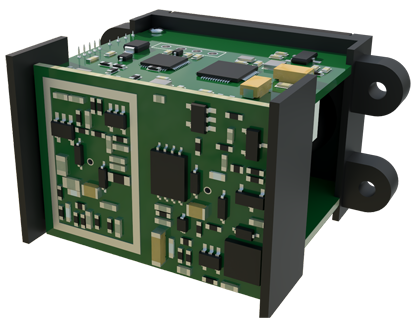
Looking ahead, the future of green laser sensor technology is poised for further growth. Emerging trends include the integration of AI and machine learning for anomaly detection, as well as miniaturization for use in portable devices and robotics. As industries continue to demand higher precision and reliability, green laser sensor manufacturers will play a pivotal role in shaping the next generation of smart factories. By investing in R&D and collaborating with end-users, these companies are not only improving sensor capabilities but also driving broader industrial efficiency and innovation.
In summary, green laser sensor manufacturers are essential contributors to modern industrial automation, offering solutions that enhance accuracy, safety, and sustainability. Their ongoing innovations ensure that industries can meet the challenges of complex manufacturing processes while embracing digital transformation.