In the realm of industrial automation, the reliable detection of objects without physical contact is a cornerstone of efficiency and safety. Among the myriad of solutions available, the PS17-5DN inductive proximity sensor stands out as a robust and versatile component widely adopted across various sectors. This article provides a detailed technical examination of the PS17-5DN, exploring its operating principles, key specifications, standard applications, and critical installation considerations.
The PS17-5DN is a cylindrical, shielded (flush-mountable), inductive proximity sensor. Its core function is to detect the presence of ferrous and non-ferrous metallic objects, typically steel, within its defined sensing range. Operating on the principle of electromagnetic induction, the sensor generates a high-frequency oscillating electromagnetic field from its active face. When a metallic target enters this field, eddy currents are induced on the target's surface. This causes a change in the oscillation amplitude within the sensor's internal LC tank circuit. This change is detected by the sensor's circuitry, which subsequently triggers a switching action in its solid-state output.
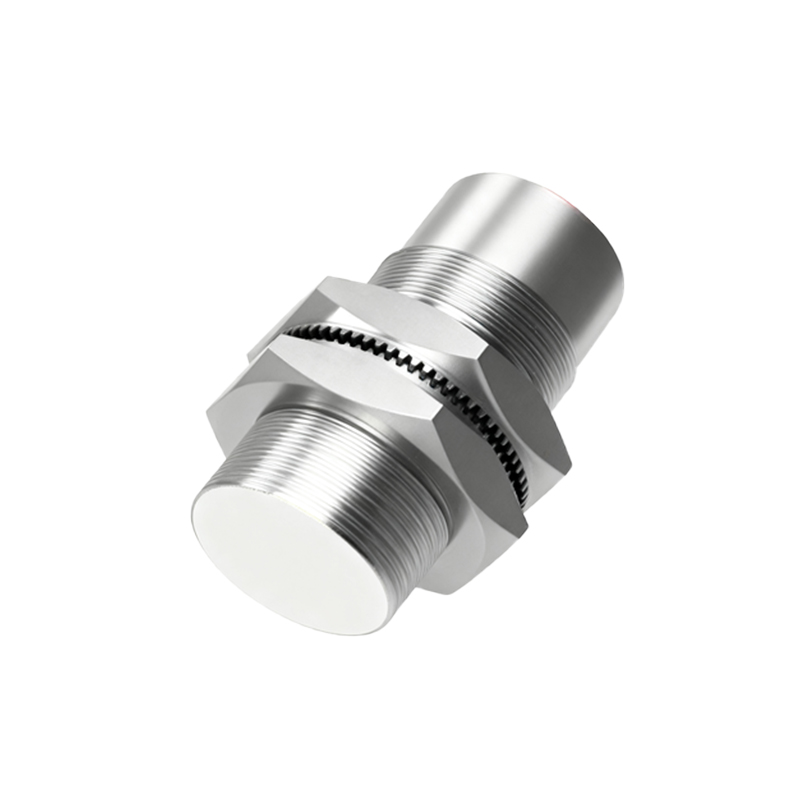
Key technical specifications define the PS17-5DN's performance envelope. The "5" in its designation typically indicates a nominal sensing distance (Sn) of 5mm. It is crucial to note that this is the rated operating distance for a standard target (often a 1mm thick square of mild steel, side length equal to the sensor's diameter or 3xSn). The actual switching point can vary due to manufacturing tolerances and target material; therefore, a reliable operating distance of 0 to 4.1mm (approximately 0.81 x Sn) is generally used for design purposes. The sensor features a Normally Open (NO) output configuration, meaning the output switch closes (conducts) when a target is detected. The output type is typically a 3-wire DC configuration, with versions available for common supply voltages like 10-30V DC. The output stage utilizes a PNP switching transistor, often referred to as a "sourcing" output, where the load is connected between the output wire (usually brown or black) and the negative supply (blue). The housing is rated at IP67, ensuring protection against dust ingress and temporary immersion in water, making it suitable for harsh industrial environments.
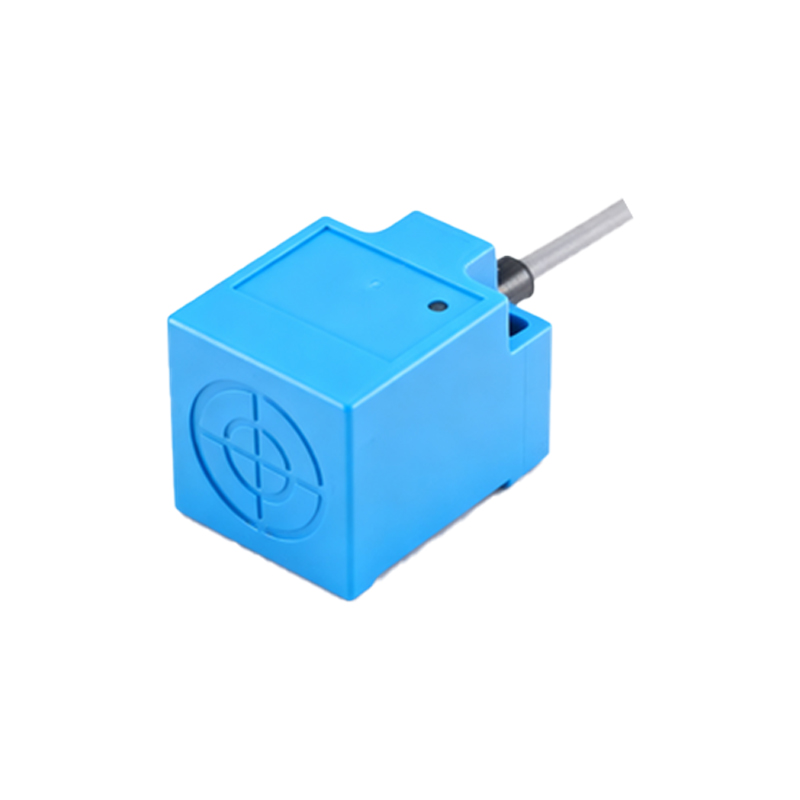
The applications for the PS17-5DN are extensive. It is commonly employed for position verification, such as checking if a cylinder piston has reached its end stroke, confirming the presence of a part on a conveyor, or detecting the open/closed status of a gate or door. In counting and sorting systems, it provides the trigger pulse for objects on a production line. Its flush-mountable design is particularly advantageous in tight spaces or where surrounding metallic structures might interfere with a non-shielded sensor, allowing it to be embedded in metal brackets without false triggering.
Proper installation and wiring are paramount for optimal performance. The sensor must be mounted securely to prevent vibration-induced damage or signal fluctuation. While shielded, maintaining a minimum clearance from adjacent metals (as per manufacturer datasheet) is still recommended. Electrical wiring should follow standard practices: connect the brown wire to the positive DC supply, the blue wire to the negative DC supply (0V), and the black (or sometimes white) wire as the switched positive output to the load (e.g., a PLC input, relay coil, or indicator lamp). Always incorporate a protective fuse or circuit breaker in the supply line. A common oversight is neglecting the residual current or leakage current specified in the datasheet. When interfacing with highly sensitive PLC input modules, a bleeding resistor may be required parallel to the load to ensure proper reset when the sensor is off.
Troubleshooting typically involves a systematic approach. First, verify the power supply voltage at the sensor's terminals. Next, check the output state using a multimeter; the voltage between the output wire and negative should switch from near supply voltage (target absent) to near 0V (target present) when a valid metal object is brought within the sensing range. Ensure the target material, size, and approach speed are within specifications. Inconsistent operation can sometimes be caused by electrical noise in the environment; using shielded cables and ensuring proper grounding of the metal machinery can mitigate this.
In summary, the PS17-5DN proximity sensor represents a mature, reliable technology for non-contact metallic object detection. Its rugged construction, consistent performance, and straightforward integration make it a fundamental building block in automated systems. Understanding its technical parameters, correct application, and installation nuances allows engineers and technicians to leverage its full potential, contributing to enhanced machine reliability, productivity, and safety on the factory floor. For any specific application, consulting the official manufacturer's datasheet for the exact model variant is always the final and most critical step.