Proximity switch sensors, particularly the M3 series, represent a critical component in modern industrial automation and control systems. These non-contact sensors are designed to detect the presence or absence of metallic objects without physical contact, ensuring reliable operation in harsh environments. The M3 designation typically refers to a compact, cylindrical housing with an M3 threaded body, making it suitable for space-constrained installations. This article delves into the technical specifications, operating principles, and diverse applications of M3 proximity sensors, providing insights for engineers and system integrators.
Operating primarily on the inductive sensing principle, M3 proximity switches generate an electromagnetic field from an oscillator circuit. When a metallic target enters this field, eddy currents are induced, causing a change in the oscillation amplitude. This change is detected by the sensor's circuitry, which then triggers a solid-state output switch. The sensing range for M3 models is typically limited, often between 0.5 to 1.5 millimeters, due to their small size. This short range is ideal for precise positioning tasks. Key electrical characteristics include a supply voltage range, usually from 10 to 30 V DC, and output configurations such as NPN (sinking) or PNP (sourcing) transistor outputs. Many models feature a built-in LED indicator for diagnostic purposes, displaying power status and output activation.
The robust construction of M3 sensors is a hallmark of their design. The housing is commonly made of nickel-plated brass or stainless steel, providing excellent resistance to mechanical stress, oils, and coolants. This makes them indispensable in machine tools, automated assembly lines, and robotic systems. A significant advantage is their high switching frequency, often exceeding 1 kHz, allowing for detection of rapidly moving parts. Furthermore, they are inherently immune to ambient light, dust, and non-metallic debris, ensuring stable performance.
In practical applications, M3 proximity switches serve numerous functions. They are extensively used for end-position detection in pneumatic and hydraulic cylinders, verifying whether a piston has fully extended or retracted. In conveyor systems, they count metallic products or detect the position of fixtures. Within electronic manufacturing, these sensors verify the presence of components on circuit boards before soldering. Their small form factor is crucial in packaging machinery for detecting tiny metal parts or foil seals. Additionally, they act as safety interlock devices, confirming that guards or doors are securely closed before machine operation commences.
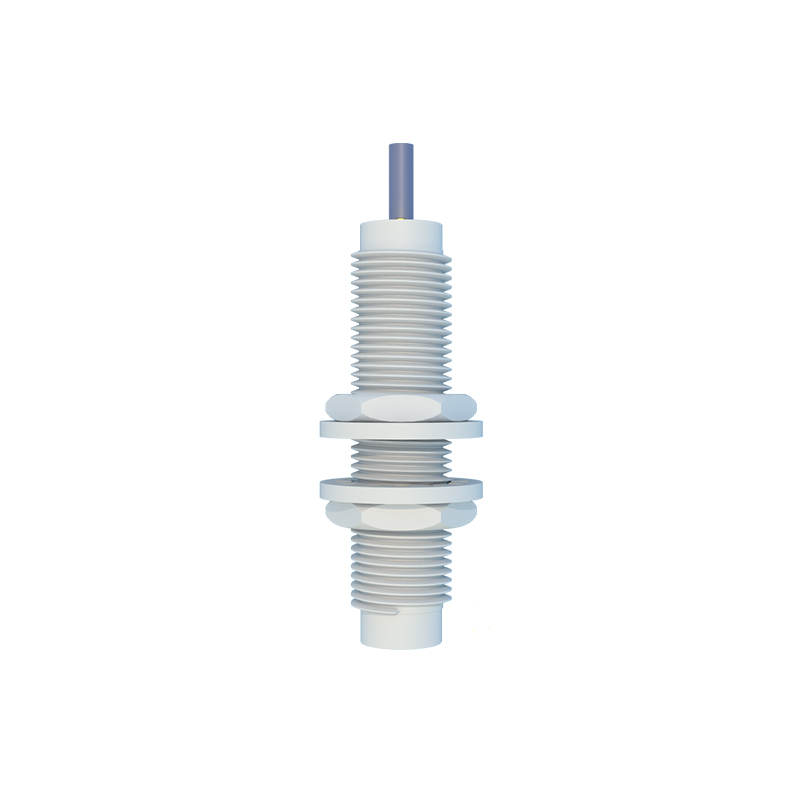
Installation and wiring require careful consideration. The sensor must be mounted securely using its M3 thread, ensuring the correct sensing face orientation and maintaining the specified gap from the target. Engineers must account for the "flush-mountable" or "non-flush-mountable" design. Flush-mounted models can be installed embedded in metal without loss of sensing range, while non-flush models offer a longer range but require a non-metallic surrounding area. Electrical connections are typically made via pre-wired cables or compact connectors. It is vital to adhere to the manufacturer's guidelines regarding cable length, shielding, and protection against electrical noise in industrial settings.
When selecting an M3 proximity sensor, parameters beyond size must be evaluated. The sensing distance, rated under standard conditions with a mild steel target, is fundamental. The temperature operating range, often from -25°C to 70°C, defines its environmental suitability. The housing material choice—brass for general use or stainless steel for corrosive environments—impacts longevity. Output type selection (NPN or PNP) must match the control system's input module (PLC or controller). Some advanced models incorporate short-circuit and overload protection, enhancing system reliability.
Maintenance of these devices is generally minimal due to their solid-state nature. However, periodic checks are recommended to ensure the sensing face remains clean from metallic swarf or adhesive buildup, which could affect performance. Verifying the mechanical integrity of the mounting and the electrical continuity of the connection is also good practice.
In conclusion, the M3 proximity switch sensor is a precision instrument that balances compact dimensions with robust functionality. Its role in enabling precise, high-speed, and reliable object detection in automated systems is undeniable. For engineers designing or maintaining equipment, understanding its capabilities and correct implementation is key to optimizing machine performance and ensuring operational uptime in diverse industrial sectors from automotive to pharmaceuticals.