In the world of industrial automation and machine design, proximity sensors are ubiquitous components, providing non-contact detection of metallic or, in some cases, non-metallic objects. Engineers and technicians often encounter various markings and codes on these devices, with "N1" being a common yet sometimes confusing designation. This article delves into the technical meaning of "N1" on a proximity sensor, clarifying its significance in specification sheets, wiring diagrams, and practical applications.
Fundamentally, the marking "N1" on a proximity sensor refers to its output type and switching state. It is part of a standardized coding system used by many manufacturers, particularly those following European (EN/IEC) norms, to indicate the electrical behavior of the sensor's output circuit. The code breaks down into two parts: the letter and the number.
The "N" stands for NPN. This denotes the type of transistor used in the sensor's solid-state output stage. An NPN transistor, in the context of a sensor's output, acts as a switching element that sinks current to the common negative (0V) line. In simpler terms, when an NPN output is active (switched ON), it connects the load (e.g., a PLC input, relay coil, or indicator lamp) to ground (0V). The other side of the load must be connected to the positive supply voltage (+V). This configuration is also commonly described as a "sinking" output.
The "1" indicates a normally open (NO) contact logic. This defines the switching state of the sensor when no target is within its sensing range. For a proximity sensor with a "1" in its code:
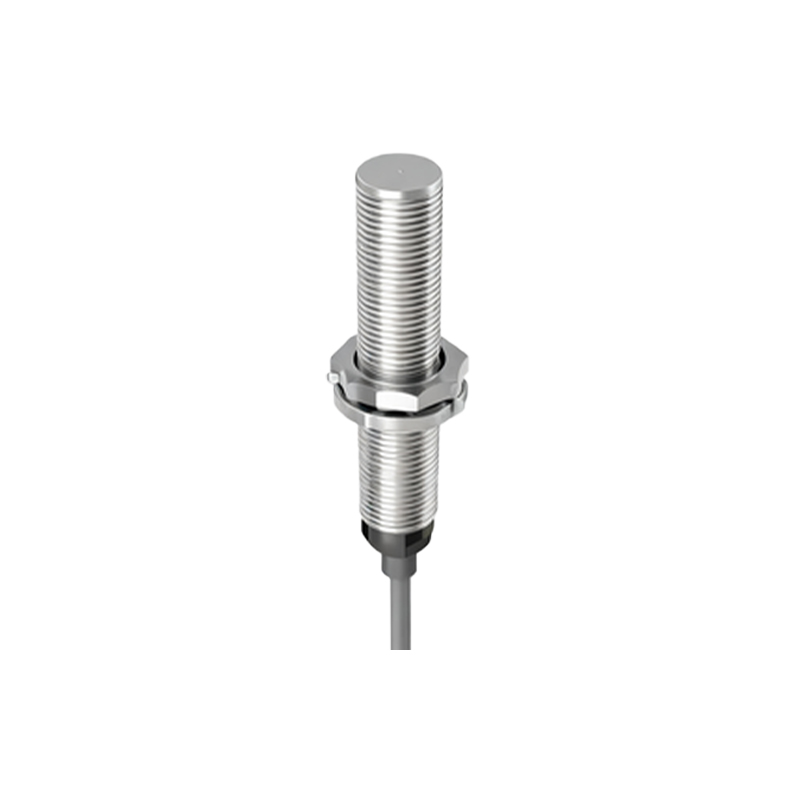
No Target Present: The output transistor is OFF (open circuit). No current flows from the output terminal to the 0V terminal.
Target Present (within sensing range): The output transistor switches ON (closes the circuit to ground). Current can now flow from the positive supply, through the load, into the sensor's output terminal, and down to 0V, thus activating the load.
Therefore, an N1 proximity sensor has an NPN, normally open (sinking) output. When it detects a target, it "sinks" current to complete the circuit to ground.
It is crucial to contrast this with other common codes:
N2: NPN, normally closed (NC) output. The output is ON (sinking) when no target is present, and turns OFF when a target is detected.
P1: PNP, normally open (NO) output. A PNP output sources current from the positive supply. When active, it provides +V to the load. This is a "sourcing" output.
P2: PNP, normally closed (NC) output.
Understanding the N1 designation is not merely academic; it has direct implications for system design and troubleshooting:
1. PLC Interface Compatibility: Most programmable logic controllers (PLCs) have input cards designed for either sinking (NPN) or sourcing (PNP) signals. An N1 sensor must be connected to a PLC input card configured to accept sinking signals. Connecting an NPN sensor to a sourcing-type input will not work and may cause malfunctions.
2. Wiring Diagrams: In electrical schematics, the N1 code instantly informs the designer how to wire the sensor. The typical 3-wire DC sensor (Brown: +V, Blue: 0V, Black: Output) will have its black wire (output) act as the switched negative path for the load when the sensor is active.
3. Circuit Logic: The choice between NO (1) and NC (2) affects the control logic and safety design. A normally open (N1) sensor is often used for standard "presence detection" where an action is initiated upon detecting a target (e.g., starting a conveyor, counting parts). Normally closed configurations might be used in safety or monitoring circuits where a broken wire or sensor failure (simulating an always "OFF" state) needs to be detected as an alarm condition.
4. Power Supply Polarity: NPN sensors require a DC power supply with the correct polarity (Brown to +, Blue to -). Reversing polarity will damage the sensor.
In practical application, when specifying or replacing a proximity sensor, confirming the code—such as N1—ensures electrical compatibility with the existing control system. Always cross-reference the manufacturer's datasheet, as while the NPN/PNP and NO/NC designations are largely standard, some manufacturers may use slightly different nomenclature. However, "N1" remains a widely recognized and reliable indicator of a sinking, normally open