LiDAR, an acronym for Light Detection and Ranging, represents a pivotal remote sensing technology that has revolutionized measurement, mapping, and perception across numerous industries. At its core, a LiDAR sensor, often referred to as a laser radar or laser rangefinder, operates on a principle similar to radar but uses laser light pulses instead of radio waves. The fundamental process involves emitting rapid, focused pulses of laser light towards a target and precisely measuring the time it takes for each pulse to reflect back to the sensor. This 'time-of-flight' (ToF) measurement, coupled with the known constant speed of light, allows for the calculation of extremely accurate distances. Modern systems can perform millions of these measurements per second, generating dense point clouds—massive collections of 3D data points that precisely map the surrounding environment.
The architecture of a typical LiDAR system comprises several key components. The laser emitter, usually a solid-state or fiber laser, generates the coherent light pulses. The scanner, which may employ rotating mirrors, MEMS (Micro-Electro-Mechanical Systems), or optical phased arrays, directs these pulses across the field of view. The photodetector, a highly sensitive receiver, captures the returning photons. Finally, sophisticated signal processing electronics and software convert the raw time-of-flight data into actionable distance and 3D spatial information. Two primary methodologies dominate: direct ToF (dToF), which measures the precise round-trip time of a single pulse, and indirect ToF (iToF), which modulates the laser's amplitude and measures the phase shift of the returned signal. Each method offers distinct advantages in terms of range, accuracy, and cost, making them suitable for different applications.
The applications of LiDAR sensors are vast and continually expanding. In the automotive sector, they are a cornerstone of Advanced Driver-Assistance Systems (ADAS) and autonomous vehicle development, providing high-resolution, long-range 3D perception crucial for object detection, classification, and safe navigation, especially in low-light conditions where cameras may struggle. In robotics and industrial automation, LiDAR enables precise navigation, obstacle avoidance, and environment modeling for autonomous mobile robots (AMRs) and robotic arms. The surveying, mapping, and GIS (Geographic Information Systems) fields have been transformed by airborne and terrestrial LiDAR, allowing for the rapid creation of highly accurate digital elevation models, topographic maps, and 3D city models, invaluable for urban planning, forestry management, and archaeology.
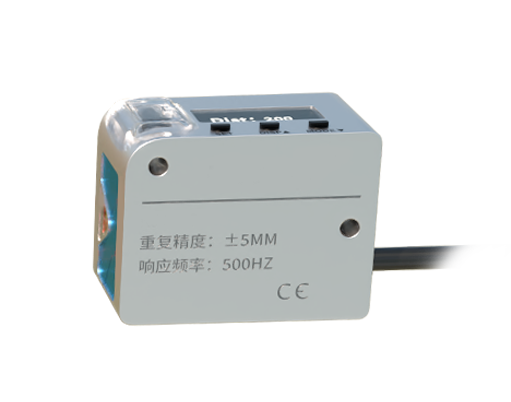
Furthermore, LiDAR is integral to smart infrastructure, monitoring structural health, and managing construction sites. In agriculture, it facilitates precision farming through crop health monitoring and yield prediction. Emerging applications include consumer electronics, where miniaturized LiDAR sensors enable features like augmented reality and improved smartphone photography, and security systems for perimeter monitoring. The technology's ability to function independently of ambient light and provide direct, precise geometric data gives it a unique and often irreplaceable role in these domains.
Looking ahead, the future of LiDAR technology is driven by trends toward miniaturization, cost reduction, and performance enhancement. Solid-state LiDAR (SSL), which eliminates moving mechanical parts, promises greater reliability, smaller form factors, and lower production costs, accelerating adoption in mass-market applications like consumer vehicles. Advances in semiconductor technology are leading to the development of chip-scale LiDAR solutions. Another significant trend is sensor fusion, where LiDAR data is seamlessly integrated with inputs from cameras, radar, and ultrasonic sensors to create a more robust, redundant, and comprehensive perception system for autonomous machines. The integration of artificial intelligence and machine learning directly at the sensor level (edge AI) will enable real-time, intelligent data processing, filtering noise, and extracting higher-level semantic information from point clouds instantly. As these trends converge, LiDAR will become more accessible, powerful, and ubiquitous, solidifying its status as a fundamental enabling technology for the intelligent systems of tomorrow.