In the realm of industrial automation and machine safety, proximity sensors are indispensable components. Among the diverse form factors available, square proximity sensors with integrated mounting holes represent a particularly robust and versatile solution. This article delves into the technical specifications, operational principles, application advantages, and selection criteria for these critical devices, providing a detailed guide for engineers and system designers.
Fundamentally, a square proximity sensor is a non-contact electronic device designed to detect the presence or absence of a metallic target object within its sensing range without any physical contact. The "square" designation refers to its housing geometry, which is typically a compact, rugged cube or rectangular prism. The inclusion of pre-drilled mounting holes—often threaded or through-holes on one or more faces—is a key feature that distinguishes this design. These holes facilitate secure and precise mechanical installation onto machinery, frames, or brackets using standard bolts, ensuring long-term stability and alignment in high-vibration environments.
The sensing technology employed is predominantly inductive. The sensor's active face contains a coil that is part of an oscillating circuit. When a ferrous or non-ferrous metal target enters the oscillating electromagnetic field, eddy currents are induced in the target. This causes a change in the oscillation amplitude or frequency within the sensor's circuit. An integrated evaluation circuit detects this change and triggers a solid-state output switch (typically PNP or NPN, sourcing or sinking). This output can then interface directly with programmable logic controllers (PLCs), motor starters, or other control system components.
The square housing offers several distinct advantages. Its shape provides a larger surface area for heat dissipation compared to cylindrical counterparts, contributing to enhanced thermal stability and operational longevity. The flat sides allow for easier side-by-side mounting in dense control panels or on machine tool heads. The robust construction, often meeting IP67 (dust-tight and protected against temporary immersion) or IP69K (protected against high-pressure, high-temperature washdowns) ingress protection ratings, makes these sensors ideal for harsh industrial settings such as automotive manufacturing, material handling, metalworking, and packaging lines. The mounting holes are critical for this ruggedness, enabling a secure, anti-vibration fit that prevents loosening over time.
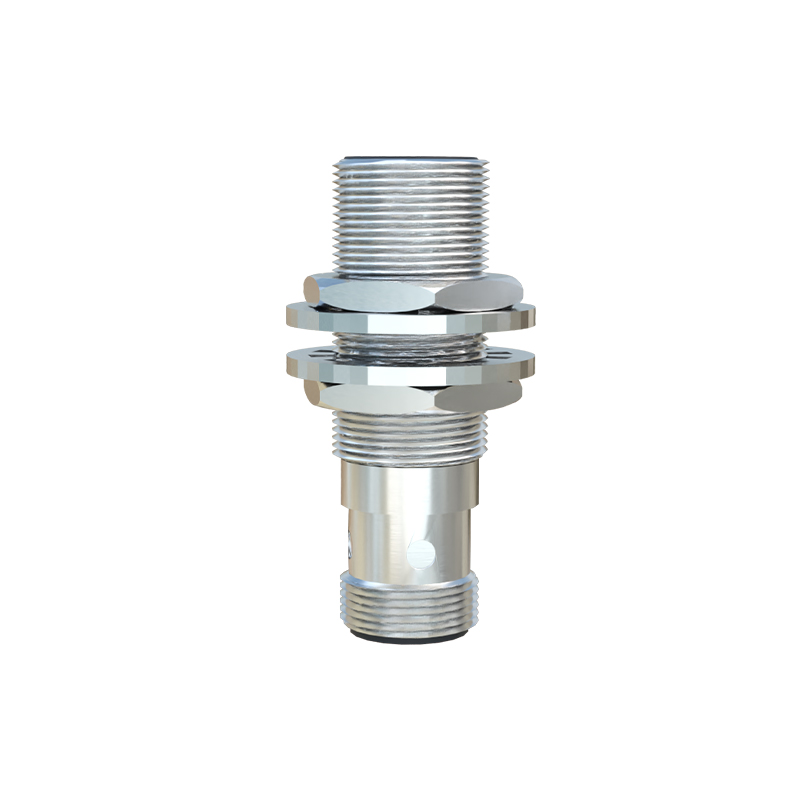
Key technical parameters must be carefully evaluated during selection. The sensing distance, or nominal range (Sn), is specified for a standard target (usually a square of mild steel). It is crucial to note that this distance can vary with different metals; for instance, the effective range for aluminum or copper is less than for steel. The hysteresis is the difference between the switch-on and switch-off points, which prevents output chatter when a target is at the edge of the sensing field. Switching frequency defines how many on/off cycles per second the sensor can handle, a vital factor in high-speed counting or positioning applications. Output configuration (e.g., 3-wire DC, 2-wire DC/AC, analog 4-20mA) and connection type (cable or quick-disconnect connector) must match the control system's requirements. Finally, the material of the housing (often nickel-plated brass, stainless steel, or high-grade PBT plastic) and the face material (typically PTFE or ceramic for weld-field immunity) are chosen based on the environmental conditions.
Application scenarios are vast. Common uses include: position verification of machine tool slides or robotic arms, end-of-travel limit sensing, part presence/absence detection on conveyor belts, rotary speed monitoring via gear teeth detection, and liquid level control using a float with a metallic trigger. The square design with mounting holes is exceptionally well-suited for applications where precise, repeatable alignment is paramount, such as in precision stamping or CNC machining centers.
When integrating these sensors, installation best practices are essential. Ensure the mounting surface is flat and rigid. Use the specified torque on mounting bolts to avoid damaging the housing. Maintain the recommended clearance around the active sensing face—other metals in close proximity can affect performance. Always refer to the manufacturer's datasheet for wiring diagrams, temperature ratings, and any special considerations regarding target material, size, and approach direction.
In conclusion, square proximity sensors with mounting holes are engineered for reliability, precision, and durability in demanding industrial environments. Their design simplifies installation and maintenance while providing consistent, non-contact detection. A thorough understanding of their operating principles and specifications empowers engineers to select the optimal sensor, thereby enhancing machine performance, safety, and overall system uptime.