In the realm of industrial automation, robotics, and advanced measurement, the demand for sensors that offer unparalleled accuracy, reliability, and speed is ceaseless. Among the various technologies vying for dominance, ultra laser sensors have emerged as a cornerstone, enabling feats of precision once thought impossible. These devices, leveraging the fundamental properties of coherent light, are not merely incremental improvements but represent a paradigm shift in how machines perceive and interact with their environment.
At its core, an ultra laser sensor operates by emitting a highly focused beam of laser light towards a target. The sensor then meticulously analyzes the reflected light. Different models utilize distinct principles for measurement. The time-of-flight (ToF) method calculates distance by measuring the minute time delay between the emission and return of a laser pulse. This technique excels in long-range applications. Conversely, triangulation sensors use a known angle between the emitter and a receiving sensor (like a CCD or CMOS array) to determine position with extreme accuracy at shorter ranges, often down to the micrometer level. A third principle, laser confocal displacement, uses chromatic aberration to measure height and thickness with exceptional precision on transparent or multi-layered materials. What defines an "ultra" laser sensor is its performance envelope: sub-micron resolution, measurement rates in the tens or hundreds of kilohertz, and robust operation against challenging environmental factors like ambient light, surface color, or material transparency.
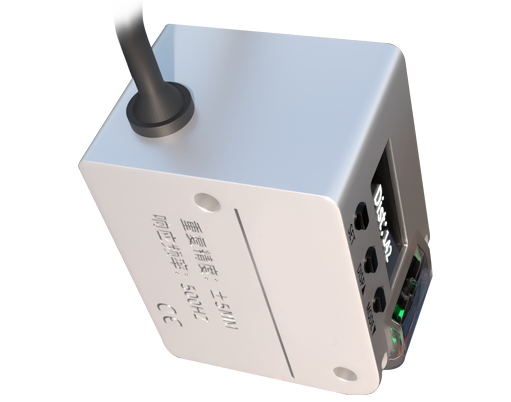
The applications of these sensors are as diverse as they are critical. In automated manufacturing, they perform non-contact inspection of component dimensions, verifying tolerances in real-time on high-speed assembly lines. A single sensor can measure the height of solder paste on a circuit board or the precise gap in a smartphone assembly, rejecting faulty parts instantly. In robotics, ultra laser sensors provide the exact distance and profile data needed for precise bin-picking, guiding robotic arms to grasp irregularly oriented parts from a container. They are indispensable in semiconductor fabrication for wafer alignment and thickness monitoring. Beyond the factory floor, they enable advanced driver-assistance systems (ADAS) in vehicles, creating high-definition 3D maps of the surroundings for functions like adaptive cruise control and collision avoidance. Even in logistics, they ensure package dimensioning for accurate shipping costs and optimize warehouse automation.
The advantages over traditional sensing methods are profound. Unlike contact probes, laser sensors eliminate wear and tear and the risk of damaging delicate surfaces. Compared to ultrasonic sensors, they offer vastly superior resolution and are unaffected by temperature or air turbulence. When pitted against standard photoelectric sensors, ultra laser variants provide precise quantitative data (exact distance, height) rather than a simple present/absent signal. Their focused beam allows for precise targeting in cluttered environments, and their high speed enables measurement of fast-moving objects without motion blur. This combination of non-contact operation, high precision, and incredible speed directly translates to higher quality control, reduced waste, increased production throughput, and lower maintenance costs.
However, deploying ultra laser sensors is not without consideration. Highly reflective or absorbent surfaces can pose challenges, though modern sensors with advanced algorithms and automatic gain control can compensate for many material variations. The initial investment is typically higher than for simpler sensors, necessitating a clear analysis of return on investment through improved process control. Furthermore, ensuring optimal installation—correct angle, stable mounting, clean lenses—is crucial for achieving specified performance. For safety, most industrial laser sensors are classified as Class 1 or Class 2, meaning they are eye-safe under normal operating conditions, but proper labeling and adherence to guidelines remain essential.
Looking ahead, the evolution of ultra laser sensors is tightly coupled with trends in Industry 4.0 and the Internet of Things (IoT). Future sensors will feature enhanced connectivity (IO-Link, Ethernet-APL) for seamless integration into smart factory networks, allowing for remote configuration, predictive maintenance, and data aggregation. On-board processing power will increase, enabling edge computing where the sensor itself can perform complex analyses and make immediate decisions. Miniaturization will continue, opening new applications in compact consumer electronics and medical devices. Integration with artificial intelligence for adaptive learning and anomaly detection is on the horizon, transforming the sensor from a simple data collector into an intelligent perception node.
In conclusion, ultra laser sensors are far more than just sophisticated measuring tools. They are fundamental enablers of modern automation, providing the critical "eyes" for machines in an increasingly precise and fast-paced world. By converting physical properties into reliable, high-speed digital data, they bridge the gap between the physical and digital realms, driving efficiency, innovation, and quality across countless industries. As technology advances, their role will only become more central, shaping the future of intelligent manufacturing and beyond.