The KGE27 inductive proximity sensor represents a robust and reliable solution for non-contact detection of metallic objects in industrial environments. Designed to withstand harsh conditions, this sensor operates on the principle of electromagnetic induction, generating an oscillating electromagnetic field from its active face. When a ferrous or non-ferrous metal target enters this field, eddy currents are induced, causing a change in oscillation amplitude. This change is detected by the internal circuitry, which subsequently triggers a solid-state switching output.
Key technical specifications of the KGE27 include a standard sensing range, typically up to 15mm depending on the specific model and target material. It features a shielded design, allowing for flush mounting in metal without a reduction in operating distance. The sensor is constructed with a nickel-plated brass housing or stainless-steel variant, offering high resistance to mechanical impact, vibrations, and industrial chemicals. Electrical characteristics commonly encompass a wide operating voltage range, such as 10-30V DC, with both PNP (sourcing) and NPN (sinking) output configurations available. The output is typically short-circuit and reverse polarity protected, ensuring longevity and system safety.
A defining feature is its high switching frequency, enabling the detection of rapidly moving objects on production lines or automated machinery. The KGE27 is often rated with IP67 or higher ingress protection, making it suitable for use in areas exposed to coolants, oils, and dust. Its temperature stability across a broad range, from -25°C to +70°C, guarantees consistent performance in both cold storage and hot manufacturing settings.
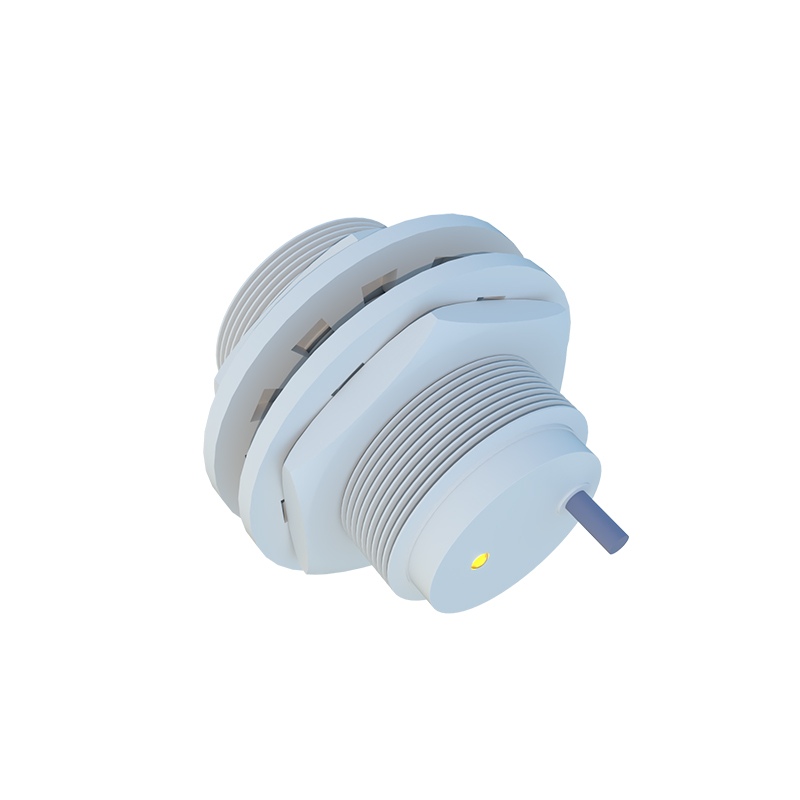
In practical applications, the KGE27 is extensively deployed for position sensing, such as verifying the presence of a metal part on a conveyor, end-of-travel detection on actuators, and counting metallic items. In automated assembly systems, it ensures components are correctly positioned before a robotic operation. Within packaging machinery, it monitors the passage of foil-wrapped products. Its reliability in dirty environments where optical sensors might fail due to contamination makes it a preferred choice for heavy industries like metalworking, automotive manufacturing, and material handling.
Installation and wiring are straightforward, with pre-wired cable or quick-disconnect M12 connector options. Users must consider the target material and size; for instance, steel targets achieve the rated sensing distance, while aluminum or copper may require a reduction factor. Regular maintenance is minimal, primarily involving periodic cleaning of the sensing face to remove accumulated debris that could marginally affect performance.
Compared to capacitive or ultrasonic sensors, the KGE27 offers cost-effective, precise detection limited to metals, eliminating false triggers from non-metallic substances. Its solid-state design, with no moving parts, translates to a long operational life with millions of switching cycles. When integrated into a PLC-controlled system, it provides a critical digital input for process logic, enhancing automation efficiency and safety.
Overall, the KGE27 inductive proximity sensor is a fundamental component in modern industrial automation, valued for its durability, precision, and adaptability in challenging operational landscapes.