In industrial automation, process control, and countless consumer applications, the accurate detection and measurement of liquid levels is a fundamental requirement. Liquid level sensors, also known as liquid proximity sensors, are the critical devices that fulfill this role. They provide essential data for inventory management, process safety, equipment protection, and automated control systems. Unlike simple mechanical floats, modern electronic sensors offer high precision, reliability, and integration capabilities with digital control networks.
The working principle of these sensors varies significantly based on technology. A primary category is contact sensors, which require physical interaction with the liquid. The most common type here is the conductive or resistive sensor. It operates by using probes to detect the completion of an electrical circuit when liquid bridges the gap between them. This simple, cost-effective method is ideal for water and other conductive fluids in tanks and reservoirs. Another contact method utilizes hydrostatic pressure. A submerged pressure transducer measures the pressure exerted by the liquid column above it, directly correlating to the liquid height. These sensors are widely used in deep tanks, wells, and chemical processing.
Non-contact sensors, on the other hand, offer advantages where avoiding fluid contamination or sensor corrosion is paramount. Ultrasonic sensors are a popular choice. They emit high-frequency sound waves towards the liquid surface and measure the time delay of the reflected echo to calculate distance. They are suitable for a wide range of liquids, including aggressive chemicals, from a safe distance. Similarly, radar level sensors use microwave pulses, offering high accuracy even in challenging conditions with vapor, dust, or varying dielectric constants. For point-level detection—simply indicating whether liquid is present at a specific height—capacitive sensors are often employed. They detect the change in capacitance caused by the presence of a liquid (which has a different dielectric constant than air) near an electrode, even through a non-metallic container wall.
Optical sensors provide another non-contact solution. They typically use an infrared LED and a phototransistor. In clear liquids, the light beam may pass through when the sensor is in air and reflect or refract when submerged, triggering a state change. They are compact and excellent for detecting minute quantities of liquid but can be affected by colored or bubbly fluids. Float switches represent a traditional yet reliable mechanical-contact method, where a magnet within a floating ring actuates a reed switch inside a stem. Their simplicity makes them robust for alarms and pump control in water and fuel systems.
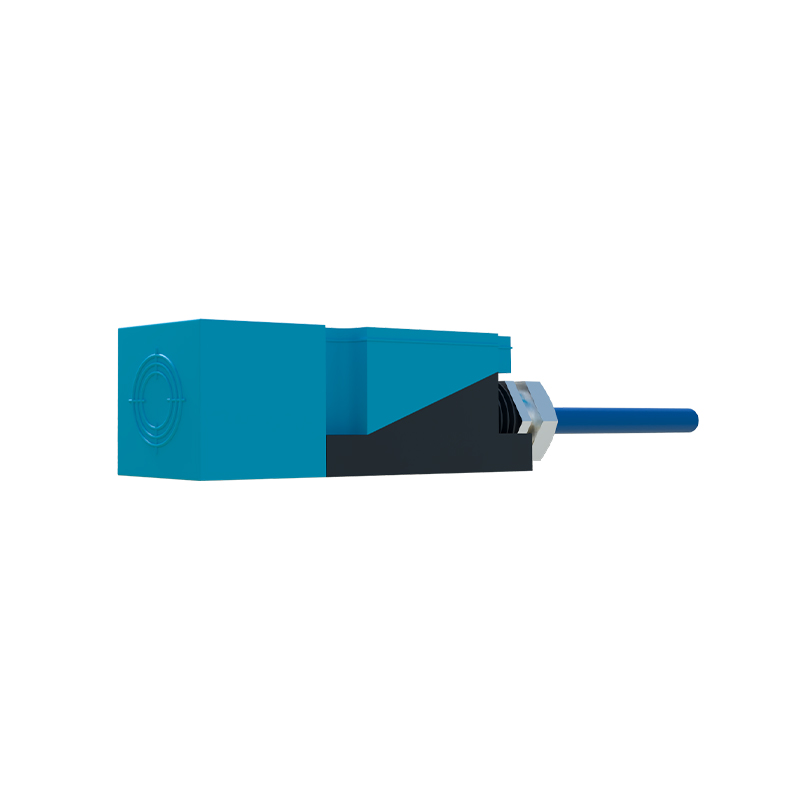
Selecting the appropriate liquid level sensor requires a careful analysis of the application's parameters. Key considerations include the nature of the liquid (conductive, corrosive, viscous, or with suspended solids), the required output (continuous level measurement or simple point-level switching), the installation environment (pressure, temperature, presence of agitation or foam), and material compatibility. For instance, a conductive sensor fails with oil or distilled water, while an ultrasonic sensor may struggle with heavy foam on a liquid's surface. The vessel's construction material also matters; capacitive sensors work well with plastic tanks, while magnetic float gauges require non-magnetic vessels.
Applications are vast and diverse. In the automotive industry, they monitor brake fluid, coolant, and windshield washer reservoirs. In manufacturing, they control chemical dosing, manage lubricant levels in machinery, and prevent overflows in mixing vats. The food and beverage sector relies on them for hygienic, easy-to-clean sensors in storage silos and processing lines. Home appliances like coffee makers, dishwashers, and water purifiers incorporate small, inexpensive sensors for proper operation. Furthermore, in water treatment plants and environmental monitoring, these sensors are indispensable for managing reservoir levels and detecting leaks.
The integration of these sensors into the Industrial Internet of Things (IIoT) is a significant trend. Modern sensors come with digital outputs like IO-Link, Modbus, or wireless protocols, enabling not just level data transmission but also diagnostic information such as device health and temperature. This facilitates predictive maintenance, reducing downtime and operational costs. As technology advances, developments in areas like microwave-guided radar and laser-based LiDAR are pushing the boundaries of accuracy and application range.
Ultimately, the effectiveness of a liquid level sensing system hinges on matching the sensor's capabilities to the specific physical, chemical, and operational demands of the task. There is no universal solution. Understanding the core technologies, their strengths, and their limitations is the first step toward implementing a reliable and efficient level detection or measurement solution that ensures safety, optimizes processes, and protects valuable equipment and inventory.