In the vast and intricate world of industrial automation and electronic control systems, sensors act as the fundamental sensory organs. Among them, proximity sensors and distance sensors are two terms frequently encountered, often leading to confusion. A common question posed by engineers, technicians, and procurement specialists is: "Are proximity sensors and distance sensors the same?" The short answer is no, but the relationship is nuanced and understanding the distinction is crucial for optimal system design and component selection.
At its core, a proximity sensor is a device designed to detect the presence or absence of an object within a specific, relatively short range without making physical contact. Its primary function is binary: to signal whether an object is "near" or "not near." The detection range, often called the sensing distance, is typically fixed and specified by the manufacturer. For instance, an inductive proximity sensor might have a nominal sensing distance of 8mm for a standard steel target. It triggers an output switch (like a relay or transistor) when a metallic object enters this predefined zone. Proximity sensors are predominantly used for applications like object counting, limit switching, jam detection, or verifying part presence on an assembly line. Common technologies include inductive (for metals), capacitive (for both metals and non-metals, including liquids), and magnetic (using Hall effect or reed switches).
On the other hand, a distance sensor, more accurately termed a ranging sensor or displacement sensor, is engineered to measure the precise interval between the sensor itself and a target object. Its output is not a simple on/off signal but an analog value (e.g., 4-20mA, 0-10V) or a digital value (via protocols like IO-Link, USB, or RS-232) that corresponds to the exact distance. This measured distance can be continuously variable over its operating range. For example, an ultrasonic distance sensor might measure distances from 50mm to 1000mm, providing a voltage output proportional to the detected range. Laser triangulation sensors, time-of-flight (ToF) sensors, and ultrasonic sensors are prime examples. Applications are centered on precise measurement: checking dimensions, controlling robot arm position, monitoring material thickness, or guiding automated guided vehicles (AGVs).
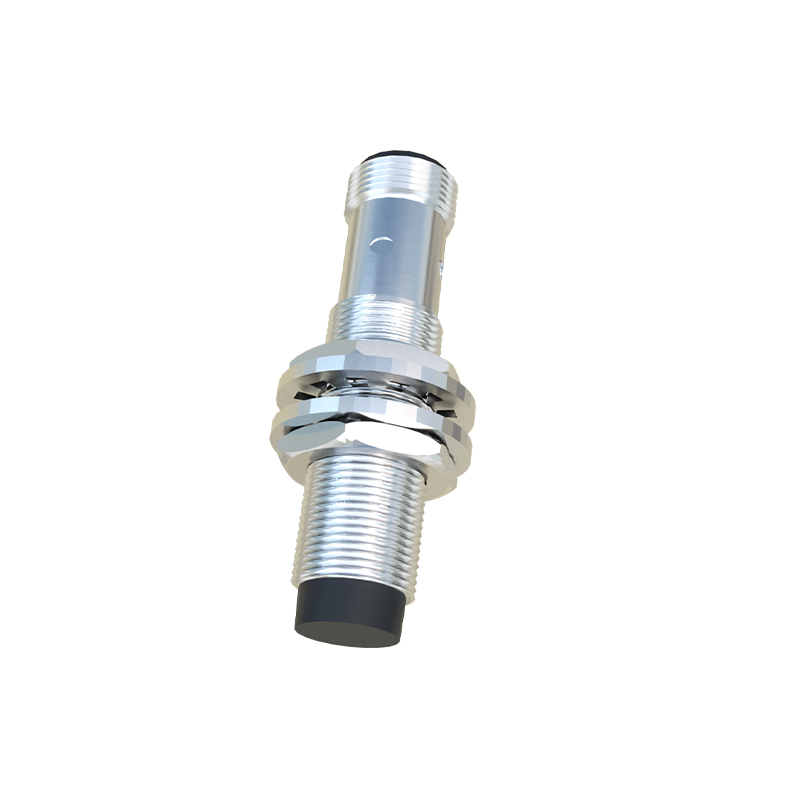
The key differentiator lies in the output and application intent. A proximity sensor provides a discrete, switch-like output indicating a state (object present/absent within a zone). A distance sensor provides a continuous, scaled output indicating a precise measurement. One could metaphorically say a proximity sensor acts like a door contact telling you if the door is open or closed, while a distance sensor acts like a tape measure telling you exactly how far open the door is.
However, the line can blur with advanced devices. Some modern "proximity sensors" with analog outputs or IO-Link capability can provide limited distance information within their narrow sensing window, functioning in a rudimentary ranging mode. Conversely, a distance sensor can be configured with setpoints to emulate a proximity switch—for instance, triggering an alarm when a measured distance falls below a certain threshold. Despite this functional overlap, their design optimization differs. Proximity sensors are typically rugged, cost-effective, and optimized for high-speed, reliable detection in harsh industrial environments. Distance sensors prioritize accuracy, resolution, and linearity over their specified measuring range, often at a higher cost and sometimes with more stringent installation requirements.
Selecting the wrong type can lead to system inefficiency or failure. Using a standard inductive proximity sensor where you need to know if a pallet is 100mm or 150mm away is impossible; it will only tell you if the pallet is within its 15mm range. Conversely, employing a high-precision laser distance sensor for a simple parts-counting task on a high-speed conveyor is often an unnecessary expense and may be prone to overkill or contamination issues where a robust capacitive proximity sensor would suffice.
In conclusion, while all distance sensors can perform a proximity detection function (by using thresholds), not all proximity sensors can perform accurate distance measurement. They are distinct families of sensors designed for different primary purposes: detection versus measurement. Clarity in terminology ensures precise communication in specifications, datasheet reviews, and system integration, leading to more reliable, efficient, and cost-effective automation solutions. Always base the selection on the fundamental requirement: Do you need to know if an object is there, or exactly how far away it is?