In the rapidly evolving landscape of industrial automation, the demand for precision, reliability, and adaptability has never been higher. At the heart of countless automated systems lie proximity sensors, the silent sentinels that detect the presence or absence of objects without physical contact. While standard off-the-shelf sensors serve many purposes, the push towards Industry 4.0 and smart manufacturing has catalyzed a significant shift towards the customization of intelligent proximity sensors. This tailored approach is not merely an option but a strategic necessity for optimizing complex processes, enhancing safety, and achieving unparalleled operational efficiency.
Intelligent proximity sensors transcend basic detection. They integrate microprocessors and advanced algorithms, enabling features like self-diagnostics, condition monitoring, parameter adjustment via IO-Link or other industrial networks, and sophisticated output signaling. Customization begins with a deep understanding of the specific application's environmental and operational challenges. Key parameters for customization include sensing range, required resolution, response time, housing material, and output type (e.g., PNP/NPN, analog, IO-Link). For instance, a sensor deployed in a food and beverage plant may require a stainless-steel housing with specific ingress protection (IP69K) for high-pressure washdowns, while a sensor in a welding robot cell might need enhanced immunity to electromagnetic interference (EMI) and spatter resistance.
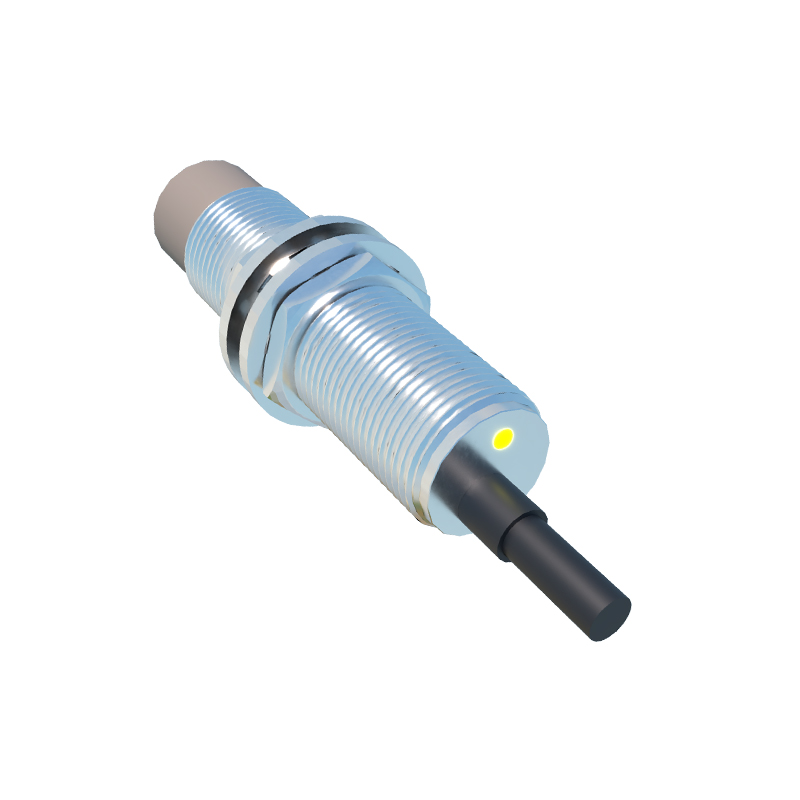
The physical form factor is another critical dimension of customization. Standard cylindrical or block-style housings may not fit constrained spaces or unique mounting configurations. Engineers can collaborate with sensor manufacturers to design compact, rectangular, or even ring-shaped sensors that integrate seamlessly into machinery. This mechanical customization ensures optimal positioning for accurate detection and long-term durability.
Furthermore, the intelligence embedded within these sensors opens vast possibilities. Custom firmware can be developed to implement application-specific logic. A sensor can be programmed to output different signals based on the distance of an object (analog value) or its material composition (e.g., differentiating between ferrous and non-ferrous metals). In packaging lines, a customized intelligent sensor might not only detect a missing cap on a bottle but also communicate this fault directly to a PLC and a central monitoring system, triggering a reject mechanism and logging the event for quality analysis. This level of integration is pivotal for predictive maintenance strategies, where sensors monitor their own health and the vibration or alignment of machinery, alerting operators before a failure occurs.
The communication protocol is a cornerstone of modern sensor customization. The adoption of IO-Link, a point-to-point serial communication protocol, has been a game-changer. It allows for bidirectional data exchange, remote configuration, and detailed diagnostic information. Customizing sensors with IO-Link capability means they can be dynamically reconfigured for different product batches on a production line without manual intervention. Parameters like switching thresholds, hysteresis, and output delay can be adjusted on-the-fly from a central control panel.
Material compatibility presents another layer of complexity. Standard inductive sensors detect metals, but customized versions can be tuned for specific alloys or optimized for reduced sensing ranges on particular materials. Capacitive sensors, which can detect non-metallic objects, can be customized to ignore certain materials (like a conveyor belt) while sensing the target product (like a plastic container), minimizing false triggers.
The process of customizing an intelligent proximity sensor is inherently collaborative. It involves a detailed dialogue between the end-user's engineering team and the sensor manufacturer's application specialists. This partnership ensures that the final product is not just a modified component but a fully integrated solution. Prototyping and rigorous testing under real or simulated conditions are essential phases to validate performance before full-scale deployment.
In conclusion, the era of one-size-fits-all sensors is fading. The future belongs to intelligent, customized proximity solutions that act as smart data points within the Industrial Internet of Things (IIoT). By investing in sensor customization, industries unlock higher levels of precision, flexibility, and data-driven insight, forming a robust foundation for resilient and competitive smart factories. The initial development effort is strategically offset by significant gains in productivity, quality control, and system uptime, delivering a compelling return on investment in the long-term automation journey.