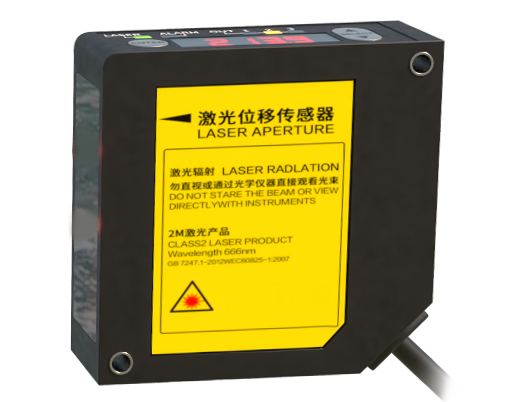
Laser distance module sensors have become indispensable components in contemporary electrical engineering, offering unparalleled precision in measurement applications. These devices operate on the principle of time-of-flight or phase-shift measurement, emitting laser beams toward a target and calculating distance based on the reflected light. In industrial settings, they enable accurate positioning, level monitoring, and object detection, enhancing automation efficiency. For instance, in robotics, laser sensors facilitate real-time spatial awareness, allowing machines to navigate complex environments safely. Similarly, in construction, they streamline surveying tasks by providing millimeter-level accuracy over long ranges.
The core technology behind these sensors involves a laser diode, optics, and a photodetector. The diode emits coherent light pulses, which travel to the target and bounce back. By measuring the time delay or phase difference between emission and reception, the sensor computes distance using the formula: distance = (speed of light × time delay) / 2. Advanced models incorporate signal processing algorithms to filter noise, ensuring reliability in harsh conditions like dust or vibration. Engineers often select sensors based on parameters such as range (from centimeters to hundreds of meters), resolution, and response time, tailoring choices to specific applications like warehouse logistics or automotive assembly lines.
Integration with electrical systems is seamless, thanks to standard interfaces like analog outputs, RS-485, or Ethernet. This connectivity supports data transmission to PLCs or SCADA systems, enabling real-time monitoring and control. Maintenance is minimal, as laser modules are designed for durability, with IP-rated housings protecting against environmental factors. However, users must consider limitations, such as interference from highly reflective surfaces or ambient light, which can be mitigated through calibration and shielding.
Looking ahead, innovations in miniaturization and AI-driven analytics promise to expand sensor capabilities. Emerging trends include the fusion of laser data with IoT platforms for predictive maintenance, reducing downtime in manufacturing. As electrical engineering evolves toward smart infrastructure, laser distance modules will play a pivotal role in achieving higher accuracy and efficiency, driving advancements across sectors from renewable energy to healthcare.
