In modern industrial automation and precision manufacturing, dimensional measurement is a critical quality control process. Among various non-contact measurement technologies, proximity sensors have gained widespread adoption due to their high accuracy, reliability, and adaptability to harsh environments. This article delves into the fundamental principles of using proximity sensors for dimensional measurement, covering working mechanisms, common types, and key application considerations.
Proximity sensors operate by detecting the presence or absence of a target object without physical contact. For dimensional measurement, they primarily rely on changes in electromagnetic fields or ultrasonic waves to gauge distance or size variations. The core principle involves emitting a signal—such as an electromagnetic field, light beam, or sound wave—toward the target. The sensor then analyzes the reflected or disturbed signal to calculate the distance between the sensor and the object. This distance data is subsequently processed to derive dimensional parameters like thickness, diameter, or positional alignment.
One of the most common types is the inductive proximity sensor, which is ideal for measuring metallic objects. It generates an oscillating electromagnetic field from a coil. When a conductive target enters this field, eddy currents are induced on the target’s surface, altering the oscillation amplitude or frequency. The sensor detects this change and converts it into a distance output. Inductive sensors excel in environments with dust, oil, or moisture, offering resolutions down to micrometers. However, they are limited to conductive materials and require calibration for different metals due to variations in conductivity and permeability.
Capacitive proximity sensors, on the other hand, can measure both conductive and non-conductive materials, including plastics, liquids, and ceramics. They function by creating an electrostatic field between the sensor electrode and the target. As the target approaches, the capacitance changes, affecting the oscillator circuit. This change is proportional to the distance, enabling precise measurement. Capacitive sensors are versatile but sensitive to environmental factors like humidity and temperature, necessitating shielding or compensation mechanisms in industrial setups.
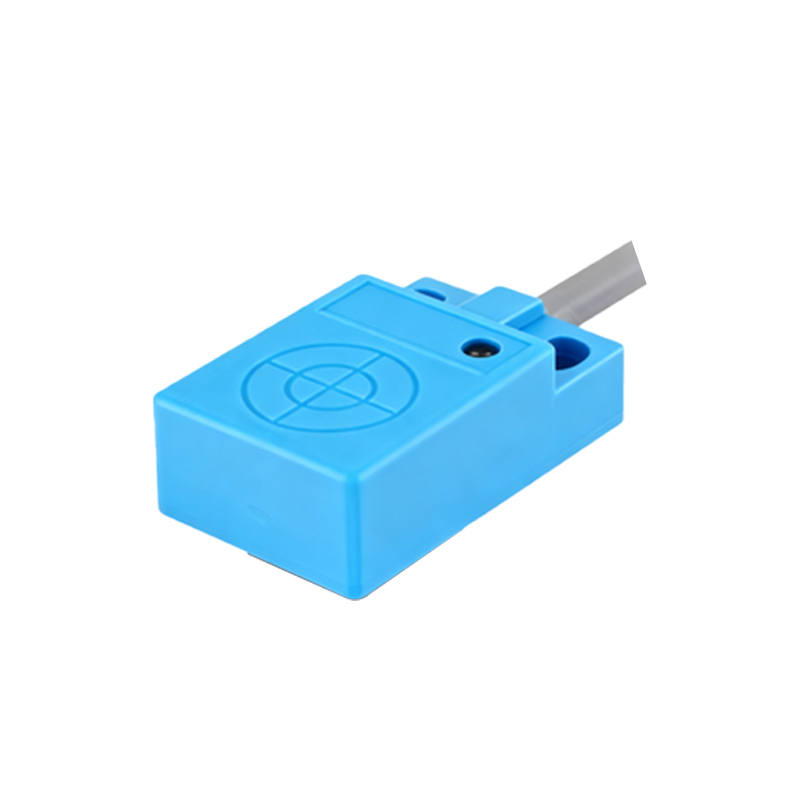
For high-precision applications, optical proximity sensors (often laser-based) are preferred. These sensors emit a focused light beam onto the target and measure the time-of-flight or triangulation of the reflected light. Laser triangulation sensors, for instance, use a photodetector to capture the beam’s reflection angle, which shifts with distance. They achieve sub-micron resolutions and are suitable for measuring small features or fast-moving objects. However, optical sensors may be affected by surface reflectivity, ambient light, or transparent materials, requiring careful selection and setup.
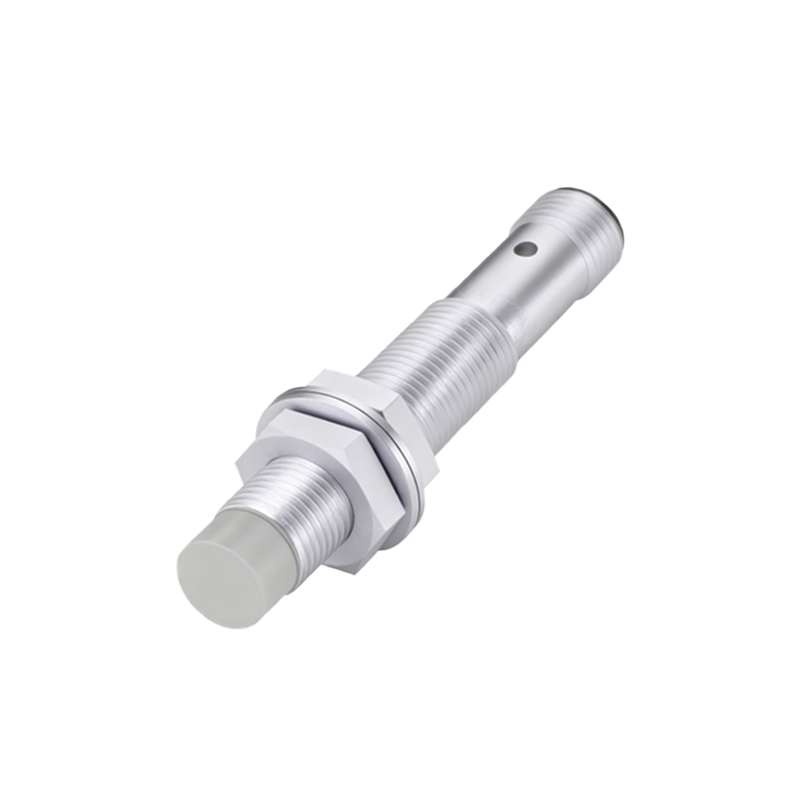
Ultrasonic proximity sensors utilize sound waves above the human hearing range. They emit ultrasonic pulses and measure the time delay of the echo to calculate distance. These sensors are effective for measuring larger dimensions or irregular surfaces, as sound waves can penetrate dust and vapors. While less precise than optical or inductive sensors, they offer robust performance in challenging conditions, such as measuring liquid levels or textured materials.
In practice, achieving accurate dimensional measurement with proximity sensors involves several considerations. First, sensor selection must align with the target material, measurement range, and environmental conditions. For example, inductive sensors are unsuitable for non-metallic parts, while capacitive sensors may falter in humid areas. Second, calibration is crucial to account for material properties, sensor drift, and temperature effects. Manufacturers often provide calibration curves or digital interfaces for fine-tuning. Third, mounting and alignment impact measurement stability; sensors should be positioned perpendicular to the target to avoid angular errors.
Signal processing also plays a vital role. Modern proximity sensors integrate microprocessors that filter noise, linearize output, and communicate via protocols like IO-Link or analog signals. This enables real-time monitoring and integration with control systems for automated adjustments. Additionally, multi-sensor arrays can be deployed for complex measurements, such as profiling or contour analysis, by synchronizing data from multiple points.
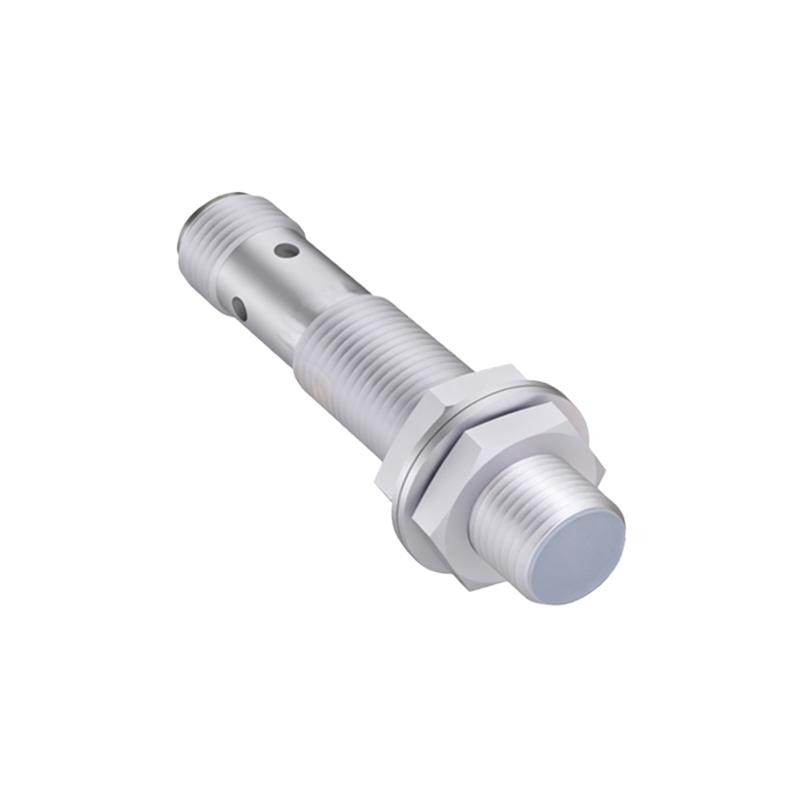
Despite their advantages, proximity sensors have limitations. They may struggle with highly reflective or absorbent surfaces, extreme temperatures, or rapid motion. Regular maintenance, including cleaning and recalibration, ensures long-term accuracy. Industry standards, such as ISO 9001 for quality management, often guide their implementation to meet regulatory requirements.
In summary, proximity sensors provide a versatile solution for non-contact dimensional measurement in industries like automotive, aerospace, and electronics. By leveraging electromagnetic, capacitive, optical, or ultrasonic principles, they deliver precise, reliable data that enhances production efficiency and product quality. As technology advances, smart sensors with AI-driven analytics are emerging, promising even greater accuracy and adaptability for future manufacturing challenges.