In the complex landscape of industrial automation, the ability to detect objects reliably and accurately over extended distances is a critical requirement. Long-distance separated proximity sensors, a specialized category within the sensor family, are engineered to meet this precise need. Unlike standard integrated proximity sensors where the sensing element and electronics are housed together, separated or remote-head sensors feature a distinct physical separation between the sensing head and the amplifier or controller unit. This design unlocks unique capabilities, particularly for challenging environments and long-range detection scenarios.
The fundamental operating principle of these sensors varies by technology, with inductive, capacitive, and photoelectric types being the most prevalent for long-distance applications. Inductive separated sensors are ideal for detecting metallic objects. They generate an electromagnetic field from the remote sensing head. When a metal target enters this field, it induces eddy currents, causing a change in oscillation amplitude that is processed by the separate amplifier. For non-metallic materials like liquids, powders, wood, or plastics, capacitive separated sensors are the tool of choice. They detect changes in capacitance caused by the presence of any material that alters the dielectric constant near the sensing face. For the longest ranges, photoelectric separated sensors, often employing modulated infrared light to avoid ambient interference, are unparalleled. They function by emitting a light beam from a remote emitter; a separate receiver detects the beam, and an object is sensed when it interrupts (through-beam mode) or reflects (retro-reflective or diffuse mode) this light signal.
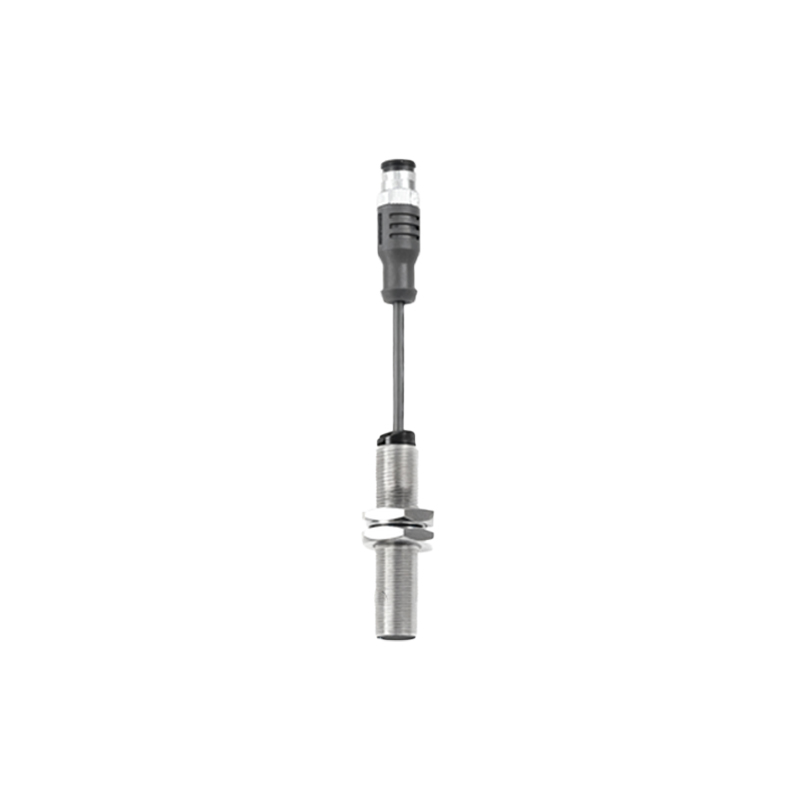
The primary advantage of the separated design is the decoupling of the sensing point from the evaluation electronics. This allows the compact, rugged sensing head to be installed in extremely confined, hot, cold, or high-vibration locations—inside a machine cavity, on a moving gantry, or in a washdown area—while the larger, more sensitive amplifier unit can be mounted in a protected, accessible control cabinet dozens of meters away. This separation significantly enhances system flexibility and protects the core electronics from harsh operational conditions. Furthermore, for photoelectric types, it enables very long sensing ranges, often exceeding 100 meters in through-beam configurations, which is impossible with integrated designs.
Applications for long-distance separated proximity sensors are diverse and mission-critical. In material handling and logistics, they are used for high-level bay monitoring in warehouses, package presence verification on long conveyor lines, and position sensing on large automated storage and retrieval systems (AS/RS). In the automotive industry, they monitor vehicle bodies on expansive assembly lines over many meters. In forestry and lumber, they detect logs on infeed decks. In food and beverage plants with stringent hygiene standards, sealed sensing heads can be placed directly in processing zones while amplifiers remain outside, simplifying cleaning and maintenance.
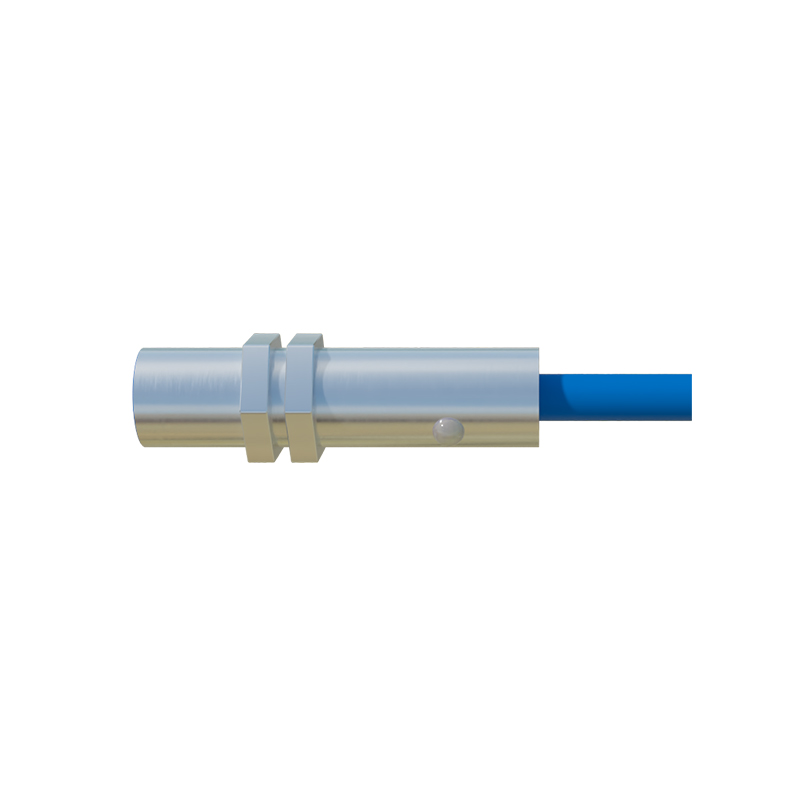
Selecting the appropriate long-distance separated sensor requires careful consideration of several technical parameters. First, the required sensing distance and the nature of the target material dictate the technology: inductive for metals at moderate ranges, capacitive for non-metals at shorter ranges, and photoelectric for longest ranges and most material types. Second, the operating environment is crucial; the sensing head's ingress protection (IP) rating, temperature rating, and chemical resistance must match the installation site. Third, the connection distance between the head and the amplifier must be within the specified cable length limits to avoid signal degradation. Fourth, output type (e.g., NPN, PNP, analog, IO-Link) and response time must align with the control system's requirements. Finally, features like built-in diagnostics, teach-in functionality for easy range adjustment, and robust housing materials (stainless steel, PBT) add value for reliable long-term operation.
Installation and alignment are pivotal for performance, especially for photoelectric sensors. Precise mechanical mounting and alignment fixtures are recommended for through-beam types to ensure the receiver accurately captures the emitter's beam over long distances. Regular maintenance should include lens cleaning for optical types and checking for physical damage or cable integrity. Understanding environmental factors like airborne dust, steam, vibration, and temperature swings is essential to prevent false triggers or degraded performance.
In conclusion, long-distance separated proximity sensors are indispensable components for advanced industrial automation systems where detection over extended ranges or in severe environments is necessary. Their unique architecture provides unparalleled installation flexibility, environmental resilience, and long-range capability. By meticulously analyzing the application requirements—target characteristics, required distance, environmental conditions, and system integration needs—engineers can leverage these powerful sensors to create more robust, reliable, and efficient automated processes, pushing the boundaries of what is possible in modern manufacturing and material handling.