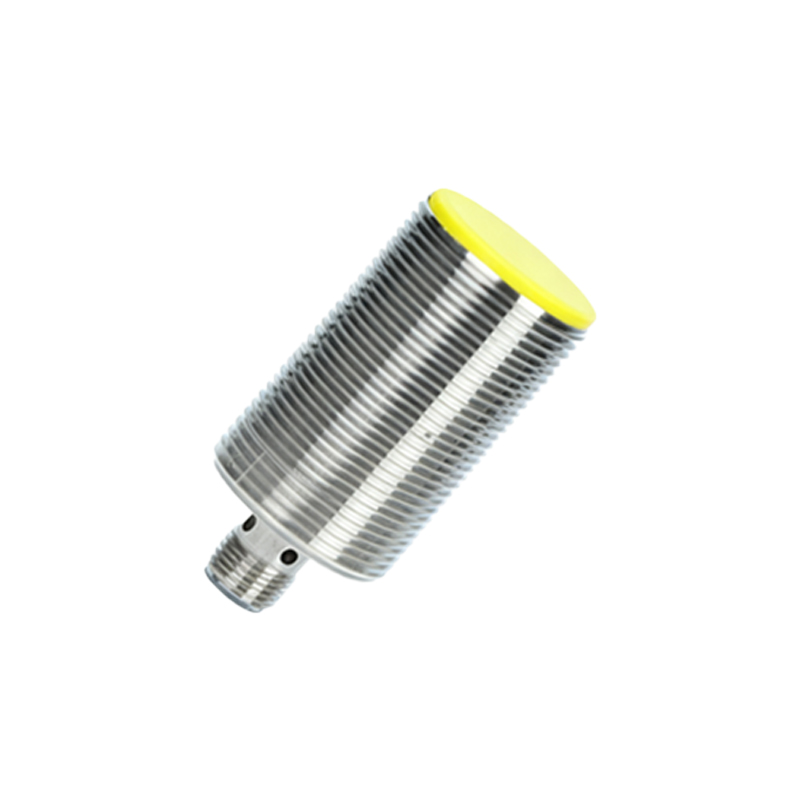
Proximity switch sensors, fundamental components in modern industrial automation, rely on sophisticated microcontroller principles to achieve their high precision, reliability, and programmability. Unlike mechanical limit switches, these non-contact sensors detect the presence or absence of a target object without physical contact, using various physical phenomena such as electromagnetic fields, capacitance, or light. The integration of a microcontroller unit (MCU) has revolutionized their functionality, transforming them from simple binary detectors into intelligent nodes within a networked control system.
At its core, the principle of operation begins with the sensor's oscillator circuit, which generates a high-frequency electromagnetic field (for inductive types) or an electrostatic field (for capacitive types). In an inductive proximity sensor, when a metallic target enters this oscillating field, eddy currents are induced on the target's surface. This causes a measurable energy loss or loading effect on the oscillator. The sensor's detection circuit monitors the amplitude of these oscillations. The critical role of the microcontroller starts here. The analog signal representing the oscillation damping is fed into the MCU's built-in Analog-to-Digital Converter (ADC). The MCU digitizes this signal, allowing for precise threshold analysis. It doesn't merely detect a presence; it can evaluate the signal strength, which can correlate to distance or target material properties, enabling more nuanced detection logic.
The microcontroller's firmware contains the algorithm that determines the switching point. This is where programmability offers immense advantages. Engineers can configure parameters such as hysteresis—the difference between the switch-on and switch-off points—to prevent chattering in noisy environments or when a target vibrates near the detection boundary. This hysteresis is implemented in software, making it adjustable without changing hardware components. Furthermore, the MCU can implement filtering algorithms, such as digital debouncing or time delays. For instance, a sensor can be programmed to only trigger an output if a target is detected consistently for a predefined number of milliseconds, effectively ignoring transient false triggers from passing debris or electrical noise.
Output signal generation is another domain of microcontroller mastery. Traditional sensors provided a simple transistor switch output. Modern microcontroller-based sensors offer configurable output types (NPN/PNP, NO/NC) often selectable via software or teach-in buttons. The MCU directly controls the output transistor's state. More advanced models feature programmable logic functions (AND, OR, timing functions) directly within the sensor. A single sensor could be programmed to output a signal only if Target A is present AND Target B is absent, or to produce a pulsed output after a specific on-delay. This reduces the load on the central PLC and simplifies wiring.
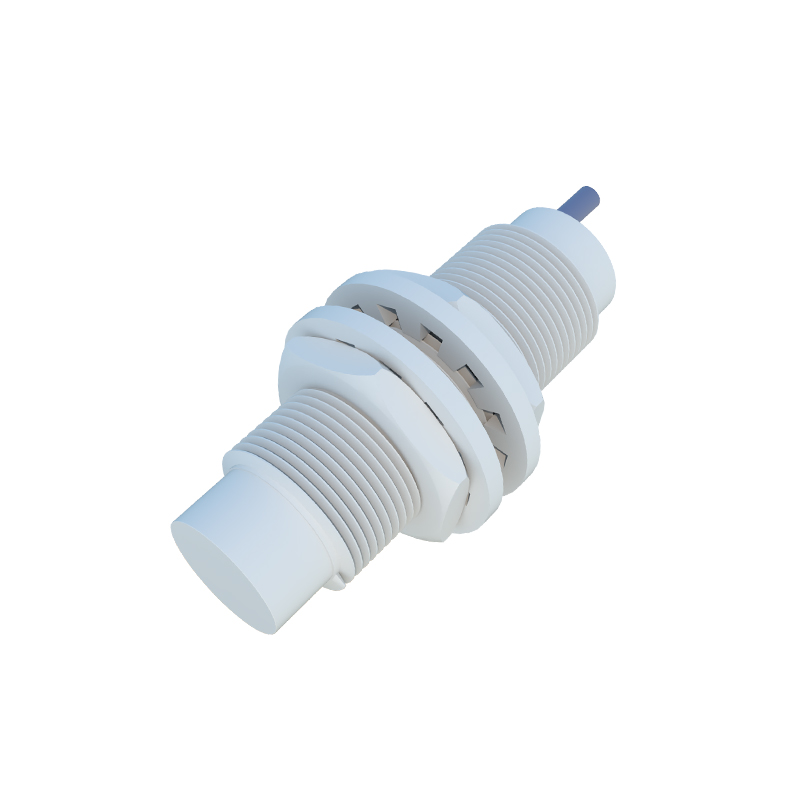
Diagnostics and communication represent the pinnacle of intelligent sensor design facilitated by microcontrollers. The MCU continuously monitors its own health, checking supply voltage, output load current, and internal temperature. It can set internal flags for conditions like short-circuit, overload, or sensor head contamination (detectable via a shift in baseline capacitance or inductance). This diagnostic data can be communicated via various industrial protocols. Sensors equipped with IO-Link, a point-to-point serial communication protocol, use the microcontroller to transmit not just the binary switch state but also detailed process data (like scaled distance measurements), parameter settings, and diagnostic warnings back to the master controller. This enables predictive maintenance and detailed process monitoring.
The design considerations for the microcontroller in such an environment are stringent. It must operate reliably across a wide industrial temperature range (-25°C to 85°C is common), withstand electrical transients and electromagnetic interference (EMI) as per IEC standards. Therefore, MCUs used are often industrial-grade with robust internal clock systems, watchdog timers to recover from software glitches, and ample GPIO pins for interfacing with the oscillator circuit, output driver, status LEDs, and communication transceivers. Low-power modes are also crucial for sensors in battery-operated applications.
In summary, the microcontroller is the brain of a modern proximity sensor. It elevates the device from a passive component to an active, intelligent participant in the control loop. By handling signal conditioning, programmable logic, advanced diagnostics, and digital communication, MCU-based proximity sensors provide the flexibility, reliability, and data richness required for Industry 4.0 applications, smart factories, and complex automated systems where precision and information are paramount.