In the rapidly evolving landscape of industrial automation and precision measurement, laser sensors have become indispensable tools. A critical, yet sometimes overlooked, aspect of selecting the right laser sensor for an application is its physical size. This size comparison is not merely about fitting into a control cabinet; it directly impacts performance, integration complexity, and overall system design. This guide delves into the technical considerations behind laser sensor dimensions, comparing common form factors and their implications for engineers and system integrators.
The physical size of a laser sensor is primarily dictated by its core technology, measurement principle, and intended performance specifications. Fundamentally, a laser sensor comprises a laser diode, optics (lenses), a photodetector, signal processing electronics, and housing. The choice between technologies like time-of-flight (ToF), triangulation, or confocal measurement significantly influences the package. For instance, a long-range, high-accuracy time-of-flight sensor for warehouse logistics often requires a larger housing to accommodate more powerful laser emitters and sophisticated receiver circuits. In contrast, a compact triangulation sensor for precise displacement measurement on a production line can be remarkably small, as its optical path is designed for short distances.
Common form factors in the market range from ultra-compact "chip" sensors to larger, ruggedized industrial housings. The smallest variants, often called "micro" or "chip" sensors, may measure as little as 10mm x 10mm x 5mm. These are typically used in space-constrained applications like consumer electronics assembly or miniature robotics, where they provide basic presence detection or simple distance feedback. Their compactness, however, often comes with trade-offs in measurement range, accuracy, and environmental robustness (e.g., lower IP ratings).
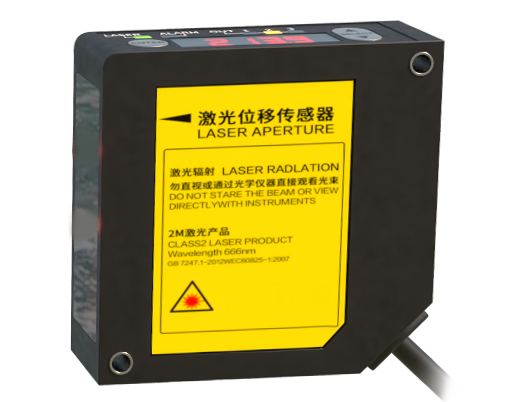
Mid-sized sensors, perhaps in the range of 30mm x 40mm x 15mm, represent the workhorses of many industrial settings. They balance a reasonable footprint with robust performance, offering good accuracy, moderate ranges (from a few centimeters to several meters depending on type), and higher ingress protection (e.g., IP67). These sensors are commonly found in packaging machinery, material handling, and automotive assembly for tasks like contour profiling, fill level control, or robot guidance. Their size allows for easier mounting and wiring while providing sufficient internal space for stable electronics.
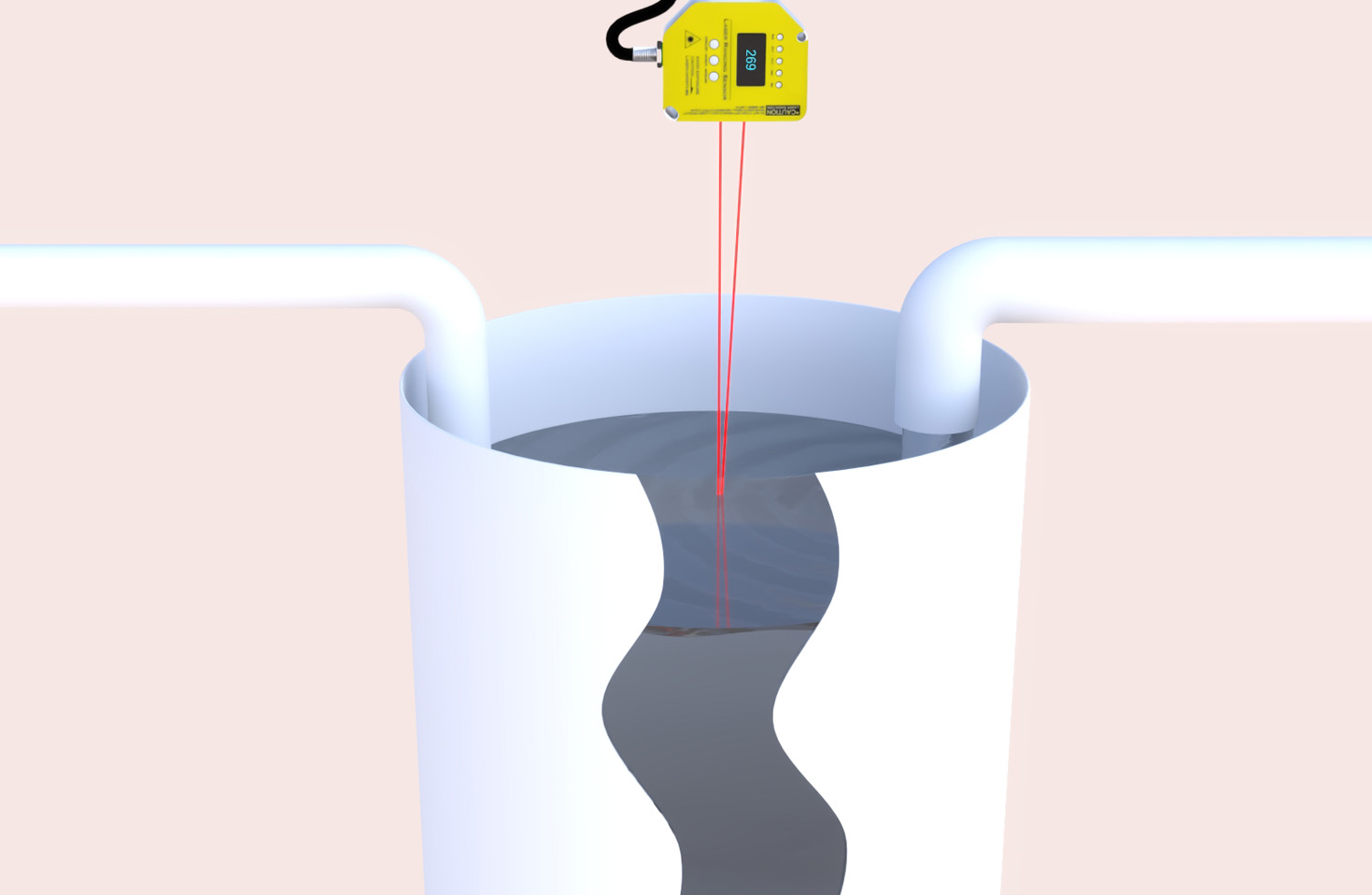
Large-format laser sensors, sometimes exceeding 100mm in length, are engineered for maximum performance under demanding conditions. They house high-power laser sources, complex optical systems for beam shaping, and advanced processing units for handling vast amounts of data at high speeds. Applications include long-range outdoor distance measurement (hundreds of meters), high-speed 3D scanning for quality inspection, or operation in extreme temperatures. Their size is a direct consequence of their capability and the need for robust thermal management and mechanical stability.
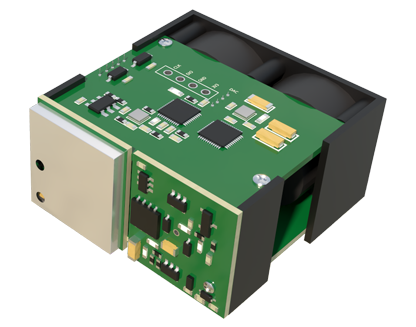
The implications of sensor size extend beyond the sensor itself. A compact sensor reduces the system's footprint and weight, which is crucial for mobile robots or gantry systems. It may also simplify integration into tight spaces. However, a larger sensor often provides better heat dissipation, leading to higher long-term stability and reduced thermal drift—a vital factor for metrology-grade applications. Larger housings also allow for more connection options (e.g., multi-pin connectors, Ethernet ports) and status LEDs for easier diagnostics.
From an installation perspective, size affects mounting requirements, cable routing, and maintenance access. A small sensor might require a custom bracket, while a standard-sized sensor can utilize off-the-shelf mounts. Furthermore, the sensor's size often correlates with its beam characteristics. A smaller sensor might have a more focused, precise laser spot, ideal for detecting small objects. A larger sensor could project a structured line or a wider beam pattern for area monitoring.
In conclusion, comparing laser sensor sizes is a multidimensional exercise in engineering trade-offs. There is no universally "best" size. The selection must be driven by the application's primary requirements: required measurement range and accuracy, available installation space, environmental conditions (dust, moisture, temperature), necessary data interface, and lifecycle cost. An ultra-compact sensor might save space but could necessitate more frequent calibration or replacement. A larger, more capable sensor might represent a higher initial investment but deliver superior reliability and precision over time, reducing total cost of ownership. By thoroughly understanding the relationship between size, technology, and performance, engineers can make informed decisions that optimize their automated systems for efficiency, accuracy, and longevity.