In the realm of industrial automation and control systems, proximity sensors are indispensable components, providing non-contact detection of metallic and, in some cases, non-metallic objects. A critical performance parameter often scrutinized by engineers, especially in sectors like cold storage, outdoor automation, cryogenics, and arctic operations, is their operational capability in low-temperature environments. The question "Are proximity sensors suitable for low-temperature applications?" is not a simple yes or no. The answer hinges on a detailed understanding of sensor construction, material science, and electronic component limitations.
Fundamentally, a proximity sensor's ability to function in low temperatures is determined by its design specifications and the quality of its components. Standard industrial proximity sensors are typically rated for an operating temperature range of -25°C to +70°C. However, this is a generalization. Specialized low-temperature or cryogenic proximity sensors are engineered to perform reliably in environments as cold as -40°C, -50°C, or even lower, with some models pushing the limit to -70°C.
Several key factors are challenged by extreme cold:
1. Electronic Components: Integrated circuits (ICs), oscillators, and other semiconductor devices have specified temperature ranges. Below their minimum operating temperature, semiconductors can experience carrier freeze-out, leading to increased resistance, altered switching characteristics, and ultimately, failure or erratic behavior. High-quality sensors use components graded for extended temperature ranges.
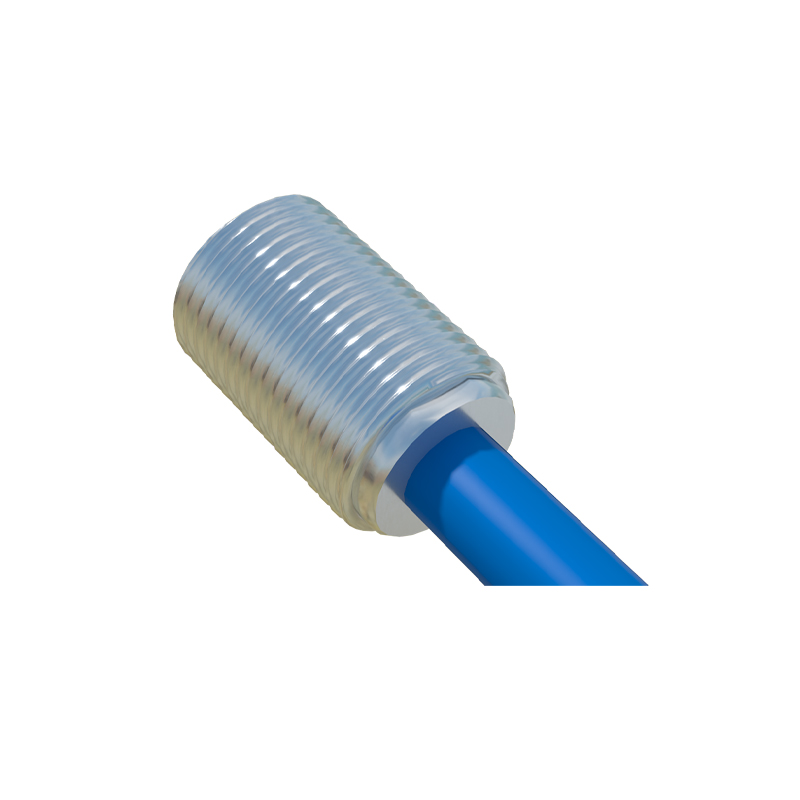
2. Housing and Sealing Materials: The sensor body, typically made from materials like nickel-plated brass, stainless steel (e.g., 303, 304, 316), or PBT/PPS plastics, must retain its mechanical integrity. Standard elastomers used for seals (O-rings, gaskets) can lose elasticity, become brittle, and crack at low temperatures, compromising the IP (Ingress Protection) rating and leading to internal condensation or icing. Specialized compounds like fluorocarbon (FKM/Viton) or silicone rubber are often specified for low-temperature duty.
3. Internal Potting/Casting Compound: Many sensors are filled with a potting compound (epoxy or polyurethane) to protect internal circuitry from moisture, vibration, and shock. At very low temperatures, inferior potting materials can shrink, crack, or detach from components, causing stress fractures on solder joints or coil windings, and creating thermal insulation issues.
4. Sensing Element and Coil: For inductive sensors (the most common type for metal detection), the coil is wound with fine enameled wire. Thermal contraction can stress these windings. Furthermore, the magnetic properties of the ferrite core can change with temperature, potentially affecting the sensing distance (snap point). While this effect is often minimal within the specified range, it must be characterized by the manufacturer.
5. Cable Flexibility: The PVC or PUR jacket of the attached or connector cable becomes rigid and prone to cracking in extreme cold. Using cables with specially formulated jackets designed for low-temperature flexibility is crucial for installation and long-term reliability.
Performance Considerations in Cold Environments:
Switching Frequency/Response Time: Electronics may slow down, potentially increasing the sensor's response time or reducing its maximum switching frequency. This is critical in high-speed applications.
Switching Distance: As mentioned, a slight reduction in the nominal sensing distance is possible. Reputable manufacturers will provide derating curves or specific data for performance at temperature extremes.
Condensation and Icing: Cycling between cold and warmer environments can cause condensation inside the housing if seals fail. More critically, ice buildup on the sensor's active face can physically block detection or alter its dielectric properties (for capacitive sensors). Sensors with a PTFE (Teflon) coating on the face can mitigate ice adhesion.
Selection and Application Guidelines:
For engineers specifying proximity sensors for low-temperature applications, the following steps are essential:
1. Consult the Data Sheet: Never assume. Scrutinize the manufacturer's datasheet for the operating temperature range (Ta) and storage temperature range. The operating range is the key parameter.
2. Demand Certification: Look for sensors explicitly marketed as "low-temperature," "arctic," or "cryogenic" grade. They will have undergone validation testing.
3. Material Specification: Ensure the housing material, seal type (e.g., FKM), cable jacket (e.g., PUR for low-temp flexibility), and potting compound are suitable. Stainless steel housings are generally more robust than plastic in thermal cycling.
4. Consider Heating Options: In the most severe applications, such as sensors exposed to spraying water that can instantly freeze, an external heating collar or a sensor with an integrated, thermostatically controlled heater may be necessary to maintain a local microclimate above