Proximity sensor technology represents a cornerstone of modern industrial automation and control systems. At its core, a proximity sensor is a non-contact device designed to detect the presence or absence of an object within a specified range without any physical contact. This fundamental capability enables precise, reliable, and maintenance-free operation in countless applications, from manufacturing assembly lines to consumer electronics. The principle of operation varies significantly across different sensor types, each tailored to specific environmental conditions and target materials.
The most prevalent categories include inductive, capacitive, ultrasonic, and photoelectric sensors. Inductive proximity sensors are workhorses in metal detection. They generate an electromagnetic field from a coil fed by an oscillator. When a metallic object enters this field, it induces eddy currents within the target, causing a change in the oscillation amplitude. This change is detected by the sensor's circuitry, triggering an output signal. Their robustness, insensitivity to non-metallic materials, and ability to function in dirty or wet environments make them ideal for machine tools, automotive manufacturing, and material handling.
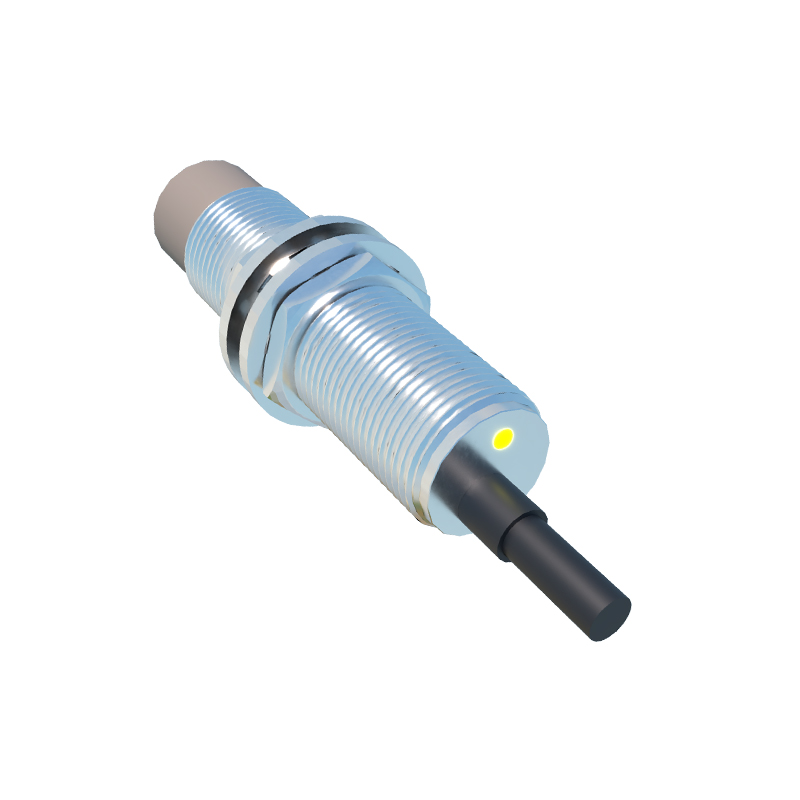
In contrast, capacitive proximity sensors can detect both metallic and non-metallic objects, including liquids, powders, plastics, and wood. They operate by generating an electrostatic field. The presence of any object with a dielectric constant different from air alters the capacitance of the sensor's circuit, leading to a state change. This versatility allows their use in level detection for tanks, material presence sensing on conveyor belts carrying non-metals, and touch-sensitive interfaces.
Photoelectric sensors utilize light beams, typically infrared or laser, to detect objects. They consist of an emitter and a receiver. The detection occurs when the target object interrupts (in through-beam mode) or reflects (in retro-reflective or diffuse mode) the light beam. Offering the longest sensing ranges among standard proximity sensors, they excel in packaging, bottling, and logistics for detecting transparent films, small components, or objects at considerable distances.
Ultrasonic sensors measure distance or presence by emitting high-frequency sound waves and analyzing the reflected echo. The time delay between emission and reception is calculated to determine the object's distance. They are largely unaffected by object color, transparency, or material (except for sound-absorbing surfaces), making them perfect for challenging applications like liquid level control, loop control, and uneven surface detection.
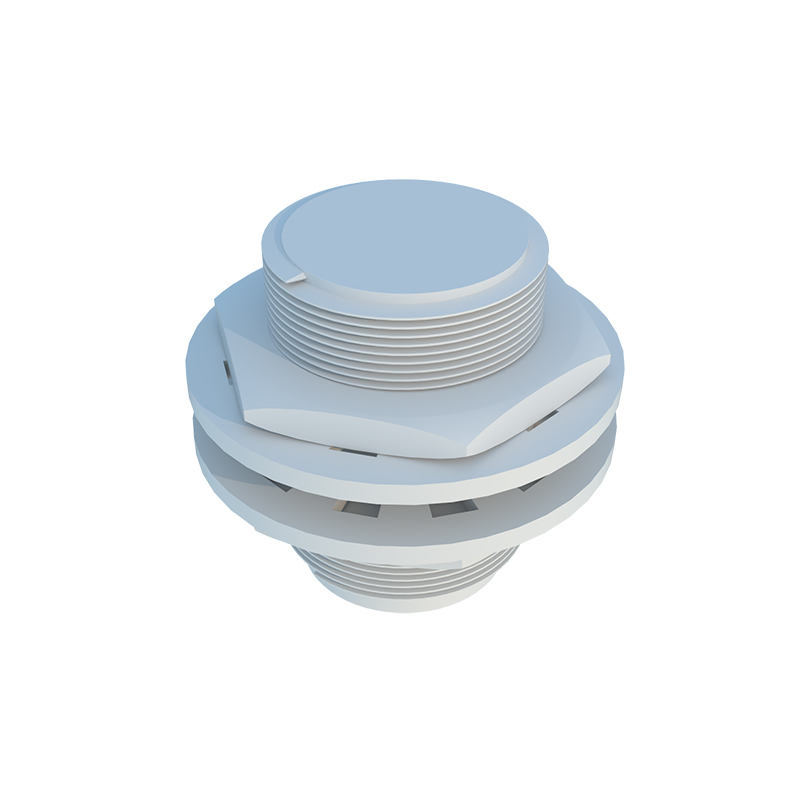
Key performance parameters define a sensor's suitability for an application. Sensing range, often specified as a nominal or operating distance, indicates the maximum distance at which a standard target can be reliably detected. Repeatability refers to the sensor's consistency in detecting an object at the same point. Response time is critical for high-speed applications, denoting how quickly the sensor can react to a target's appearance or disappearance. Environmental factors like temperature extremes, humidity, chemical exposure, and electrical noise (EMI) must also be carefully considered during selection.
The output configuration is another vital aspect. Most industrial proximity sensors provide a digital switch output, either as a Normally Open (NO) or Normally Closed (NC) solid-state transistor (PNP or NDC sourcing/sinking) or an electromechanical relay. Analog outputs (4-20 mA or 0-10 V) are available for applications requiring continuous distance measurement, such as position feedback or thickness monitoring.
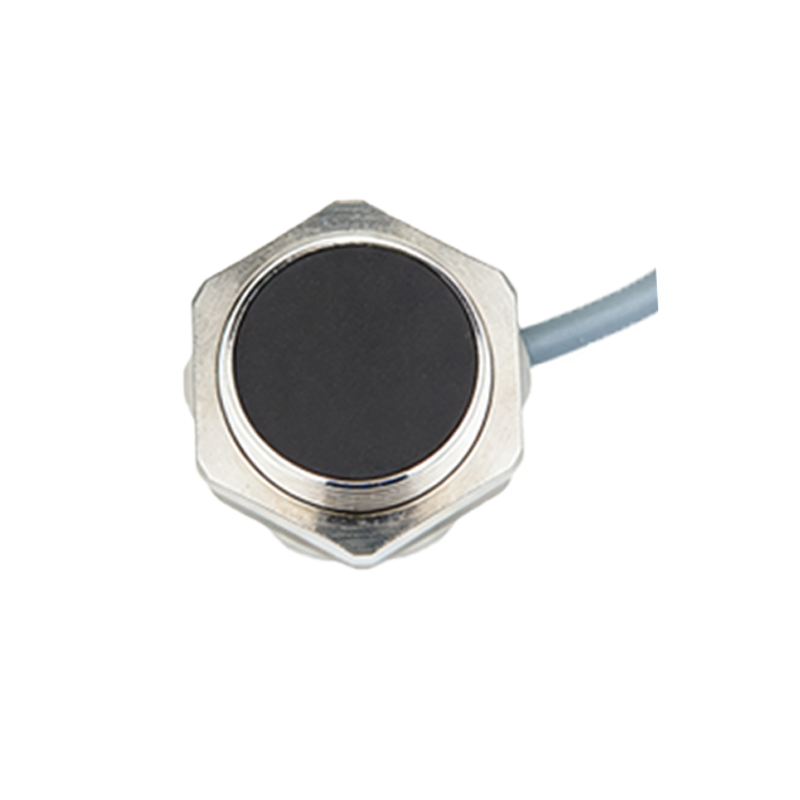
Integration into control systems is seamless, typically connecting to Programmable Logic Controllers (PLCs), industrial PCs, or robotics controllers. The advent of IO-Link, a point-to-point serial communication protocol, has further enhanced sensor capabilities. IO-Link enables bidirectional data exchange, allowing for remote parameter configuration, advanced diagnostics, and the transmission of process data beyond a simple on/off signal, paving the way for predictive maintenance and Industry 4.0 initiatives.
In practice, the application spectrum is vast. On a robotic welding cell, inductive sensors confirm the presence of a metal workpiece before the weld cycle begins. Capacitive sensors in a food processing plant monitor the level of flour in a silo. An array of photoelectric sensors ensures correct carton sealing on a high-speed packaging machine. Ultrasonic sensors guide autonomous mobile robots (AMRs) in warehouse navigation by detecting obstacles.
The evolution of proximity sensor technology continues, driven by demands for miniaturization, higher precision, and smarter functionality. Modern sensors incorporate embedded diagnostics, temperature compensation, and enhanced resistance to welding fields or washdown conditions. Understanding the underlying principles, types, and selection criteria is essential for engineers and technicians to design efficient, reliable, and future-proof automated systems. This technology, though often unseen, is indispensable in enabling the precision, safety, and efficiency that define contemporary industrial operations.