In the realm of industrial automation and precision measurement, laser sensors have become indispensable tools. Among the prominent names in this field, the Plato laser sensor stands out for its reliability, accuracy, and versatility. This article delves into the core technology, typical applications, and key considerations for selecting and implementing Plato laser sensors in various industrial environments.
At its heart, a Plato laser sensor operates on the principle of optical triangulation or time-of-flight measurement, depending on the specific model and intended use case. The triangulation method involves projecting a focused laser beam onto a target surface. The reflected light is then captured by a receiving lens at a specific angle and focused onto a position-sensitive detector, such as a CCD or PSD array. Any displacement of the target surface causes a shift in the position of the light spot on the detector. This shift is precisely calculated by the sensor's internal processor to determine the exact distance or position of the target. This technology enables Plato sensors to achieve micron-level resolution, making them ideal for high-precision tasks like thickness gauging, vibration analysis, and contour profiling.
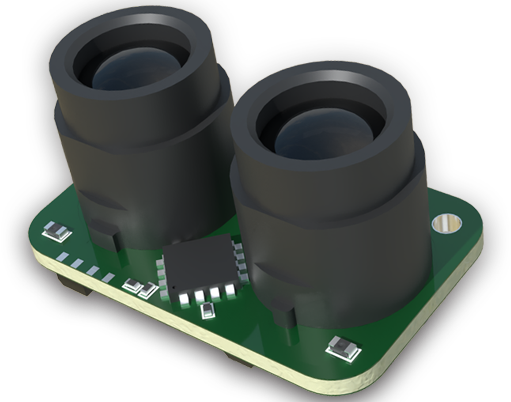
For longer-range applications, such as level monitoring in silos or vehicle detection, Plato utilizes time-of-flight (ToF) technology. Here, the sensor measures the time it takes for a laser pulse to travel to the target and back. Since the speed of light is constant, the distance can be calculated with high accuracy. Plato's ToF sensors are known for their robustness against varying surface colors and textures, a common challenge in industrial settings.
The application spectrum for Plato laser sensors is remarkably broad. In the automotive manufacturing sector, they are deployed for precise gap and flush measurement between body panels, ensuring superior build quality. In electronics assembly, these sensors verify component placement height and coplanarity on printed circuit boards (PCBs). The packaging industry relies on them for continuous monitoring of material thickness, fill level control, and web guiding systems. Furthermore, in logistics and warehousing, Plato sensors facilitate object detection, palletizing guidance, and dimensioning systems for automated storage and retrieval.

A significant advantage of the Plato series is its design philosophy centered on industrial durability. These sensors typically feature rugged metal housings with high IP ratings (e.g., IP67), providing excellent resistance to dust, moisture, and mechanical shock. They are engineered to operate reliably across a wide temperature range, ensuring consistent performance in harsh factory conditions. Many models also incorporate advanced features like programmable logic, multiple analog and digital outputs (4-20mA, 0-10V, RS-485, Ethernet/IP, PROFINET), and teach-in functions for easy setup and integration into complex control systems.
When selecting a Plato laser sensor for a specific application, several critical parameters must be evaluated. First, define the required measuring range and standoff distance. Choosing a sensor with an appropriate range prevents issues with spot size or insufficient signal strength. Second, consider the required resolution and repeatability. High-speed dynamic measurements demand sensors with fast response times and high sampling rates. Third, assess the target characteristics. The material, color, surface finish (glossy, matte, transparent), and angle of incidence can all affect the sensor's performance. Plato offers models with specialized optics and algorithms to handle challenging surfaces like hot metals, glass, or black rubber.
Environmental factors are equally important. The presence of ambient light, dust, steam, or strong vibrations can interfere with optical measurements. Selecting a model with a robust housing, a narrow-band optical filter, and suitable mounting accessories is crucial. Finally, the integration aspect cannot be overlooked. The physical dimensions, mounting options, cable connections, and communication protocols must be compatible with the existing machinery and control architecture.
Proper installation and alignment are paramount for optimal performance. The sensor should be mounted securely to minimize vibration. The laser beam must be perpendicular to the target surface under normal operating conditions to avoid cosine error. Regular maintenance, primarily keeping the lens clean from dust and oil buildup, ensures long-term accuracy and reliability.
In conclusion, Plato laser sensors represent a sophisticated fusion of optical engineering and digital signal processing, tailored for the demanding needs of modern industry. Their precision, robustness, and adaptability make them a cornerstone technology for quality control, process automation, and logistical optimization. By carefully matching the sensor's specifications to the application's requirements and following best practices for installation, engineers can unlock their full potential, driving efficiency and enhancing product quality across countless manufacturing and handling processes. As Industry 4.0 continues to evolve, the role of intelligent, connected sensors like those from Plato will only become more central to smart, data-driven operations.