In the realm of industrial automation, where precision and space constraints are paramount, the evolution of sensor technology continues to push boundaries. Among the critical components enabling this progress are proximity switches, and specifically, the ultra-short M6 variant. These compact sensors represent a significant engineering achievement, offering robust performance in an exceptionally small form factor. This article delves into the technical specifications, operational principles, application advantages, and selection criteria for ultra-short M6 proximity sensors, providing essential insights for engineers and system integrators.
The defining characteristic of an ultra-short M6 proximity sensor is its remarkably reduced housing length. A standard M6 cylindrical sensor might have a length of 40mm or more, whereas an ultra-short design can achieve lengths as minimal as 15mm to 25mm. This drastic reduction is made possible through advanced miniaturization of internal electronics, optimized coil design, and efficient packaging. Despite the compact size, these sensors maintain the standard M6 x 1 threading, ensuring compatibility with a vast array of existing mounting fixtures, nuts, and brackets in machinery and automated systems. The housing is typically constructed from nickel-plated brass, stainless steel, or high-grade PBT plastic, providing durability and resistance to industrial contaminants like coolants, oils, and metallic dust.
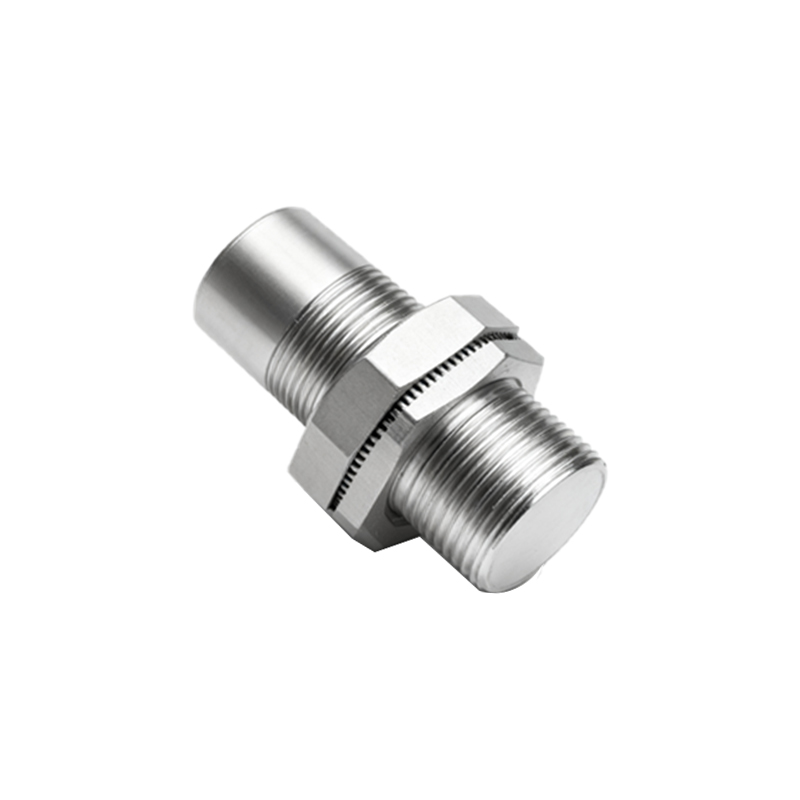
Operationally, most ultra-short M6 sensors employ an inductive sensing principle. They generate a high-frequency electromagnetic field from an oscillator coil housed within the miniature body. When a metallic target (typically ferrous metals like steel or iron, with reduced sensing ranges for non-ferrous metals like aluminum or copper) enters this field, eddy currents are induced in the target. This causes a change in the oscillation amplitude, which is detected by the sensor's circuitry. The output is then switched, providing a clean, binary signal to a programmable logic controller (PLC) or other control unit. Common output configurations include PNP (sourcing), NPN (sinking), and analog (4-20mA or 0-10V) versions, with 2-wire and 3-wire DC options being prevalent. Key performance parameters include the nominal sensing distance (Sn), which for an ultra-short M6 inductive sensor is typically between 1mm and 2mm for steel. The repeat accuracy is exceptionally high, often within microns, making them suitable for precise positioning tasks.
The primary advantage of the ultra-short M6 design is its ability to be installed in extremely tight spaces where traditional sensors simply cannot fit. This is crucial in modern, high-density machinery, robotic end-effectors, small assembly modules, and miniature linear actuators. Their compact size minimizes the risk of mechanical collision and allows for more elegant, integrated machine designs. Furthermore, the reduced mass can be beneficial in applications subject to high vibration or rapid acceleration, as it lowers inertial forces. Many models feature embedded LEDs for operational status indication and offer short-circuit and reverse polarity protection, enhancing reliability in harsh electrical environments.
Selecting the appropriate ultra-short M6 sensor requires careful consideration of several factors beyond just size. The target material and required sensing distance are fundamental. Engineers must also evaluate the operating voltage range (commonly 10-30V DC), current rating, switching frequency capability, and environmental ratings such as IP67 or IP69K for protection against water and dust ingress. For applications involving different target materials or non-standard conditions, consulting the manufacturer's derating curves is essential. Mounting is another critical aspect; while the threaded barrel allows for easy installation, ensuring proper flush or non-flush mounting conditions as specified is vital for achieving the advertised sensing performance. Non-flush mountable models offer a slightly longer sensing range but require more clearance around the sensing face.
In conclusion, ultra-short M6 proximity switch sensors are a testament to the trend of "more performance in less space" within industrial automation. Their development addresses the growing need for miniaturization without compromising on the reliability, speed, and accuracy demanded by advanced manufacturing and robotics. By understanding their technical nuances and application-specific requirements, engineers can effectively leverage these powerful components to optimize machine design, enhance functionality, and solve complex spatial challenges on the factory floor. As technology progresses, we can anticipate further refinements in sensing distance, embedded intelligence, and material resilience in these already impressive compact devices.