The landscape of industrial automation and precision measurement is undergoing a transformative shift, driven significantly by advancements in laser sensor technology. As demand for higher accuracy, reliability, and efficiency grows across sectors like automotive manufacturing, robotics, logistics, and aerospace, a new generation of laser sensor manufacturers is emerging. These companies are not merely producing components; they are engineering sophisticated solutions that redefine the boundaries of what is possible in non-contact sensing. This article explores the key innovations and contributions of these leading manufacturers, highlighting the trends that are setting new industry standards.
At the core of modern laser sensors lies the principle of using laser light to detect, measure, or profile objects without physical contact. Traditional methods often involved mechanical probes or simpler optical systems, which were prone to wear, environmental interference, and speed limitations. Today's advanced laser sensors utilize state-of-the-art technologies such as time-of-flight (ToF), triangulation, confocal chromatic, and interferometric principles. Manufacturers are integrating these with powerful embedded processors and intelligent software algorithms. This fusion enables real-time data processing, sub-micron level accuracy, and the ability to function in challenging conditions—be it extreme temperatures, varying surface textures, or high-vibration environments. The result is a sensor that is not just a data point collector but a critical decision-making node within a smart factory ecosystem.
Several pioneering manufacturers are at the forefront of this revolution. Companies like Keyence, Sick AG, and Banner Engineering have long been stalwarts, continuously pushing R&D boundaries. Keyence, for instance, has developed ultra-high-speed laser displacement sensors capable of microsecond-level response times, crucial for inspecting fast-moving production lines. Sick AG has made significant strides in safety-rated laser scanners for autonomous mobile robots (AMRs), ensuring safe human-robot collaboration. Meanwhile, newer or more specialized players, such as Micro-Epsilon and Omron, are focusing on niche applications with remarkable precision. Micro-Epsilon's confocal chromatic sensors, for example, can measure thickness, distance, and vibration on even transparent or glossy surfaces with nanometer resolution, a boon for the semiconductor and electronics industries.
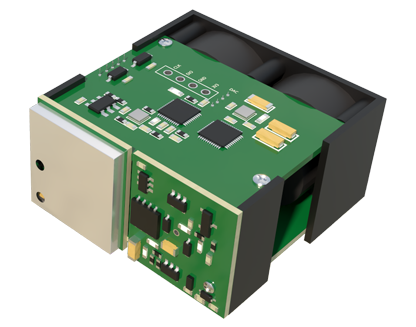
The current trend among these leading manufacturers is a strong emphasis on connectivity and Industry 4.0 readiness. Modern laser sensors are increasingly equipped with industrial Ethernet protocols like EtherCAT, PROFINET, and IO-Link. This allows for seamless integration into larger networked systems, enabling centralized monitoring, predictive maintenance, and data analytics. A sensor can now communicate not just its primary measurement but also its health status, calibration needs, and environmental operating conditions. Furthermore, the miniaturization of components has led to the development of incredibly compact sensor heads without compromising performance. This is vital for integration into space-constrained robotic grippers or intricate assembly machines.
Another critical area of innovation is in software and user experience. Leading manufacturers provide sophisticated, yet intuitive, configuration software. These platforms allow engineers to set complex measurement parameters, create application-specific logic, and visualize data in real-time through dashboards. Some systems incorporate machine learning capabilities, enabling the sensor to "learn" and adapt to slight variations in target objects, thereby reducing false readings and setup time. This shift from a hardware-centric to a software-enhanced product philosophy empowers end-users to deploy complex sensing solutions with greater ease and flexibility.
The application spectrum for these advanced laser sensors is vast and expanding. In automotive manufacturing, they ensure precise weld seam tracking, robot guidance, and 100% inline inspection of critical components. In logistics, they facilitate high-speed parcel dimensioning, palletizing, and automated guided vehicle (AGV) navigation. In electronics, they are indispensable for PCB inspection, component placement verification, and wafer alignment. The environmental robustness of newer models also opens doors for outdoor applications in agriculture for crop monitoring or in infrastructure for deformation monitoring.
Looking ahead, the trajectory for laser sensor manufacturers is clear: smarter, faster, smaller, and more connected. The integration of artificial intelligence for edge computing, the development of multispectral laser sensing, and enhanced resistance to cyber-physical threats are likely the next frontiers. Collaboration between sensor manufacturers, system integrators, and end-users will be paramount to tailor solutions for increasingly complex industrial challenges. As these technologies mature and costs become more accessible, the adoption of high-performance laser sensors will move from high-end applications to become a standard in mainstream automation, driving unprecedented levels of productivity and quality control across the global industrial base.
In conclusion, the new wave of laser sensor manufacturers is fundamentally enabling the smart, agile, and data-driven factories of the future. Their relentless pursuit of innovation in hardware, software, and system integration ensures that laser sensing remains a pivotal technology, transforming raw data into actionable intelligence and paving the way for the next industrial revolution.