Laser thermal imaging sensors represent a significant leap forward in non-contact temperature measurement and thermal analysis technologies. By combining laser precision with infrared imaging capabilities, these advanced sensors enable real-time, high-resolution thermal mapping across various industrial applications. The core technology involves emitting a laser beam that interacts with the target surface, while an integrated infrared detector captures the resulting thermal radiation. This dual mechanism allows for unparalleled accuracy in temperature readings, even in challenging environments with moving objects, reflective surfaces, or variable emissivity.
One of the primary advantages of laser thermal imaging sensors is their ability to measure temperature without physical contact, eliminating contamination risks and wear on the sensor itself. In manufacturing, these sensors are indispensable for monitoring equipment health, detecting overheating components in machinery, and ensuring product quality during processes like welding, casting, or additive manufacturing. For instance, in automotive production lines, they verify engine block temperatures post-machining, preventing defects due to thermal stress. The aerospace sector relies on them for inspecting composite materials and turbine blades, where precise thermal profiles are critical for structural integrity.
Recent technological advancements have enhanced the spatial resolution and thermal sensitivity of these sensors, with some models achieving temperature detection ranges from -40°C to over 3000°C. Innovations in algorithms and machine learning integration allow for automated anomaly detection, predicting failures before they occur by analyzing thermal patterns over time. This predictive maintenance capability reduces downtime and operational costs significantly. Additionally, portable laser thermal imaging devices have emerged, enabling field inspections in energy sectors—such as monitoring solar panels, electrical substations, or pipeline systems—for hotspots indicating inefficiencies or hazards.
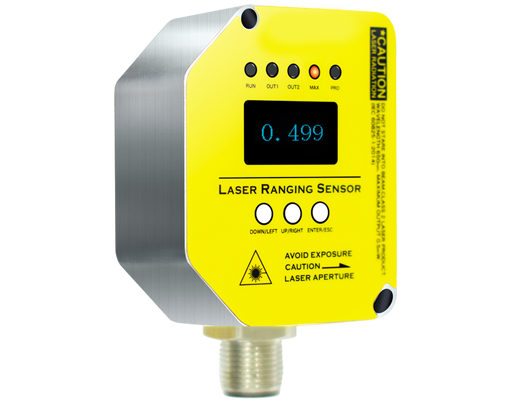
Environmental adaptability is another key feature, with sensors designed to operate in extreme conditions, including high humidity, dust, or vibration. They are increasingly used in research and development, such as in electronics to assess heat dissipation in circuit boards or in biomedical engineering for non-invasive diagnostics. Despite their benefits, challenges remain, including calibration requirements and cost barriers for small-scale operations. However, as industries embrace Industry 4.0 and IoT connectivity, laser thermal imaging sensors are becoming integral to smart factories, providing data for digital twins and automated control systems.
Looking ahead, trends point toward miniaturization and enhanced integration with other sensing modalities, like LiDAR or hyperspectral imaging, for comprehensive monitoring solutions. As global standards for safety and efficiency tighten, the demand for these sensors is projected to grow, driven by sectors like renewable energy, where they optimize thermal management in batteries and solar farms. Ultimately, laser thermal imaging sensors are not just tools for measurement but enablers of innovation, fostering safer, more efficient industrial practices through precise thermal intelligence.