In the realm of industrial automation, circular laser distance sensors have emerged as pivotal components, revolutionizing measurement accuracy and operational efficiency. These sensors utilize laser triangulation or time-of-flight principles to deliver non-contact distance measurements with exceptional precision. The circular design, often characterized by a compact, cylindrical housing, offers distinct advantages in various applications, from robotics to quality control.
The fundamental operation of circular laser distance sensors involves emitting a focused laser beam toward a target surface. The reflected light is captured by a receiver within the sensor, and through sophisticated algorithms, the distance is calculated based on the beam's angle or travel time. This process enables real-time, high-resolution measurements, typically with accuracies reaching micrometer levels. The circular form factor enhances versatility, allowing for easy integration into tight spaces and rotating mechanisms, such as in CNC machinery or automated assembly lines.
One of the key benefits of circular laser distance sensors is their robustness in challenging environments. Designed to withstand vibrations, dust, and temperature fluctuations, they ensure reliable performance in manufacturing plants and outdoor settings. For instance, in automotive industries, these sensors are deployed for precise part alignment and thickness inspection, minimizing errors and reducing waste. Similarly, in logistics, they facilitate automated sorting and palletizing by accurately detecting object positions and dimensions.
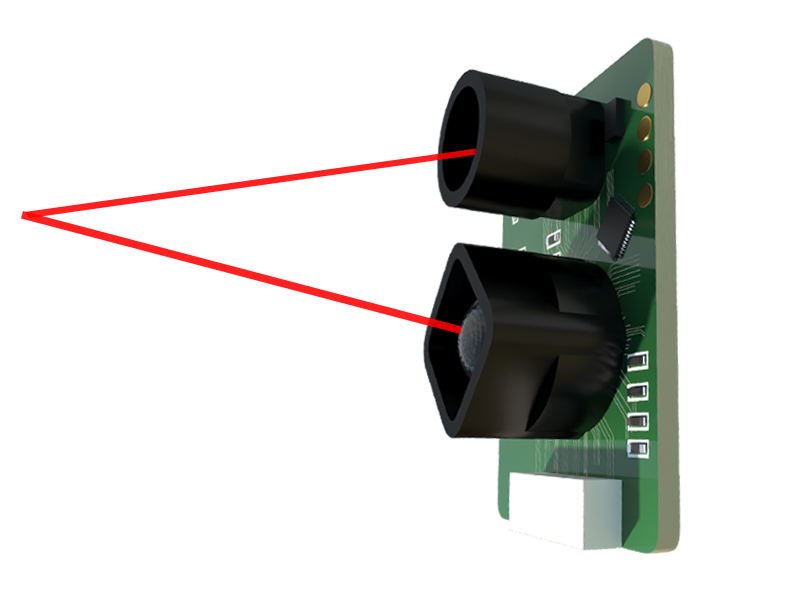
Advancements in technology have further expanded the capabilities of circular laser distance sensors. Modern versions incorporate features like adjustable focus, multiple measurement modes, and connectivity options (e.g., Ethernet, IO-Link) for seamless data transmission to control systems. This integration supports Industry 4.0 initiatives, enabling predictive maintenance and smart factory operations. Additionally, energy-efficient designs and long operational lifespans contribute to sustainability goals, lowering overall costs.
Despite their advantages, selecting the right circular laser distance sensor requires careful consideration of factors such as measurement range, resolution, and environmental conditions. Engineers must assess application-specific needs to optimize performance. For example, in high-speed production lines, sensors with fast response times are crucial to maintain throughput. Regular calibration and maintenance are also essential to preserve accuracy over time.
In conclusion, circular laser distance sensors represent a critical innovation in industrial automation, driving precision and productivity across sectors. Their circular design, combined with advanced laser technology, offers a reliable solution for diverse measurement challenges. As industries continue to evolve toward greater automation, these sensors will play an increasingly vital role in shaping efficient and intelligent systems.