In the realm of computer peripherals, the evolution of the wireless mouse has been significantly driven by advancements in sensor technology, particularly the adoption of laser sensors. Unlike traditional optical sensors that rely on LED light and surface reflection, laser sensors utilize a coherent laser beam to track movement with exceptional accuracy. This technology has become a cornerstone for professionals and enthusiasts who demand high precision in graphic design, gaming, and general productivity.
The core principle behind a laser sensor involves emitting an invisible laser beam onto the surface below the mouse. This beam penetrates microscopic textures more effectively than LED light, allowing the sensor to capture detailed images at a much higher resolution. Typically, laser sensors offer DPI (Dots Per Inch) ratings ranging from 2000 to over 16000, enabling users to adjust sensitivity for ultra-fine cursor control or rapid sweeping motions across multiple monitors. The enhanced tracking capability ensures consistent performance on a variety of surfaces, including glossy desks, wooden tables, and fabric mousepads, where optical sensors might struggle.
One of the key advantages of laser sensors in wireless mice is their power efficiency. Modern laser sensors are designed to consume minimal energy, which is crucial for battery-operated devices. Many wireless models incorporate intelligent power management systems that put the sensor into a low-power sleep mode during inactivity, thereby extending battery life without compromising responsiveness. This efficiency, combined with advanced wireless protocols like Bluetooth 5.0 or proprietary 2.4GHz RF connections, ensures a reliable, lag-free experience that rivals wired counterparts.
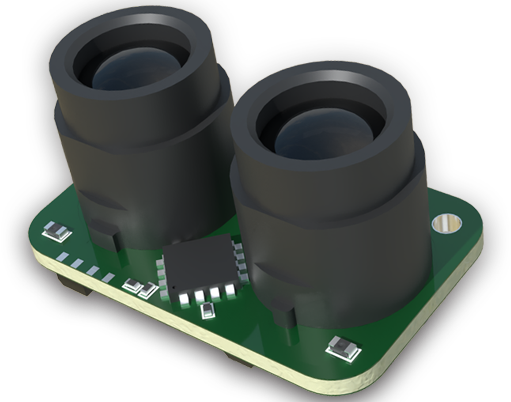
However, laser sensors are not without limitations. Some users report issues with "acceleration," where cursor speed varies based on how quickly the mouse is moved, which can be problematic in competitive gaming scenarios requiring consistent tracking. Manufacturers have addressed this through firmware updates and custom calibration software, allowing users to fine-tune sensor behavior. Additionally, the higher cost of laser components often makes these mice more expensive than basic optical models, though the price gap has narrowed as technology matures.
Looking ahead, innovations in laser sensor technology continue to emerge. Features like adjustable lift-off distance (the height at which the sensor stops tracking) and surface calibration are becoming standard in high-end wireless mice. Integration with AI-driven software for predictive tracking and gesture recognition is also on the horizon, promising to enhance user interaction further. For professionals in fields such as CAD design or video editing, where pixel-perfect accuracy is essential, laser sensors remain the preferred choice due to their reliability and precision.
In summary, the laser sensor in wireless mice represents a fusion of engineering excellence and practical utility. By delivering superior tracking, energy efficiency, and versatility, it has redefined expectations for peripheral performance. As wireless technology advances, laser sensors will likely evolve to offer even greater responsiveness and customization, solidifying their role in the future of computing interfaces.