In the realm of industrial automation and machinery, proximity sensors are indispensable components for non-contact detection, position sensing, and object counting. Among the various types, inductive proximity sensors, particularly those designed to detect metallic objects like copper nuts, play a critical role. This article delves into the operational principles, design considerations, and typical applications of copper nut proximity sensors, providing a technical overview for engineers and technicians.
The fundamental principle behind an inductive proximity sensor is electromagnetic induction. The core component is a coil wound around a ferrite core, which is part of an oscillator circuit. When an alternating current passes through this coil, it generates a high-frequency oscillating electromagnetic field at the active face (sensing surface) of the sensor. In the absence of a metallic target within its sensing range, the oscillator operates at a stable amplitude.
When a conductive metal object, such as a copper nut, enters this alternating electromagnetic field, eddy currents are induced on the surface of the metal. These eddy currents create their own magnetic field, which opposes the original field generated by the sensor coil, following Lenz's Law. This opposition results in a loss of energy or a "damping" effect within the oscillator circuit. The amplitude of the oscillations decreases. A subsequent evaluation circuit within the sensor monitors this amplitude change. Once the damping exceeds a predefined threshold—corresponding to the target entering the specified sensing distance—the sensor's output state switches. This switch typically controls a solid-state switch (like a transistor) to provide a digital signal (ON/OFF) to a programmable logic controller (PLC) or other control system.
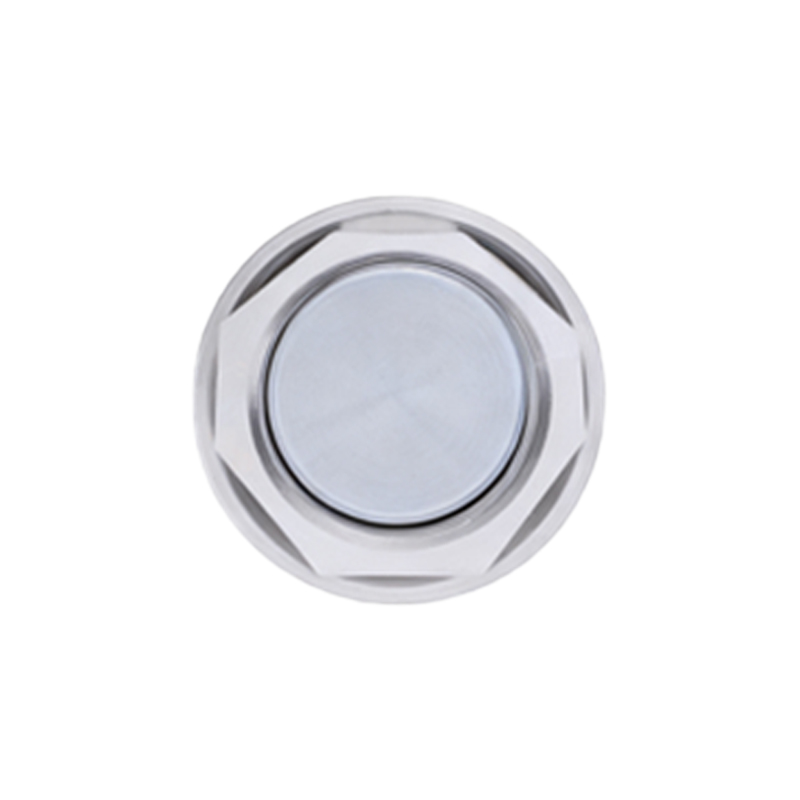
Copper, being a highly conductive non-ferrous metal, is effectively detected by standard inductive sensors. However, its detection presents specific characteristics. The sensing distance for a copper nut is typically shorter than for a ferrous metal (like iron or steel) of the same size and shape. This is because the "penetration depth" of eddy currents in good conductors like copper is shallow, concentrating the energy loss effect on the very surface. Engineers must refer to the sensor's datasheet, which usually specifies a reduction factor (e.g., 0.3 to 0.4 for copper) applied to the nominal sensing distance (Sn) defined for mild steel. For instance, a sensor with an Sn of 10mm for steel might only detect a same-sized copper nut from approximately 3-4mm away.
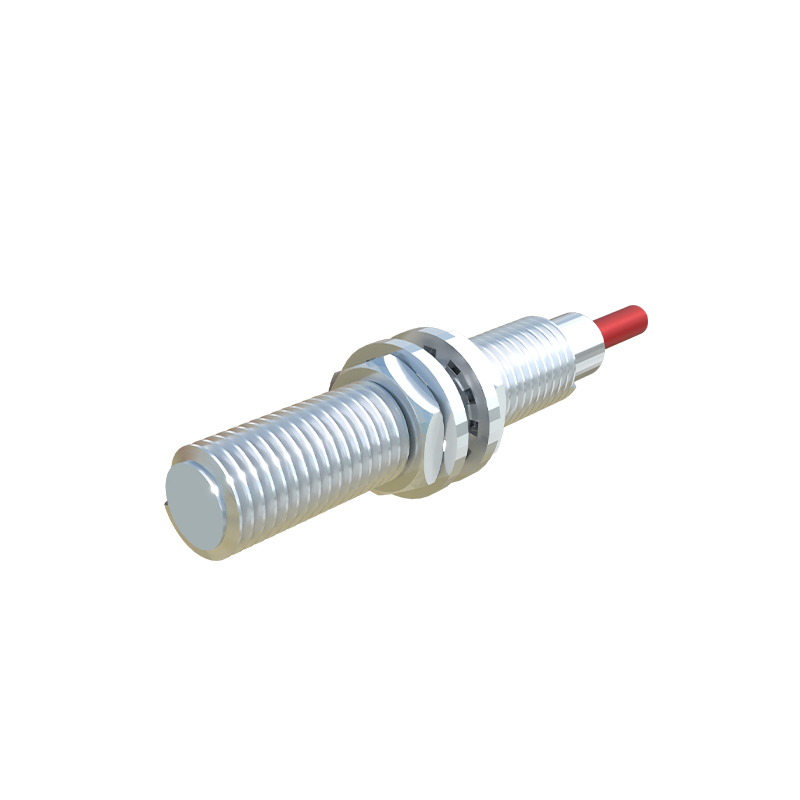
The design and selection of a sensor for detecting copper nuts involve several key parameters. First is the sensing distance: it must be chosen with the copper reduction factor in mind to ensure reliable operation without false triggers. Second, the sensor housing and form factor (e.g., cylindrical M8, M12, M18, or rectangular) must suit the mechanical installation constraints. Shielded (flush-mountable) or unshielded (non-flush) designs are selected based on the mounting environment; shielded sensors can be mounted flush in metal without affecting their sensing field, which is often preferable in dense machinery. The output type (PNP/NPN, NO/NC) must be compatible with the control system's input card. Switching frequency is crucial for high-speed applications like counting nuts on a conveyor. Environmental factors like IP rating (for dust and water resistance) and temperature range are also vital for longevity.
Typical applications in automation are numerous. On assembly lines, these sensors verify the presence or absence of a copper nut before a robotic arm proceeds with a tightening operation, ensuring quality control. In vibratory bowl feeders or sorting systems, they count copper nuts for packaging or detect jams. They are used for position verification in CNC machine tool changers or to confirm the correct seating of a nut in a fixture. Their non-contact nature ensures no wear and tear on the nut itself, providing maintenance-free and highly reliable operation over millions of cycles.
In conclusion, copper nut proximity sensors are specialized inductive devices that leverage the physics of eddy current generation. Their reliable, non-contact detection capability is foundational to modern automated manufacturing. A thorough understanding of their operating principle, coupled with careful selection based on application-specific parameters, allows engineers to design robust and efficient sensing solutions that enhance productivity and system reliability.