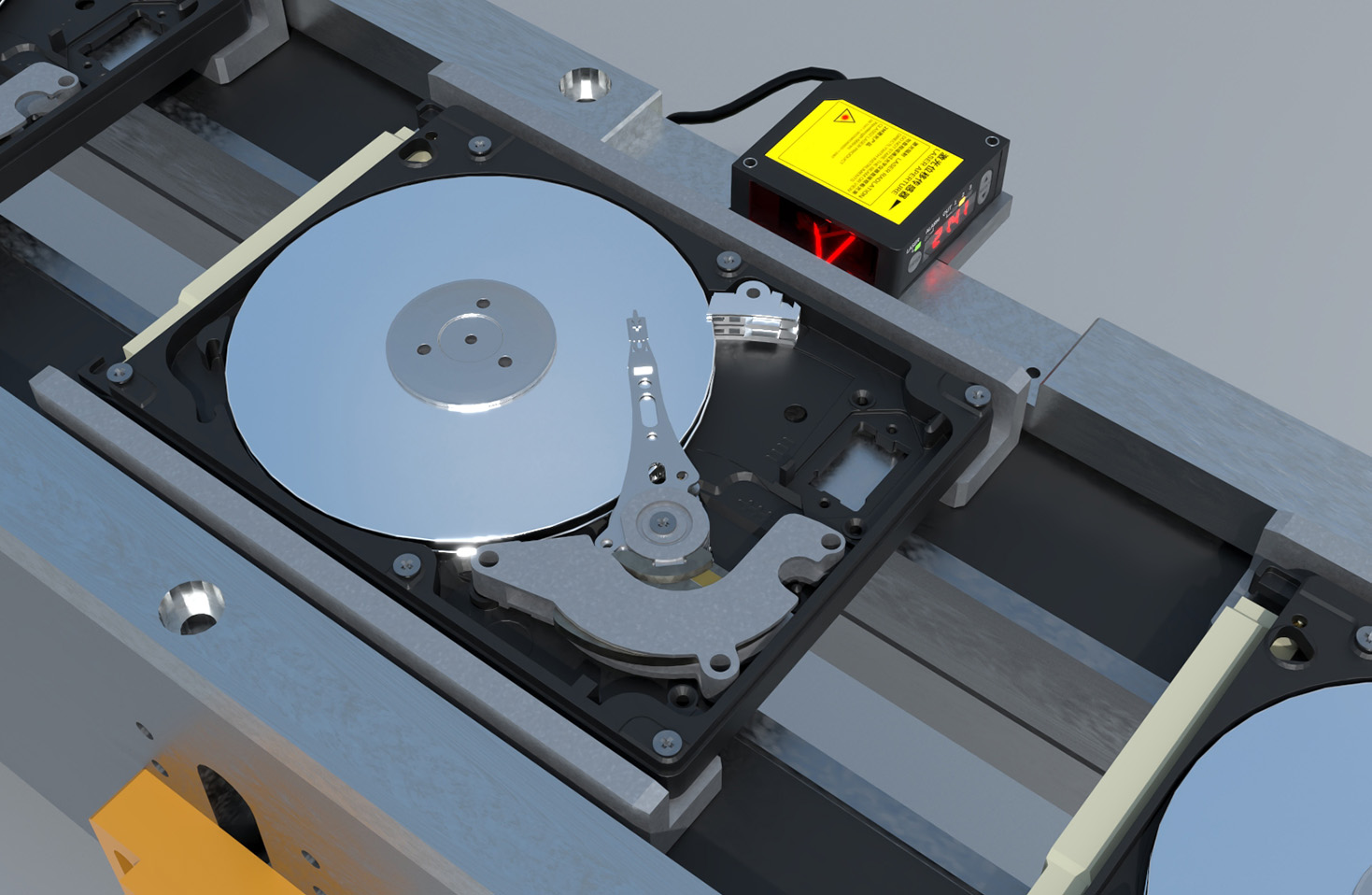
In the rapidly evolving landscape of industrial automation and precision measurement, micro-micron laser sensors have emerged as a cornerstone technology. These sophisticated devices, capable of detecting displacements, vibrations, and dimensions with resolutions reaching the sub-micron level, are revolutionizing quality control, process monitoring, and robotic guidance across numerous sectors. Unlike conventional contact-based measurement tools or older optical sensors, modern micro-micron laser sensors offer non-contact, high-speed, and exceptionally accurate data acquisition, making them indispensable in environments where precision is paramount.
The fundamental operating principle of these sensors is based on laser triangulation or confocal measurement techniques. In a typical triangulation sensor, a laser diode projects a focused spot onto the target surface. The reflected light is captured by a precision lens and focused onto a position-sensitive detector, such as a CCD or CMOS array. Any change in the target's distance causes the reflected spot to shift position on the detector. This shift is analyzed by onboard processors to calculate the exact displacement with micron or sub-micron accuracy. Confocal chromatic sensors, another prevalent type, use white light and spectral analysis to achieve even higher precision, particularly on challenging surfaces like transparent or highly reflective materials.

The applications for micro-micron laser sensors are vast and varied. In the semiconductor and electronics manufacturing industry, they are critical for wafer inspection, wire bonding control, and component placement, where tolerances are often measured in nanometers. The automotive sector relies on them for precise gap and flush measurement on vehicle bodies, thickness monitoring of paint and coatings, and real-time inspection of engine components. In pharmaceutical production, these sensors ensure the exact fill level in vials and the integrity of blister packs. Furthermore, they are pivotal in micromachining, where they provide real-time feedback for CNC systems to maintain cutting or milling accuracy, and in robotics, enabling precise object detection and positioning for assembly tasks.
Key advantages driving their adoption include their non-contact nature, which eliminates mechanical wear and prevents damage to delicate surfaces. They provide high measurement speed, often in the kilohertz range, allowing for 100% inline inspection without slowing down production lines. Their robustness is another significant benefit; many models are designed with IP67 ratings to withstand harsh industrial environments involving dust, coolant, and vibration. Modern sensors also feature integrated intelligence, such as digital interfaces (EtherCAT, PROFINET, IO-Link) and advanced software for data logging, statistical process control (SPC), and easy integration into Industry 4.0 frameworks.
However, the implementation of micro-micron laser sensors is not without challenges. Surface characteristics—including color, reflectivity, texture, and transparency—can significantly impact measurement accuracy. A highly reflective or matte black surface may require specific sensor models or auxiliary lighting setups. Environmental factors like ambient light, temperature fluctuations, and airborne contaminants must also be controlled or compensated for. Therefore, proper sensor selection, based on the specific application requirements and environmental conditions, is crucial. Consulting with technical specialists and conducting on-site trials is often recommended to ensure optimal performance.

Looking ahead, the future of micro-micron laser sensor technology is geared towards even greater miniaturization, higher speeds, and enhanced smart capabilities. The integration of artificial intelligence and machine learning algorithms directly into sensor firmware will enable predictive maintenance, advanced anomaly detection, and adaptive calibration. Furthermore, the development of multi-point and profile sensors, which can measure an entire line or area instead of a single point, is expanding their utility for complex 3D inspections. As industries continue to push the boundaries of precision manufacturing and smart automation, the role of the micro-micron laser sensor will only become more central, acting as the critical "eyes" of modern intelligent factories.