In the realm of industrial automation and machinery, proximity sensors play a pivotal role in enabling non-contact detection, enhancing efficiency, and ensuring operational safety. Among the diverse range of sensors available, the GX130MA stands out as a reliable and widely utilized inductive proximity sensor. This article delves into the technical specifications, operational principles, common applications, and key considerations for selecting and implementing the GX130MA sensor.
The GX130MA is typically an inductive-type proximity sensor. Inductive sensors operate on the principle of electromagnetic induction. The sensor generates an oscillating electromagnetic field from its sensing face. When a metallic object (the target) enters this field, eddy currents are induced within the target. This causes a change in the oscillation amplitude or frequency within the sensor's internal circuit. The sensor's electronics detect this change and trigger a switching action, typically by changing the state of its output signal. The "GX" series often denotes a cylindrical housing, and "130" likely refers to the housing diameter in millimeters, which is a standard M30 size. The "MA" suffix may indicate specific output type, connection style, or sensing distance variations, though exact interpretation can vary by manufacturer. It is crucial to consult the specific manufacturer's datasheet for precise details.
Key features of the GX130MA series generally include robust construction in a metal or durable plastic housing, offering high resistance to environmental factors like oil, coolant, and dust, often conforming to IP67 or higher ingress protection ratings. The standard sensing distance for an M30 inductive sensor is often up to 15mm, but specific models like the GX130MA may have a rated operating distance (Sn) defined precisely in its documentation. These sensors usually provide a stable, repeatable detection point. The output is commonly a DC 3-wire configuration (PNP or NPN transistor output) or sometimes a 2-wire AC/DC version, providing compatibility with various programmable logic controllers (PLCs) and control systems. Many models feature a built-in LED status indicator for easy diagnostics. Their design is optimized for easy installation using standard nuts in machined holes.
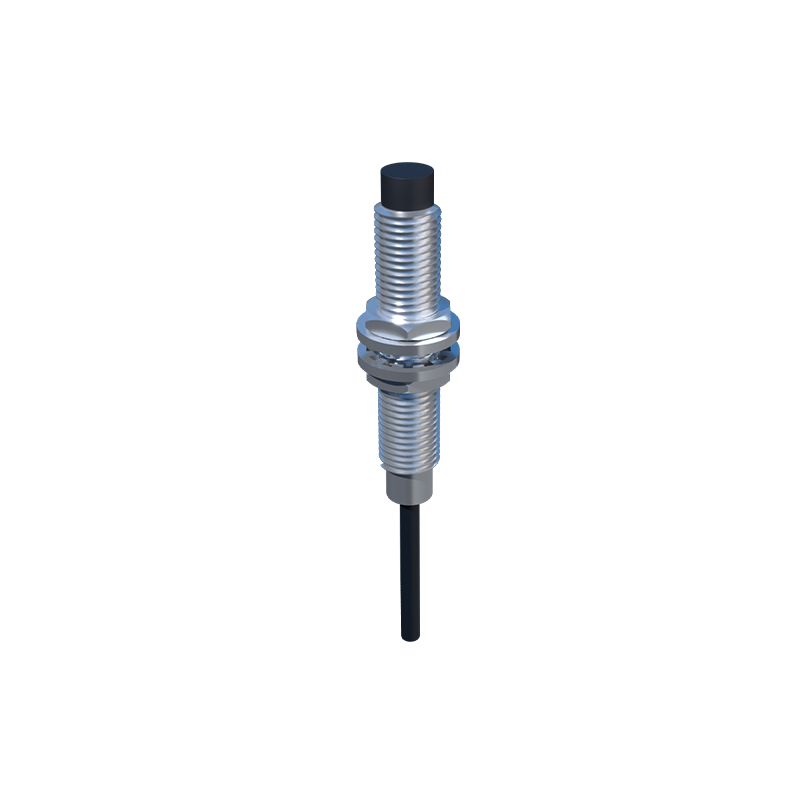
The applications for the GX130MA proximity sensor are extensive across manufacturing and processing industries. Common uses include position sensing, such as detecting the presence or absence of a metal part on a conveyor, verifying the end position of a cylinder rod in pneumatic or hydraulic systems, and confirming the closure of a metal door or guard. They are integral in counting metallic objects passing a point on a production line. In machine tools, they serve as limit switches to prevent over-travel of slides or spindles. Their robust nature makes them suitable for harsh environments found in automotive assembly, metal stamping, packaging machinery, and material handling systems. The non-contact nature eliminates mechanical wear, ensuring long-term reliability and reducing maintenance needs compared to mechanical limit switches.
When selecting a GX130MA sensor for a specific application, several factors must be evaluated. First, confirm the target material; standard inductive sensors only detect metals, with different detection ranges for steel, aluminum, and copper. The required sensing distance should be chosen with a safety margin, typically 70-80% of the rated distance, to account for installation tolerances and temperature variations. The electrical characteristics are paramount: ensure the supply voltage (e.g., 10-30V DC) matches your control system, and select the correct output type (PNP-sourcing or NPN-sinking) to interface properly with your PLC input module. The output current rating must not be exceeded. Environmental conditions like ambient temperature, exposure to chemicals, or potential for physical impact dictate the required housing material (e.g., stainless steel for corrosive areas) and IP rating. Finally, consider the electrical connection method—pre-wired cable or quick-disconnect connector—based on maintenance and installation preferences.
Proper installation and wiring are critical for optimal performance. The sensor should be mounted securely, ensuring the target approaches the sensing face axially for maximum range. Lateral or flush mounting (where the sensor is recessed in a metal bracket) reduces the effective sensing distance and must be accounted for using correction factors from the datasheet. Maintain adequate clearance between multiple sensors to prevent mutual interference. For wiring, strictly follow the manufacturer's pinout diagram. For a 3-wire DC sensor, connect the brown wire (typically) to positive voltage (+V), the blue wire to common negative (0V), and the black wire as the switched output signal. Always implement electrical protection, such as fuses or surge suppressors, in inductive load circuits to protect the sensor's solid-state output.
In summary, the GX130MA proximity sensor represents a fundamental component in modern industrial control systems. Its durability, reliability, and versatility in detecting metallic objects make it a go-to choice for engineers and technicians.