Capacitive proximity sensors are versatile electronic devices widely used in industrial automation, manufacturing, and consumer electronics for non-contact detection of objects. Unlike inductive sensors that only detect metals, capacitive sensors can sense a variety of materials, including liquids, plastics, glass, and wood, by measuring changes in capacitance. This article explores the common types of capacitive proximity sensors and explains their fundamental working principles in detail.
Types of Capacitive Proximity Sensors:
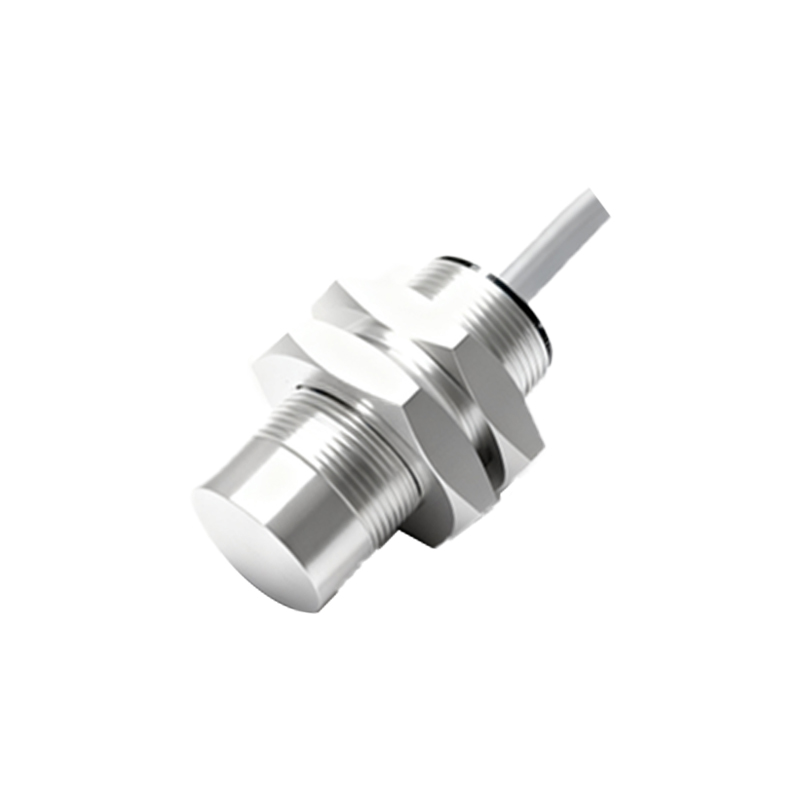
1. Standard Cylindrical Sensors: These are the most common type, housed in a cylindrical metal or polymer body. They are suitable for general-purpose applications such as object presence detection on conveyor belts or level sensing in containers.
2. Flat-pack or Rectangular Sensors: Designed with a low-profile housing, these sensors are ideal for installations with space constraints. They often feature a larger sensing area and are used in packaging machinery or assembly lines.
3. Analog Output Sensors: Instead of a simple on/off signal, these sensors provide a continuous analog output (e.g., 4-20 mA or 0-10 V) proportional to the distance or material properties. They are employed in applications requiring precise measurement, like thickness monitoring or fill level control.
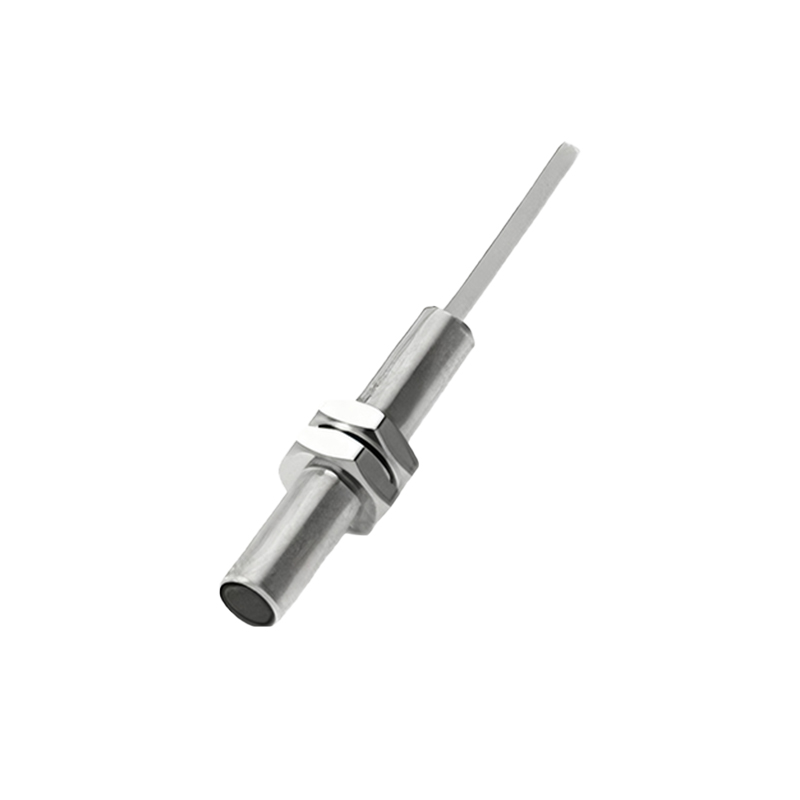
4. High-temperature Sensors: Built with specialized materials and insulation, these sensors operate reliably in extreme environments, such as foundries or ovens, where temperatures may exceed 100°C.
5. Washdown or Hygienic Sensors: Featuring stainless steel housings and sealed designs, they resist water, chemicals, and contaminants, making them perfect for food processing, pharmaceuticals, and cleanrooms.
Working Principles:
The core operation of a capacitive proximity sensor is based on the principle of capacitance, which is the ability of a system to store an electrical charge. A capacitive sensor typically consists of an oscillator circuit, a sensing electrode (often the sensor face itself), and a detection circuit. When no target object is present, the oscillator generates a stable electrical field around the sensing electrode. As a target object enters this field, it alters the dielectric properties between the electrode and ground, causing a change in capacitance. This change affects the oscillator's amplitude or frequency. The detection circuit monitors these variations and triggers an output signal (e.g., switching a relay or transistor) when the change exceeds a predefined threshold. Factors influencing sensitivity include the target material's dielectric constant, size, distance, and environmental conditions like humidity.
Key advantages of capacitive sensors include their ability to detect non-metallic objects, insensitivity to color or surface texture, and robustness in dusty or dirty environments. However, they may be affected by conductive contaminants or extreme moisture. Proper installation and calibration, such as adjusting the sensitivity potentiometer, are essential for optimal performance. In summary, capacitive proximity sensors offer a reliable solution for diverse detection tasks, enhancing efficiency and automation in modern industrial systems.