In today's world, air quality monitoring has become increasingly critical for health, safety, and environmental management. At the heart of many modern air monitoring devices lies a sophisticated technology: the laser particle sensor. This article delves into the principles, applications, and significance of these sensors, explaining their operation in clear terms without relying on overly technical jargon.
A laser particle sensor functions by using a focused beam of light to detect and measure particulate matter (PM) in the air. The core components typically include a laser diode, a photodetector, and a controlled air sampling chamber. As airborne particles are drawn through the sensing chamber, they pass through the path of the laser beam. When a particle intersects the beam, it scatters the light. This scattered light is then collected by the photodetector, which converts the light signals into electrical pulses. The characteristics of these pulses—such as their intensity and frequency—are analyzed by the sensor's onboard processor. By interpreting this data, the sensor can determine the concentration of particles in the air and often estimate their size distribution, commonly categorized as PM1.0, PM2.5, and PM10.
The advantages of laser-based detection are substantial. Compared to older methods like gravimetric analysis or light-scattering without lasers, these sensors offer real-time data, high sensitivity to fine particles, and relatively compact size. They can detect particles as small as 0.1 microns, making them invaluable for identifying pollutants like dust, smoke, allergens, and even some bacteria. Their responsiveness allows for immediate feedback, which is crucial in applications ranging from industrial safety to smart home devices.

Applications for laser particle sensors are vast and growing. In consumer electronics, they are integrated into air purifiers, HVAC systems, and portable air quality monitors, providing users with actionable information about their indoor environment. In industrial settings, they ensure workplace safety by monitoring for hazardous dust in factories, mines, or construction sites. Environmental agencies deploy them in stationary and mobile stations to track urban pollution levels and assess compliance with air quality standards. Furthermore, they play a role in scientific research, helping to study atmospheric composition and the spread of aerosols.
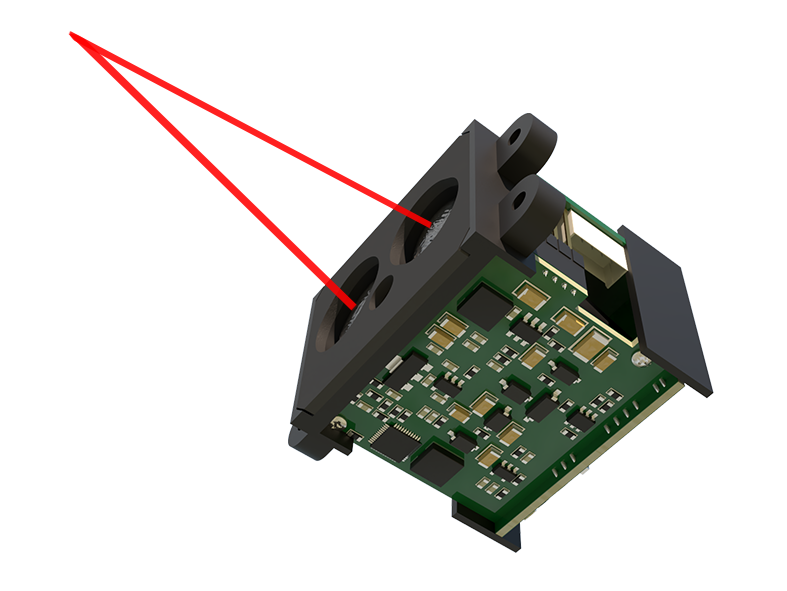
Despite their effectiveness, laser particle sensors have limitations. Their readings can be influenced by factors like humidity, particle composition, and very high concentrations that may cause coincidence errors. Calibration against reference instruments is often necessary for high-precision applications. However, ongoing advancements in optics, algorithms, and miniaturization continue to enhance their accuracy and affordability.
Understanding how these sensors work empowers individuals and organizations to make informed decisions about air quality management. As awareness of airborne risks increases, the demand for reliable, accessible monitoring technology will only grow. Laser particle sensors, with their blend of precision and practicality, are poised to remain essential tools in our collective effort to breathe cleaner air.