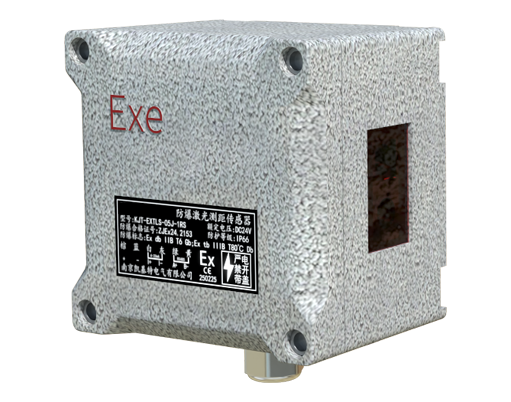
Laser displacement sensors are non-contact measurement devices that utilize laser technology to determine the distance to a target object. They operate by projecting a focused laser beam onto the target surface. The sensor then detects the position of the reflected light spot using a receiving element, such as a Position Sensitive Detector (PSD) or a Charge-Coupled Device (CCD) image sensor. By calculating the angle or position shift of the reflected beam, the sensor precisely computes the distance to the object. This principle allows for high-speed, high-accuracy measurements without physically touching the target, making them ideal for applications where contact could cause damage or measurement error.
There are primarily two measurement methods employed: the triangulation method and the time-of-flight (TOF) method. The triangulation method is most common for short to medium-range measurements requiring micron-level accuracy. In this setup, the laser emitter, the receiving lens, and the detection element form a triangular relationship. As the target distance changes, the position of the reflected light spot on the detector shifts linearly. This shift is converted into an electrical signal and processed to output a precise distance value. This method excels in applications like thickness gauging, vibration analysis, and profile measurement on production lines.
The time-of-flight method, often used for longer ranges, measures the time it takes for a laser pulse to travel to the target and back. Since the speed of light is constant, the distance is calculated directly from this time interval. While typically offering slightly lower resolution than triangulation over short distances, TOF sensors are excellent for measuring larger distances, such as in level monitoring of bulk materials or vehicle detection.
Key advantages of laser displacement sensors include their exceptional resolution and repeatability. They can detect minute changes in position, often down to the sub-micron level. Their non-contact nature eliminates issues like probe wear or surface deformation. Furthermore, they perform well on a variety of surface materials, including metals, plastics, glass, and even liquids, though surface color, reflectivity, and texture can influence performance. Manufacturers often provide models with different laser wavelengths or specialized algorithms to handle challenging surfaces like transparent materials or highly reflective metals.

The output from these sensors is typically an analog voltage or current signal, or a digital value via interfaces like Ethernet or RS-485. This data can be easily integrated into control systems, data loggers, or quality inspection software. Common industrial applications are vast. They are used for real-time thickness measurement of rolled metals or plastics, precise height inspection of electronic components, monitoring of part presence or absence on assembly lines, and controlling robot positioning. In research and development, they are indispensable for measuring deformation, vibration, and dimensional characteristics.
When selecting a laser displacement sensor, critical parameters to consider are measurement range, resolution, linearity error, sampling speed, and spot size. The required measurement range dictates the sensor model. Resolution defines the smallest detectable change. Linearity error indicates the maximum deviation from a perfect straight-line output across the range. A high sampling speed is necessary for measuring fast-moving or vibrating objects. The laser spot size determines the minimum feature that can be measured; a smaller spot allows for more precise measurement of edges or small parts. Environmental factors like ambient light, temperature, and dust must also be evaluated to ensure stable operation.
In summary, laser displacement sensors provide a robust, accurate, and versatile solution for precise dimensional measurement and position detection. Their ability to deliver reliable data without contact makes them a cornerstone technology in modern automation, quality control, and scientific measurement, driving efficiency and precision across countless industries.