Laser displacement sensors are critical components in modern industrial automation, precision manufacturing, and quality control systems. These devices provide non-contact, high-accuracy measurements of distance, position, and thickness by emitting a laser beam and analyzing its reflection. However, their sophisticated optical and electronic systems are susceptible to various forms of damage, leading to measurement errors, system downtime, and costly replacements. Understanding the primary causes of failure is essential for maintenance personnel and system designers.
One of the most prevalent causes of sensor damage is environmental contamination. In industrial settings, sensors are often exposed to dust, oil mist, coolant fluids, and metal particulates. These contaminants can accumulate on the sensor's lens or optical window, attenuating the emitted laser beam and distorting the received signal. Over time, certain aggressive chemicals or conductive dust can corrode the housing or penetrate seals, leading to internal damage of the optical assembly or circuit boards. Regular cleaning with appropriate, non-abrasive materials and ensuring the sensor has an adequate IP (Ingress Protection) rating for its environment are fundamental preventive measures.
Excessive mechanical vibration and shock represent another significant threat. Laser displacement sensors, particularly those with fine internal optical alignments, are sensitive to sustained vibration or sudden impacts. These forces can misalign internal lenses, loosen components, or fracture solder joints on electronic boards. Mounting the sensor using proper vibration-dampening brackets and ensuring it is installed away from high-vibration machinery like presses or heavy motors can mitigate this risk. For applications involving moving machinery, securing cables to prevent whip and strain on the sensor's connector is also crucial.

Electrical issues are a frequent and often catastrophic source of failure. Voltage spikes, surges, or incorrect power supply connections can instantly damage the sensor's sensitive electronic circuitry. Common scenarios include inductive load switching from nearby solenoids or motors, lightning-induced transients, or simple wiring errors. Implementing protective devices such as surge protectors, isolation transformers, or dedicated power conditioners for the sensor's supply line is highly recommended. Furthermore, strict adherence to the manufacturer's specifications for voltage, current, and proper grounding is non-negotiable for long-term reliability.
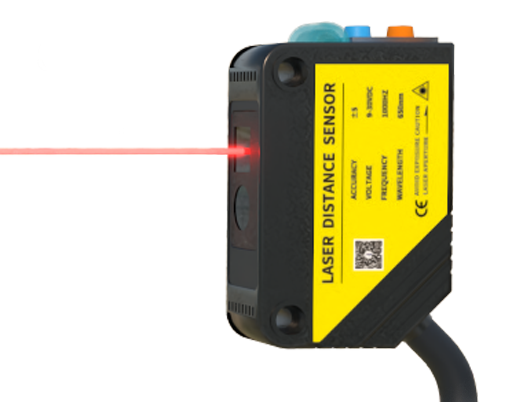
Operational misuse beyond the sensor's specified limits also leads to premature failure. This includes exposing the sensor to measurement targets outside its designed range (too close or too far), using it on surfaces that are highly reflective, transparent, or absorbent beyond its capability, or exceeding the maximum data sampling rate. Such conditions force the sensor to operate at its extremes, causing overheating of the laser diode, overloading the processing unit, or providing unreliable data that can trigger faulty system responses. Careful selection of a sensor model suited for the specific application—considering range, target surface properties, and required speed—is a vital first step in prevention.
Finally, thermal stress from ambient temperature extremes can degrade sensor performance and lifespan. Operating a sensor in an environment consistently above or below its rated temperature range can cause condensation inside the housing, thermal expansion mismatches that break seals or misalign optics, and accelerated aging of electronic components. Ensuring adequate ventilation, using protective enclosures with climate control for extreme environments, or selecting sensors built with wider operating temperature ranges are effective strategies.
In conclusion, while laser displacement sensors are robust instruments, their longevity and accuracy depend heavily on correct selection, installation, and operating conditions. A proactive maintenance regimen involving regular inspection, cleaning, and verification of electrical and mechanical integrity can prevent most common failure modes, ensuring continuous and precise operation in demanding industrial applications.