In the rapidly evolving landscape of industrial automation and smart technology, the demand for precision, reliability, and space efficiency has never been higher. At the forefront of this revolution are ultra-compact proximity sensor factories, specialized manufacturing hubs dedicated to producing some of the smallest, most sophisticated non-contact sensing devices available today. These facilities are not merely assembly lines; they are high-precision engineering ecosystems where innovation in miniaturization, material science, and digital integration converges.
The core mission of an ultra-compact proximity sensor plant is to overcome the inherent challenges of shrinking sensor dimensions without compromising performance. Traditional proximity sensors detect the presence or absence of an object within a defined range without physical contact, typically using electromagnetic fields, light, or sound. The ultra-compact variants push this technology to its limits, with housings often measuring just a few millimeters in diameter. Manufacturing such devices requires an environment of exceptional cleanliness, often adhering to stringent cleanroom standards to prevent microscopic contaminants from interfering with sensitive electronic components and sensing elements. The production floor is a symphony of advanced machinery: automated surface-mount technology (SMT) lines place microscopic resistors, capacitors, and integrated circuits onto printed circuit boards (PCBs) with micron-level accuracy. Laser welding and sealing techniques are employed to create hermetic, robust enclosures that can withstand harsh industrial environments—resisting oils, coolants, vibrations, and extreme temperatures—while maintaining a footprint smaller than a pencil eraser.
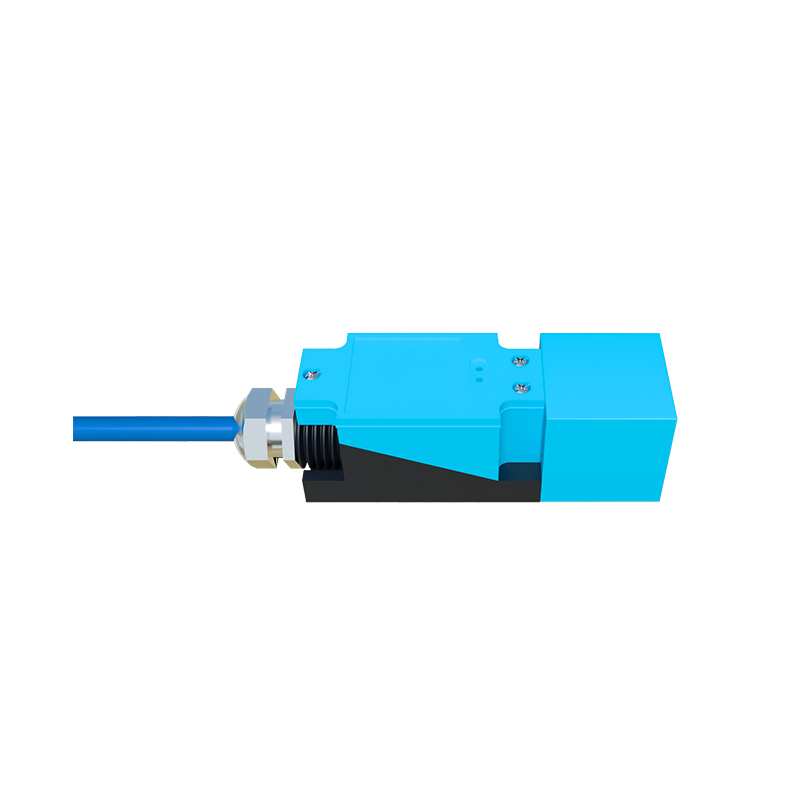
Material selection is a critical engineering discipline within these factories. Engineers must choose substrates, housing materials, and sensing face materials that optimize performance. For inductive sensors, ferrite cores are meticulously shaped to focus electromagnetic fields efficiently in a tiny package. For capacitive variants, the electrode design and dielectric materials are optimized for maximum sensitivity. The shift towards advanced polymers and composite materials has been pivotal, offering excellent durability, chemical resistance, and electromagnetic shielding properties in minimal mass.
Furthermore, the integration of smart factory principles, or Industry 4.0, is transformative. Ultra-compact sensor production is increasingly data-driven. Every sensor can be tracked through its manufacturing lifecycle via digital twins and RFID tags. In-line automated optical inspection (AOI) and functional testing systems perform 100% verification of parameters like sensing range, repeat accuracy, response time, and current consumption. This ensures that even the tiniest sensor leaving the factory meets rigorous quality and performance specifications. The data collected feeds back into the design and process engineering loops, enabling continuous refinement and predictive maintenance of the manufacturing equipment itself.
The applications driving this specialized manufacturing are vast and growing. From enabling collaborative robots (cobots) to sense human presence with unobtrusive sensors, to providing critical position feedback in miniature medical devices, to ensuring precise component counting in densely packed electronic assembly lines, the ultra-compact proximity sensor is a key enabler. Automotive electronics, consumer gadgets, and aerospace systems all rely on these miniaturized components to add functionality without adding bulk or weight.
In conclusion, an ultra-compact proximity sensor factory represents the pinnacle of precision electromechanical manufacturing. It is where challenging design concepts are translated into reliable, mass-produced reality through a blend of cutting-edge automation, meticulous process control, and deep domain expertise. As the trend towards miniaturization continues unabated across all sectors of industry, these specialized production facilities will remain essential in engineering the invisible, intelligent sensory layer of our automated world.