In the rapidly evolving landscape of industrial automation and smart systems, sensing technology forms the critical backbone. Among the plethora of sensing solutions available, millimeter wave (mmWave) radar proximity sensors have emerged as a transformative force, offering unparalleled capabilities in detection, measurement, and environmental perception. Operating typically in the frequency spectrum between 30 GHz and 300 GHz, mmWave radar sensors utilize electromagnetic waves to detect the presence, distance, velocity, and even angle of objects within their field of view. Unlike traditional infrared or ultrasonic sensors, mmWave radar excels in penetrating various non-metallic materials such as plastic, glass, and drywall, and performs reliably under challenging environmental conditions including dust, fog, rain, and complete darkness. This robustness makes it an indispensable tool in modern industrial settings.
The fundamental principle behind mmWave radar proximity sensing is Frequency Modulated Continuous Wave (FMCW) technology. An FMCW radar transmits a continuous signal whose frequency increases linearly over time. This chirp signal, when reflected off a target object, returns to the sensor with a time delay and a frequency shift. By analyzing the difference between the transmitted and received signals—specifically the beat frequency—the sensor's onboard processor can accurately calculate the distance to the object. Furthermore, by leveraging the Doppler effect on successive chirps, the sensor can determine the relative velocity of the moving target. Advanced mmWave radar chips integrate multiple antennas in a Multiple-Input Multiple-Output (MIMO) configuration, enabling the estimation of the angle of arrival and creating a point cloud representation of the surrounding environment. This rich data set moves sensing far beyond simple binary presence detection.
The applications of mmWave radar proximity sensors are vast and growing. In factory automation, they are deployed for precise liquid level sensing in tanks, object counting on high-speed conveyor belts, and safeguarding dangerous machinery by creating invisible safety zones. Their ability to detect minute movements makes them ideal for occupancy sensing in smart buildings, enabling energy-efficient control of lighting and HVAC systems. The automotive industry heavily relies on mmWave radar for blind-spot detection, automatic parking assistance, and cross-traffic alerts. In robotics, these sensors provide the essential perception needed for autonomous navigation and object manipulation in dynamic, unstructured environments. A key advantage in industrial contexts is their immunity to color, texture, and lighting conditions, which often plague vision-based systems.
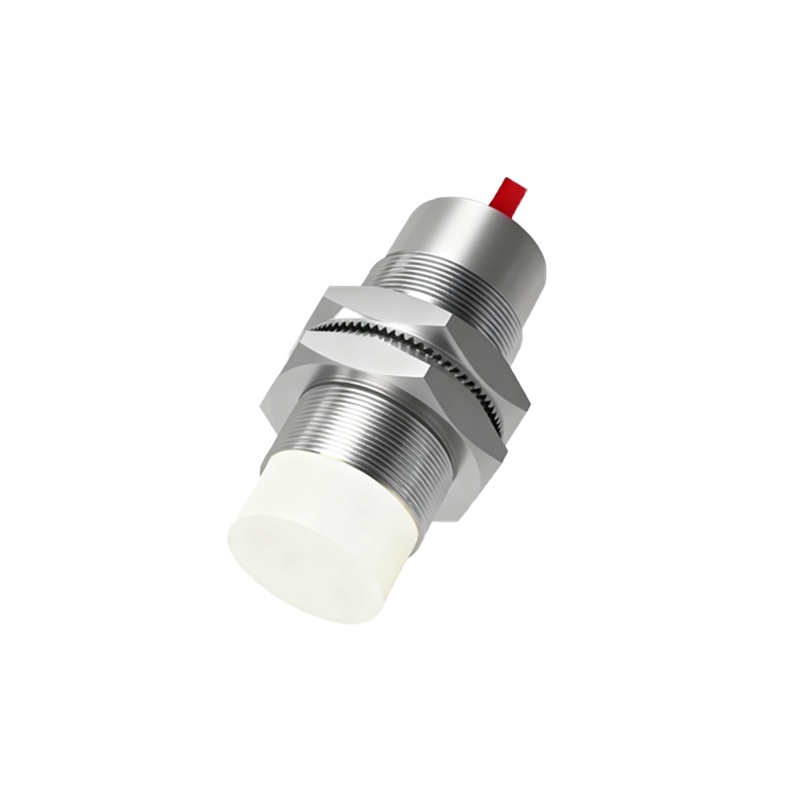
When selecting a mmWave radar sensor for a specific application, several technical parameters require careful consideration. The operating frequency band, such as 60 GHz, 77 GHz, or 79 GHz, influences the resolution, range, and antenna size. Range resolution, which defines the minimum distance between two objects for them to be detected as separate entities, is inversely proportional to the bandwidth. Higher bandwidth offers finer resolution. The maximum unambiguous range and velocity are also critical design constraints. Furthermore, the field of view, output data interface (e.g., CAN, Ethernet, UART), and power consumption must align with the system's requirements. Modern sensor modules often come with sophisticated software development kits (SDKs) that simplify algorithm development for gesture recognition, vibration analysis, and vital sign monitoring, further expanding their utility.
Looking ahead, the future of mmWave radar proximity sensors is intertwined with advancements in semiconductor technology and artificial intelligence. The trend is toward higher levels of integration, lower power consumption, and reduced form factors, making them suitable for compact consumer electronics and IoT devices. The fusion of radar data with inputs from cameras and LiDAR in sensor fusion systems is creating more robust and context-aware perception for autonomous systems. Furthermore, the development of cognitive radar, capable of adapting its waveform in real-time based on the environment, promises even greater efficiency and performance. As costs continue to decrease and processing power increases, mmWave radar is poised to become a ubiquitous sensing modality, driving innovation in Industry 4.0, smart cities, and beyond, solidifying its role as a cornerstone of the connected, intelligent world.