Proximity sensors designed for human detection are critical components in modern industrial automation, safety systems, and smart environments. These sensors detect the presence or absence of a person within a specified range without physical contact, enabling automated responses, enhancing safety, and optimizing energy efficiency. Various technologies are employed based on application requirements, environmental conditions, and detection precision. Here, we explore the primary types of proximity sensors used for human detection, their operating principles, advantages, and typical use cases.
Capacitive proximity sensors operate by generating an electrostatic field. When a human body, which has dielectric properties, enters this field, it alters the capacitance, triggering detection. These sensors are effective for detecting humans through non-metallic materials like wood or plastic, making them suitable for applications such as touch-sensitive switches, occupancy sensing in offices, or safety guards on machinery. They offer high sensitivity but can be influenced by environmental factors like humidity.
Inductive proximity sensors rely on electromagnetic fields to detect metallic objects. While not directly used for human body detection (as the human body is non-metallic), they are often integrated into systems where human presence is inferred by interaction with metallic elements, such as in automated doors or assembly line safety curtains. Their robustness in harsh industrial environments makes them valuable for indirect safety applications.
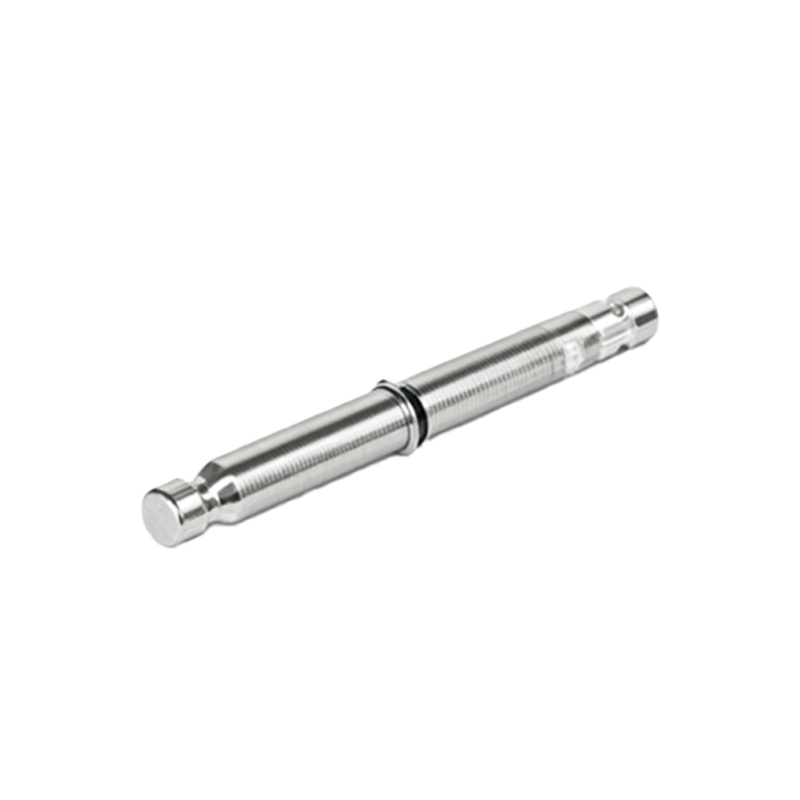
Ultrasonic proximity sensors emit high-frequency sound waves and measure the time taken for echoes to return after hitting an object, including humans. They are versatile, capable of detecting various materials regardless of color or transparency, and work well in dusty or foggy conditions. Common applications include people counting in retail spaces, automatic faucets, and obstacle detection in robotics. However, they may have limited accuracy with soft surfaces that absorb sound.
Infrared (IR) proximity sensors detect humans by measuring infrared radiation emitted by the body. Passive infrared (PIR) sensors are widely used in motion-activated lighting, security alarms, and energy management systems. They respond to changes in thermal energy, making them efficient for detecting movement but less effective for stationary individuals. Active IR sensors, which emit and receive infrared light, can provide more precise detection, such as in touchless switches or presence detection in restricted areas.
Photoelectric sensors use light beams (visible, infrared, or laser) to detect interruptions caused by human presence. They are highly accurate and fast, ideal for applications like automatic doors, conveyor belt safety stops, and inventory tracking. Reflective, through-beam, and diffuse modes offer flexibility for different ranges and environments. However, they can be affected by ambient light or obstructions.
Radar-based sensors, particularly millimeter-wave radar, are gaining popularity for human detection due to their ability to penetrate materials and operate in all weather conditions. They measure frequency shifts in reflected radio waves to detect movement and even vital signs like breathing. Applications include smart home automation, elderly care monitoring, and advanced industrial safety systems where precise location and motion tracking are required.
Each sensor type has distinct characteristics: capacitive sensors excel in material penetration, ultrasonic sensors in environmental resilience, IR sensors in cost-effective motion detection, photoelectric sensors in speed and accuracy, and radar sensors in sophisticated monitoring. Selection depends on factors like detection range, response time, environmental robustness, and cost. In industrial settings, a combination of sensors is often deployed to ensure reliability and safety, such as using PIR for initial motion detection complemented by ultrasonic sensors for presence verification.
As technology advances, integration with IoT and AI enables smarter human detection systems. Sensors can now differentiate between humans and objects, track multiple individuals, and predict behaviors, enhancing applications in automated manufacturing, smart buildings, and public safety. Engineers must consider standards like IEC 60947-5-2 for sensor performance and safety to ensure compliance and optimal functionality. Ultimately, the right proximity sensor enhances operational efficiency, prevents accidents, and contributes to a seamless interaction between humans and automated systems.