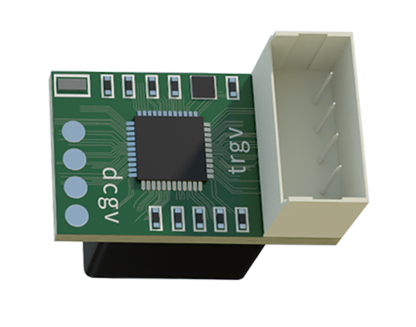
Laser sensors have become indispensable tools across a vast spectrum of industrial and technological applications. Their ability to deliver precise, non-contact measurements has revolutionized processes in manufacturing, automation, robotics, and quality control. At their core, laser sensors operate on the principle of emitting a focused beam of coherent light—typically from a laser diode—towards a target. The sensor then detects the reflected or scattered light using a photodetector. By analyzing the properties of this returned light, such as the time-of-flight, phase shift, or triangulation angle, the sensor can accurately calculate critical parameters like distance, displacement, position, thickness, or presence.
The fundamental technology behind these devices can be broadly categorized. Time-of-flight (ToF) laser sensors measure the time it takes for a laser pulse to travel to the target and back, calculating distance based on the speed of light. This method is excellent for long-range measurements. Triangulation sensors, on the other hand, use a geometric approach. The emitted laser beam, the reflected beam detected at a known angle by a position-sensitive detector (PSD), and the target form a triangle. Any change in the target's distance causes a proportional shift in the light spot on the PSD, allowing for extremely high-resolution measurements at shorter ranges. Confocal sensors utilize a different principle, employing multiple wavelengths or chromatic aberration to determine distance with nanometer-level precision, ideal for measuring transparent or highly reflective surfaces.
The advantages of integrating laser sensors into industrial systems are compelling. First and foremost is their exceptional accuracy and resolution, capable of detecting micron-level changes, which is paramount for stringent quality assurance. Their non-contact nature eliminates mechanical wear on both the sensor and the target, ensuring long-term reliability and preventing damage to delicate objects. Laser sensors offer high-speed response, making them suitable for dynamic processes and high-throughput production lines. Furthermore, they are largely immune to environmental factors like electromagnetic interference, which can plague other sensing technologies, and many models are designed to perform reliably in challenging conditions involving dust, smoke, or variable ambient light.
In practical application, laser sensors are the workhorses of modern automation. On assembly lines, they perform precise dimensional gauging, verifying component heights, widths, and diameters in real-time. In robotics, they enable accurate positioning and guidance for tasks such as pick-and-place, welding, and material handling. They are crucial for controlling web tension, measuring thickness in rolling mills, and detecting edge positions in continuous processing. Laser profilometers create detailed 3D surface maps for defect detection, while safety laser scanners create invisible protective fields around hazardous machinery. The automotive industry relies on them for body-in-white measurements and gap-and-flush analysis, and they are equally vital in electronics for solder paste inspection and wafer alignment.

Selecting the appropriate laser sensor requires careful consideration of several key parameters. The required measuring range and resolution are primary drivers. The type of target surface—its color, reflectivity, material, and texture—significantly influences the choice of sensor technology; a confocal sensor might be necessary for a glossy metal surface, whereas a standard triangulation sensor suffices for matte plastic. Environmental conditions such as temperature extremes, humidity, and exposure to contaminants dictate the needed ingress protection (IP) rating. Finally, the output interface (analog, digital, IO-Link, Ethernet) must be compatible with the existing control system for seamless integration.
As technology advances, laser sensors continue to evolve. Trends point towards miniaturization, allowing integration into increasingly compact devices. Enhanced connectivity through Industrial Internet of Things (IIoT) protocols enables predictive maintenance and data analytics. The development of more robust and cost-effective models is expanding their use into new markets. Furthermore, innovations in beam shaping and signal processing are improving performance on difficult surfaces. In conclusion, laser sensors represent a critical enabling technology for Industry 4.0. Their precision, versatility, and reliability make them essential for driving efficiency, improving product quality, and enabling sophisticated automation solutions that define the future of modern industry.