In the realm of industrial automation and machinery, the reliability and precision of sensing components are paramount. Among the myriad of options available, the E18-B0 series of diffuse reflective photoelectric proximity sensors has established itself as a versatile and dependable solution. This article delves into the technical specifications, operational principles, and practical applications of the E18-B0 sensor, providing a detailed guide for engineers and technicians.
The E18-B0 is a type of photoelectric sensor that operates on the diffuse reflection principle. It integrates both a light emitter, typically an infrared LED, and a receiver into a single, compact housing. The sensor detects the presence or absence of an object by emitting a beam of light and measuring the intensity of the light reflected back to its receiver. Unlike through-beam sensors that require a separate emitter and receiver, or retro-reflective sensors that use a reflector, the E18-B0 detects objects directly, making its installation simpler and more flexible. A key feature is its fixed sensing distance, which for the standard E18-B0 model is typically 10cm (100mm). This distance is calibrated and stable, requiring no potentiometer for adjustment, which enhances its reliability in environments with varying environmental conditions.
The construction of the E18-B0 sensor is designed for industrial durability. It commonly features a cylindrical threaded barrel housing, often in M18 size, allowing for easy mounting in standard industrial fixtures. The housing is typically made from materials like nickel-plated brass or stainless steel, offering good resistance to corrosion, oils, and mild chemicals. The sensing face is protected by a transparent lens, and many models are rated with an Ingress Protection (IP) code such as IP67, making them dust-tight and capable of withstanding temporary immersion in water. This robust build ensures consistent performance in challenging environments, including assembly lines, packaging machinery, and material handling systems.
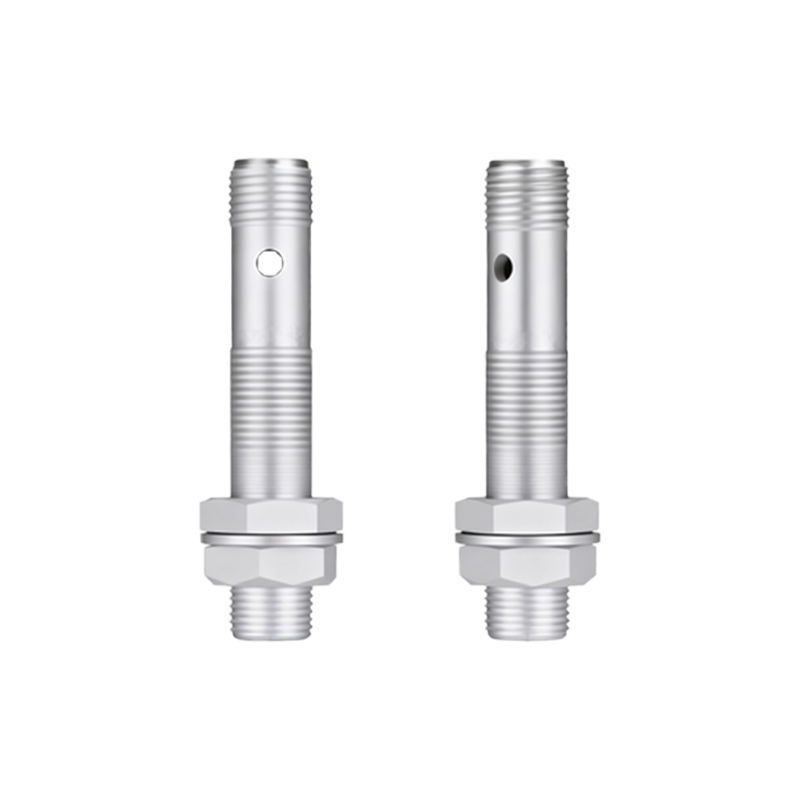
Electrically, the E18-B0 sensor is available in various output configurations to interface seamlessly with Programmable Logic Controllers (PLCs), relays, and other control systems. The most common output types are NPN (sinking) and PNP (sourcing) transistor outputs. An NPN output switches the negative (0V) line to the load, while a PNP output switches the positive voltage line. The choice between NPN and PNP depends on the prevailing electrical standards of the control system. The output is typically in a normally-open (NO) or normally-closed (NC) configuration. The sensor operates on a wide range of DC voltages, commonly from 10-30V DC, ensuring compatibility with standard industrial power supplies. A vital performance indicator is the response time, which for the E18-B0 is in the millisecond range, enabling it to detect objects on high-speed production lines without introducing significant lag.
The applications for the E18-B0 proximity sensor are extensive across manufacturing and automation. It is exceptionally effective for object detection, counting, and positioning tasks. For instance, on a conveyor belt, it can detect the passage of boxes, bottles, or components, triggering a counter or initiating the next step in a process. It can be used to verify the presence of a part in a fixture or assembly jig before a machining operation commences, preventing errors and damage. Its ability to detect objects regardless of their material conductivity makes it ideal for sensing non-metallic items like plastic, wood, glass, and liquids, where inductive proximity sensors would fail. However, its performance can be influenced by the object's color and surface texture; light-colored, matte surfaces reflect light better than dark, glossy ones. For optimal performance, it is recommended to conduct tests with the actual target object during the sensor selection process.
When installing and maintaining the E18-B0 sensor, several best practices should be followed. Ensure the sensor is mounted securely and aligned correctly with the expected path of the target object. Avoid mounting the sensor facing highly reflective backgrounds, as this can cause false triggering. The operating environment should be considered; while the sensor is robust, excessive dust, steam, or direct sunlight can interfere with the light beam. Regular maintenance involves keeping the lens clean from dirt, grease, or debris that could attenuate the light signal. Troubleshooting common issues often starts with checking the power supply connections, verifying the output load, and confirming that the target object is within the specified sensing range and has suitable reflective properties.
In conclusion, the E18-B0 photoelectric proximity sensor represents a critical component in modern industrial sensing. Its simple diffuse reflective operation, robust M18 housing, and reliable fixed-distance detection make it a go-to choice for a wide array of non-contact detection challenges. By understanding its operating principles, specifications, and application nuances, engineers can effectively integrate the E18-B0 into their systems, enhancing automation efficiency, safety, and productivity. Its enduring popularity is a testament to its