In the rapidly evolving landscape of industrial automation, robotic arm laser sensors have emerged as a cornerstone technology, enabling unprecedented levels of precision, flexibility, and efficiency. These sophisticated devices function by emitting laser beams and analyzing the reflected light to measure distance, detect objects, profile surfaces, and guide robotic movements with micron-level accuracy. Unlike traditional contact or simpler optical sensors, laser sensors provide non-contact, high-speed data acquisition, making them indispensable in complex manufacturing, assembly, and quality control processes.
The core principle behind most robotic laser sensors is laser triangulation or time-of-flight measurement. In triangulation sensors, a laser diode projects a spot or line onto a target. The reflected light is focused onto a sensitive position-sensitive detector (PSD) or CMOS/CCD array. By calculating the angle of the reflected beam, the sensor determines the exact distance to the point. This method is exceptionally precise for short to medium ranges and is widely used for high-accuracy tasks like weld seam tracking, precise part positioning, and 3D contour scanning. Time-of-flight sensors, on the other hand, measure the round-trip time of a laser pulse to calculate distance, suitable for longer ranges and applications like bulk material handling or large-scale metrology.
Integration of these sensors with robotic arms transforms a pre-programmed machine into an intelligent, adaptive system. Through real-time feedback loops, the sensor data is processed by the robot's controller to dynamically adjust the arm's path, force, or orientation. This closed-loop control is critical for applications such as random bin picking, where a robot must identify and grasp unordered parts from a container. A laser vision system scans the bin, creates a 3D point cloud, identifies the optimal part to pick, and guides the gripper to the exact location, all in a fraction of a second. Similarly, in precision dispensing of adhesives or sealants, a laser sensor profiles the workpiece surface and adjusts the dispensing nozzle's height and speed in real-time to ensure a consistent bead, compensating for any part warpage or positional variance.
The benefits are substantial. First and foremost is enhanced precision, reducing errors and scrap rates to near zero. This leads directly to improved product quality and consistency. Secondly, flexibility increases dramatically. Production lines can handle mixed products or rapid changeovers without extensive mechanical re-tooling; only the sensor program needs updating. This supports the trend towards high-mix, low-volume manufacturing. Thirdly, efficiency gains are achieved through faster cycle times and reduced downtime, as sensors enable robots to work reliably in unstructured or variable environments.
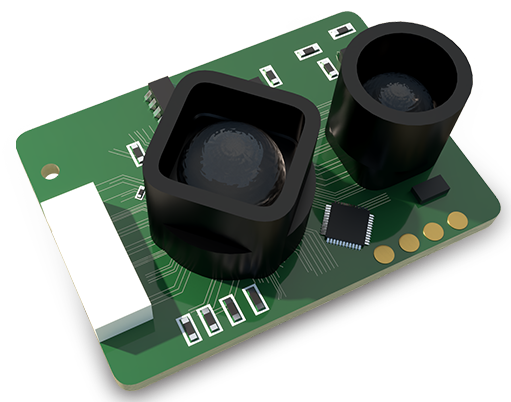
Key industries leveraging this synergy include automotive, where laser sensors guide robots for windshield installation, body-in-white inspection, and battery module assembly. In electronics, they are vital for the precise placement of microchips and soldering verification. Aerospace utilizes them for drilling and fastening composite structures, where tolerances are exceptionally tight. Even in logistics, laser-guided robots efficiently palletize boxes of varying sizes.
However, implementing robotic laser sensing systems presents challenges. Environmental factors like ambient light, dust, smoke, or highly reflective surfaces can interfere with laser readings, requiring careful sensor selection, filtering algorithms, and sometimes protective enclosures. The initial integration cost and complexity can be high, demanding expertise in robotics, sensing, and software. Furthermore, the large volumes of data generated require robust processing capabilities to maintain real-time performance.
Looking ahead, several trends are shaping the future. The convergence of laser sensing with artificial intelligence and machine learning is a major frontier. AI algorithms can learn from sensor data to identify complex defects, predict maintenance needs for the robotic cell, or optimize paths for energy efficiency. Another trend is the miniaturization and cost reduction of sensor components, making high-precision sensing accessible to smaller enterprises. The development of multi-sensor fusion, combining laser data with 2D vision, tactile, or force sensing, will create even more perceptive and dexterous robotic systems. Finally, the rise of collaborative robots (cobots) equipped with safe, low-power laser scanners is opening new applications in shared human-robot workspaces for tasks like precision assembly or inspection.
In conclusion, robotic arm laser sensors are far more than mere measurement tools; they are the enabling "eyes" that bring autonomy, intelligence, and adaptability to industrial automation. As technology advances, their role will only deepen, driving further gains in manufacturing agility, quality, and productivity, and paving the way for smarter, more responsive factories of the future.