In the realm of industrial automation, proximity sensors are indispensable components for non-contact detection of objects. A critical performance parameter that often dictates their suitability for a specific application is the switching frequency. This metric, typically measured in Hertz (Hz), defines the maximum number of detection cycles a sensor can perform per second. Understanding this specification is paramount for engineers designing high-speed production lines, packaging machinery, or any system where rapid, reliable object counting or positioning is required.
The switching frequency of a proximity sensor is fundamentally limited by its internal oscillator and evaluation circuit's response time. When a target enters the sensing field, the sensor's oscillator is damped, causing a change in amplitude. The internal circuitry must detect this change, process it, and switch the output state (e.g., from OFF to ON). After the target leaves, the circuit must reset to its original state. The total time for this complete cycle—target approach, detection, signal output, target departure, and reset—determines the maximum achievable frequency. For instance, a sensor with a response time of 1 millisecond per switching event (on and off combined) theoretically allows a maximum switching frequency of approximately 500 Hz (1/0.002s).
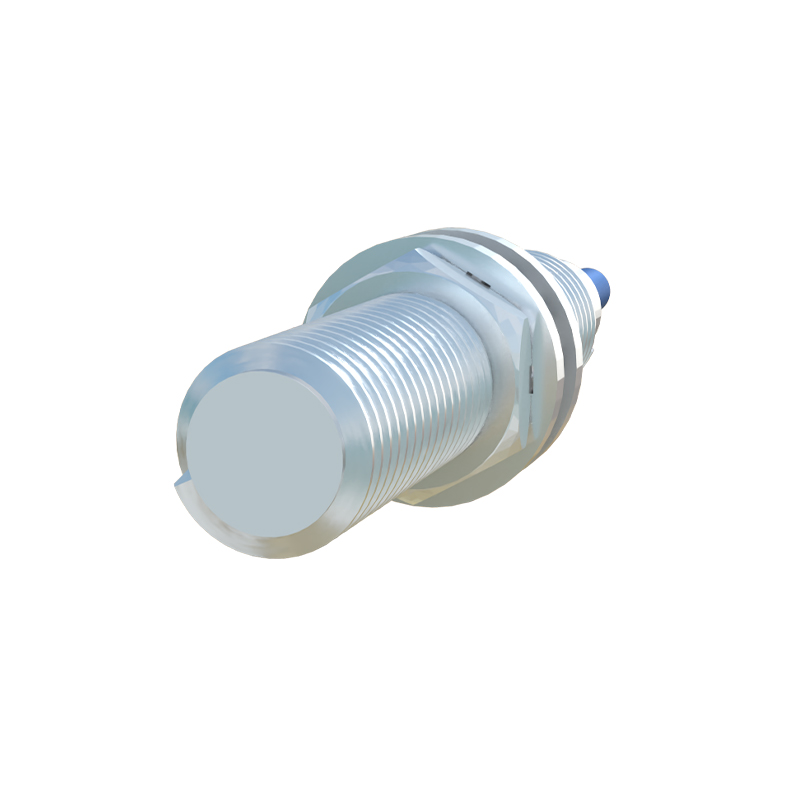
Several key factors influence the actual achievable switching frequency in practice. First and foremost is the sensor technology. Inductive proximity sensors, used for detecting metals, generally offer high switching frequencies, often ranging from 100 Hz to 5 kHz, with specialized models reaching 10 kHz or more. Capacitive sensors, used for non-metallic materials, typically operate at lower frequencies due to their different sensing principle. The second factor is the sensing distance. Operating a sensor at its rated nominal sensing distance (Sn) provides optimal performance. Using it at a reduced distance (e.g., 0.5Sn or 0.1Sn) can sometimes improve the response time and thus the effective switching frequency, as the field disturbance is more immediate and pronounced. The size and material of the target also play a role. Standardized test targets (usually a square of mild steel defined by the sensor's diameter) are used for specification. A smaller or thinner target, or a different metal like aluminum or copper, may reduce the effective sensing distance and potentially affect the switching reliability at high frequencies.
Output configuration is another crucial consideration. Sensors with a digital PNP or NPN transistor output are inherently fast and are standard for high-frequency applications. In contrast, sensors with analog outputs or relay contacts have significantly slower response times and are unsuitable for rapid cycling. Furthermore, the load connected to the sensor output (e.g., a PLC input module) must also be capable of handling the high-speed signal. A mismatch here can lead to missed counts or system errors.
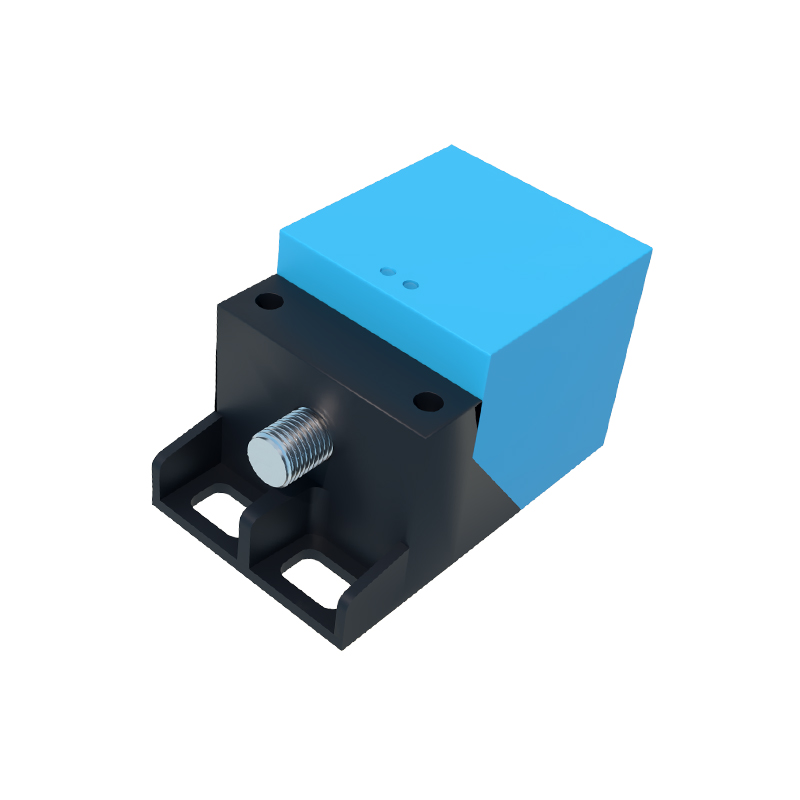
Environmental conditions cannot be ignored. Excessive temperature, strong electromagnetic interference (EMI), or the presence of conductive dust can affect oscillator stability and circuit performance, potentially degrading the maximum reliable switching frequency. It is always advisable to consult the manufacturer's datasheet, which provides the switching frequency under defined standard conditions (standard target, voltage, temperature).
In application, calculating the required frequency is straightforward. If an object on a conveyor passes a sensor at a speed of 2 meters per second, and the object length is 0.05 meters, the time each object blocks the sensor is 0.025 seconds. To reliably detect each object, the sensor's cycle time must be less than this. A sensor with a 1 kHz (1000 Hz) switching frequency has a cycle time of 0.001 seconds, which is more than adequate. However, engineers must incorporate a safety factor, often 2x or 3x, to account for mechanical vibration, target positioning variance, and signal processing delays in the controller.
In conclusion, the switching frequency is not just a number on a datasheet but a vital parameter for system design and reliability. Selecting a proximity sensor with an appropriate switching frequency margin ensures robust operation, prevents production bottlenecks, and minimizes downtime in high-speed automated environments. Always verify the specifications under the actual application conditions for optimal performance.