In the fast-paced world of industrial automation, particularly within packaging and material handling, the reliable detection of packaging boxes is a fundamental requirement for system efficiency and control logic. Proximity sensors have emerged as a cornerstone technology for this task, offering non-contact, wear-free operation critical for high-cycle applications. This article delves into the technical considerations, selection criteria, and application best practices for using proximity sensors in packaging box detection.
The primary function here is presence detection: confirming a box is at a specific point on a conveyor, at the entrance of a labeling station, within a palletizing cell, or at a divert point. Unlike limit switches, proximity sensors perform this duty without physical contact, eliminating mechanical wear and allowing for higher operational speeds. For packaging, which often involves corrugated cardboard, plastic totes, or shrink-wrapped bundles, the sensor must reliably detect the material regardless of surface color, print patterns, or slight variations in box size.
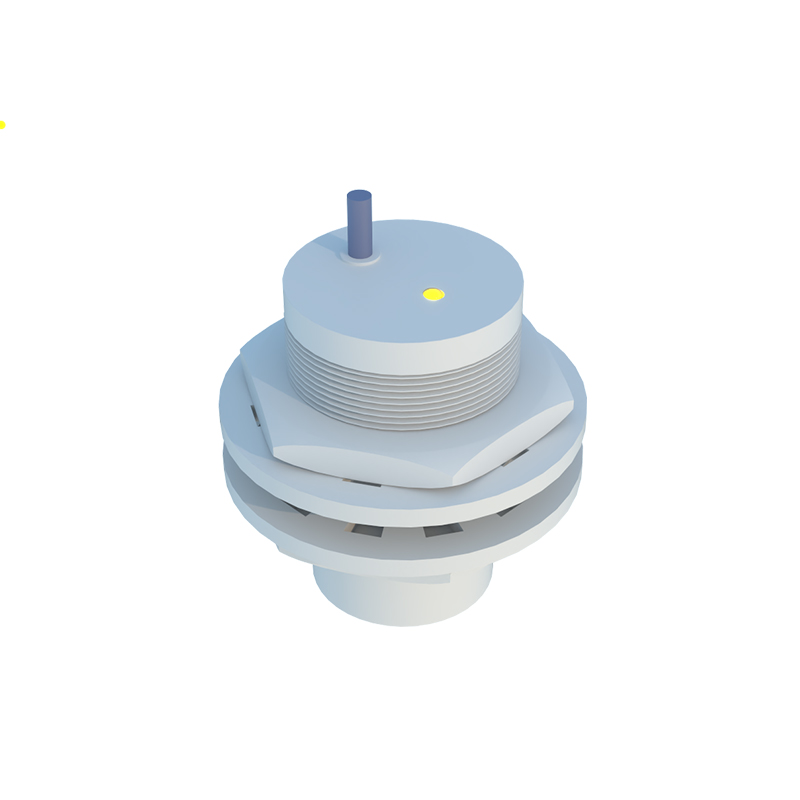
Several types of proximity sensors are applicable, each with distinct operating principles:
1. Inductive Proximity Sensors: These sensors generate an electromagnetic field and detect the eddy currents induced in metallic targets. Their use in pure packaging is limited to detecting metal staples, foil linings, or metalized films. However, they are indispensable for detecting metal components within the packaging process, such as conveyor chain links, actuator positions, or metal pushers.
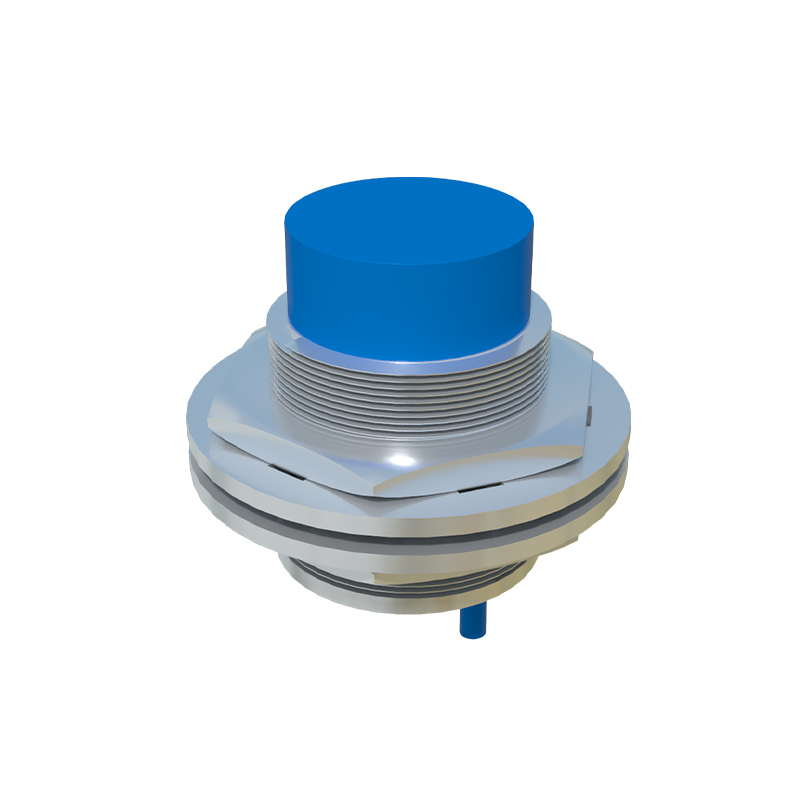
2. Capacitive Proximity Sensors: These sensors detect changes in capacitance caused by the presence of any material, making them suitable for detecting non-metallic boxes. They can sense cardboard, plastic, wood, and even liquids through thin non-metallic walls. A key advantage is their ability to ignore sensor buildup (like dust or moisture film), but they can be sensitive to environmental changes and may require careful tuning to avoid false triggers from background objects.
3. Photoelectric Sensors: While not strictly "proximity" sensors in the same sense, diffuse (proximity mode) photoelectric sensors are extremely prevalent in box detection. They emit a light beam (usually visible red or infrared) and detect the reflection from the target object. For consistent detection of varied box surfaces, sensors with background suppression (BGS) or foreground suppression (FGS) technology are preferred. These models measure the angle or distance of the reflected light, allowing them to ignore distant background surfaces (like the conveyor bed) and only detect objects within a precise window, making them highly reliable for box positioning.
4. Ultrasonic Sensors: These sensors measure the time-of-flight of sound waves to determine distance. They are excellent for detecting boxes regardless of color, transparency, or surface texture. They can also perform tasks like box height measurement or checking for filled volume. Their downside can be a slower response time compared to photoelectrics and potential interference from highly absorbent materials or turbulent air.
Key Selection Parameters for Packaging Applications:
Sensing Distance: The nominal operating distance must account for box positioning tolerances. A 10-30% safety margin is recommended. Consider the sensor's hysteresis (difference between switch-on and switch-off points) for stable switching.
Response Time: Must be fast enough for the line speed. A sensor with a 1ms response can theoretically handle objects moving at 1 meter per second with 1mm positional accuracy.
Output Type: PNP (sourcing) or NPN (sinking) transistor outputs are standard, compatible with PLC inputs. Analog outputs (4-20mA, 0-10V) are used for distance measurement tasks.
Environmental Rating: Packaging environments can be dusty. A minimum rating of IP67 is advisable to protect against dust ingress and washdowns.
Housing & Form Factor: Cylindrical (e.g., M8, M12, M18, M30) or rectangular housings must be chosen based on mounting constraints. Flat-pack sensors are useful in tight spaces.
Light Source & Technology: For photoelectrics, red light is easy to align; laser versions offer precise small-spot detection. Infrared is less susceptible to ambient light. BGS/FGS models are highly recommended for conveyor applications.
Application Challenges and Solutions:
Varied Surface Colors: Glossy white and matte black boxes reflect light differently. A polarized retro-reflective photoelectric or a robust ultrasonic sensor can solve this.
Gaps in Conveyor: Through-beam sensors (separate emitter and receiver) are ideal for detecting boxes over roller or belt conveyors with gaps, as they are not fooled by the conveyor structure.
Multiple Box Sizes: Sensors with teach-in functionality or analog outputs paired with a PLC can adapt to different box heights or positions