In the realm of industrial automation and precision measurement, laser sensors stand out for their accuracy, speed, and reliability. A critical, yet sometimes overlooked, parameter defining their performance is brightness. This article delves into the concept of laser sensor brightness, its technical underpinnings, and its paramount importance in various application scenarios.
Technically, the brightness of a laser sensor refers to the intensity or power density of its emitted laser beam at a given point. It is not merely about the visible perception of light but a quantifiable measure of optical energy concentration. This is intrinsically linked to the sensor's core components: the laser diode and the optical system. The laser diode generates the coherent light, and its output power (measured in milliwatts or watts) is a primary factor. However, raw power alone doesn't dictate effective brightness. The optical system, comprising lenses and apertures, shapes and focuses this beam. A well-designed optical system can collimate a lower-power diode into a tight, high-brightness spot, while a poor one might scatter a high-power output, resulting in low brightness and poor performance.
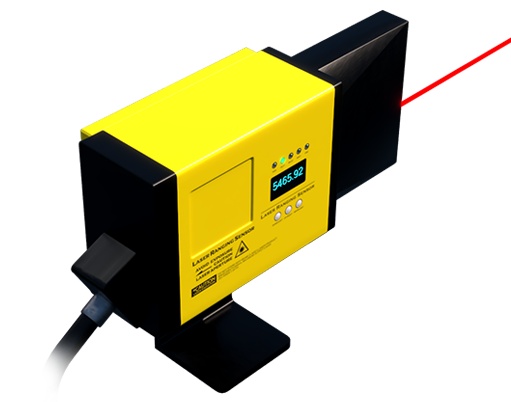
Brightness is fundamentally governed by the beam's divergence and its spot size at the target. Low divergence means the beam stays tightly focused over longer distances, maintaining high brightness. The relationship is often described by the beam parameter product (BPP), a figure of merit combining beam waist radius and divergence. A lower BPP indicates a higher quality, brighter beam suitable for precise tasks. For instance, a sensor designed for long-range object detection or high-resolution contour scanning requires exceptionally high brightness to ensure a strong, detectable signal returns to the receiver, even from distant or low-reflectivity surfaces.
The practical implications of laser sensor brightness are vast across industries. In manufacturing, bright laser lines are essential for 3D triangulation-based scanning systems used in robotic guidance and quality inspection. A brighter line provides a higher signal-to-noise ratio against ambient factory lighting, leading to more accurate point cloud data. In logistics and warehousing, barcode scanners rely on bright, focused spots to quickly and reliably read codes from various angles and distances, even on damaged labels. Material processing applications, such as laser engraving or cutting, while using higher-power lasers, also depend on the principle of brightness concentration to deliver energy precisely to the workpiece.
Furthermore, environmental factors significantly interact with sensor brightness. Ambient light interference—from sunlight or high-bay factory lighting—can swamp a sensor's receiver. A brighter emitted beam helps overcome this noise by providing a dominant signal. Similarly, when sensing dark, matte, or absorbent surfaces that scatter or absorb much of the incident light, a high-brightness sensor is crucial to obtain a sufficient reflected signal. Conversely, for highly reflective or specular surfaces, excessive brightness might cause saturation or glare issues at the receiver, necessitating sensors with adjustable power or specialized filters.
Selecting a laser sensor with appropriate brightness involves a careful balance. Key specifications to evaluate include optical output power, beam divergence (often in milliradians), and the resulting spot size at the working distance. Engineers must consider the minimum required signal strength for the receiver circuit, the reflectivity of the target materials, the operating distance, and the ambient light conditions. Modern sensors often feature programmable power settings, allowing users to tune the brightness to the specific task, optimizing both performance and laser safety.
In conclusion, laser sensor brightness is a sophisticated characteristic far beyond simple luminosity. It is a core determinant of a sensor's effective range, accuracy, and robustness in challenging environments. Understanding its technical basis—rooted in laser diode output and optical design—enables engineers to make informed selections. As industrial applications demand ever-greater precision and speed, the role of optimized laser brightness will only become more central to achieving reliable and efficient automation solutions.