In the realm of industrial automation, the synergy between motor control systems and laser sensors represents a pinnacle of precision engineering. This integration is fundamental to achieving the high-speed, accurate, and reliable operations demanded by modern manufacturing, robotics, and material handling applications. This article delves into the principles, applications, and evolving trends of using laser sensors for advanced motor control.
At its core, motor control involves governing the torque, velocity, and position of an electric motor. Traditional methods often rely on encoders or resolvers attached to the motor shaft to provide feedback. However, laser sensors introduce a non-contact, high-resolution alternative for position and displacement measurement, offering distinct advantages in specific scenarios. Laser sensors operate on the principle of optical triangulation or time-of-flight measurement. A laser diode projects a focused beam onto a target surface. The reflected light is captured by a receiving element, such as a CCD or PSD array. By analyzing the position of the reflected spot, the sensor calculates the distance to the target with micron-level accuracy. This precise distance data becomes a critical feedback signal for the motor controller.
The integration of laser sensor feedback into a motor control loop enables several sophisticated applications. In precision assembly lines, for instance, a laser sensor can continuously measure the position of a component on a conveyor belt. This real-time data is fed to the controller of a servo motor driving a robotic arm. The controller dynamically adjusts the arm's trajectory to precisely pick and place the component, compensating for any belt speed variations or positional drift. This closed-loop control ensures consistent quality and reduces waste. Another critical application is in CNC machinery and laser cutting systems. Here, a laser sensor can be used to measure the distance to the workpiece surface before and during machining. This allows for dynamic adjustment of the cutting tool or laser focus head's Z-axis position, controlled by a high-performance motor. This capability is essential for maintaining optimal cutting conditions on uneven or warped materials, significantly improving finish quality and tool life.

The benefits of employing laser sensors in motor control systems are manifold. First and foremost is enhanced precision. Laser sensors provide exceptionally high resolution and repeatability, enabling sub-micron positioning accuracy that is difficult to achieve with conventional contact-based encoders in certain setups. Second is flexibility. As non-contact devices, laser sensors can measure objects that are fragile, hot, or in motion without physical interaction, opening up new possibilities for automation. They can also measure over relatively long ranges compared to some inductive or capacitive sensors. Third is speed. The high sampling rates of modern laser sensors allow for ultra-fast control loops, essential for high-throughput production lines and rapid robotic movements.
However, successful implementation requires careful consideration of several factors. The choice of laser sensor must align with the application's requirements for range, resolution, spot size, and response time. The target surface's properties—such as color, reflectivity, and texture—can significantly affect measurement accuracy. A highly reflective or transparent surface may require specialized sensors or surface treatment. Environmental conditions like ambient light, dust, oil mist, or vibration must also be accounted for in the sensor selection and mounting design. Furthermore, integrating the sensor's analog or digital output into the motor control architecture demands robust communication protocols and proper signal conditioning to ensure data integrity and low latency.
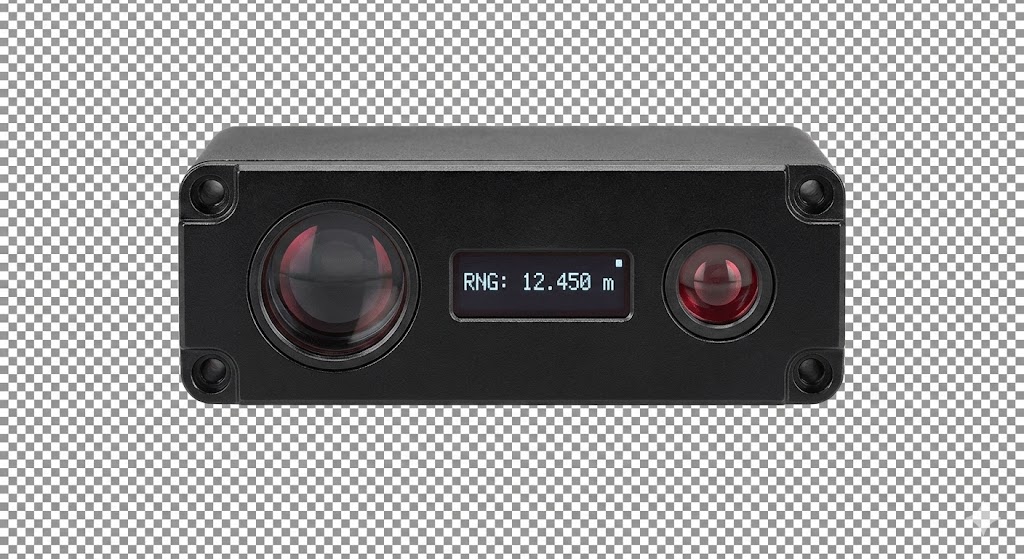
The future of motor control laser sensors is being shaped by several key trends. The drive towards Industry 4.0 and the Industrial Internet of Things (IIoT) is pushing for smarter sensors with embedded intelligence. These "smart sensors" can perform initial data processing, self-diagnosis, and communicate directly via industrial Ethernet protocols like EtherCAT or PROFINET, simplifying integration into sophisticated networked control systems. Miniaturization is another trend, allowing laser sensors to be installed in increasingly compact robotic joints and machinery. Furthermore, the development of multi-point and profile laser sensors, which can measure an array of points or a complete line profile simultaneously, is enabling more complex control scenarios. For example, a profile sensor can guide a motor-controlled actuator to trace a complex contour accurately.
In conclusion, laser sensors are not merely measurement tools but enablers of a higher class of motor control. By providing precise, non-contact, and high-speed feedback, they allow engineers to design automation systems that are more accurate, flexible, and intelligent. As technology advances towards greater connectivity and computational power at the edge, the fusion of laser sensing and motor control will continue to be a cornerstone of innovation in industrial automation, driving efficiencies and capabilities to new heights. Engineers and system integrators must stay abreast of these developments to leverage the full potential of this powerful technological combination.