In the demanding environments of modern industrial automation, the reliability and precision of sensing technology are paramount. Among the various sensor types, laser sensors stand out for their high accuracy, speed, and non-contact measurement capabilities. However, their performance can be severely compromised by one of the most common industrial adversaries: dust. This article delves into the critical importance of dust-proof laser sensors, exploring their design principles, operational advantages, and key applications across sectors such as manufacturing, logistics, and material handling.
Dust and particulate matter are ubiquitous in factories, warehouses, and outdoor industrial settings. When these contaminants settle on the optical components of a standard laser sensor—such as the transmitter lens or receiver—they can scatter or absorb the laser beam. This interference leads to inaccurate readings, signal loss, frequent calibration demands, and ultimately, sensor failure. Unplanned downtime for maintenance or replacement not only incurs direct costs but also disrupts production schedules, impacting overall operational efficiency and profitability. Consequently, the development and deployment of robust dust-proof laser sensors have become a strategic priority for engineers and plant managers aiming to enhance system resilience.
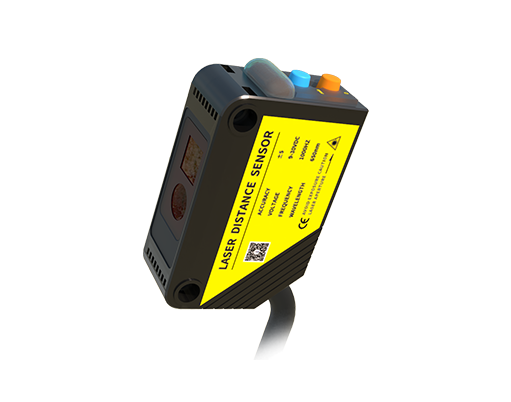
The engineering behind dust-proof laser sensors involves a multi-faceted approach to sealing and protection. A primary defense is the use of IP (Ingress Protection) ratings, specifically IP65, IP67, or IP69K. These ratings certify the sensor's resistance to dust ingress (the first digit, 6, indicates complete protection against dust) and water (the second digit). The housing is typically constructed from durable materials like stainless steel or reinforced polymers, featuring tightly sealed gaskets and O-rings at all joints and cable entry points. Beyond the enclosure, the optical window is a critical focus. Many advanced models incorporate a smooth, hydrophobic coating or a slight air purge system that creates a positive pressure barrier, preventing dust from adhering to the lens surface. Some sensors also integrate self-cleaning mechanisms, such as periodic bursts of compressed air or integrated wipers, to maintain optical clarity without manual intervention.
From a functional perspective, dust-proof laser sensors offer significant advantages. Their sustained accuracy ensures consistent quality control in processes like dimensional gauging, edge detection, and fill-level monitoring. In automated guided vehicle (AGV) systems within dusty warehouses, these sensors provide reliable object detection and collision avoidance. In the packaging industry, they ensure precise label placement and carton counting. The robustness translates to reduced maintenance cycles and lower total cost of ownership, as the sensors require less frequent cleaning and are less prone to premature failure. Furthermore, their reliability supports the implementation of Industry 4.0 and IoT frameworks, where continuous, uninterrupted data flow from sensors is essential for predictive analytics and smart factory operations.
Selecting the appropriate dust-proof laser sensor requires careful consideration of several parameters beyond the IP rating. The sensing range, laser class (typically Class 2 for safety), response time, output type (analog, digital, IO-Link), and the specific wavelength of the laser must align with the application's needs. For instance, a red laser might be standard, but in extremely dusty environments, a sensor with a blue laser could offer better performance as shorter wavelengths are less prone to scattering by fine particles. Integration with existing control systems (PLCs, PACs) and the physical mounting configuration are also crucial for seamless operation.
In conclusion, as industries push towards greater automation and operational excellence in challenging environments, the role of dust-proof laser sensors becomes increasingly vital. They are not merely components but enablers of reliability, precision, and efficiency. By investing in these advanced sensing solutions, engineers can build more resilient automation systems that withstand environmental contaminants, minimize downtime, and drive consistent, high-quality production outcomes. The ongoing innovation in materials, sealing technologies, and intelligent self-diagnostic features promises to further elevate the capabilities of these indispensable industrial tools.