In the realm of industrial automation, proximity sensors are indispensable components for non-contact detection of objects. However, the raw signal from these sensors often requires conditioning to be effectively utilized by control systems. This is where amplifiers, or specifically proximity sensor amplifiers, play a critical role. They bridge the gap between the sensor's output and the programmable logic controller (PLC) or other processing units, ensuring reliable and precise operation in demanding environments.
A proximity sensor, whether inductive, capacitive, or photoelectric, generates an electrical signal when a target object enters its sensing field. Inductive sensors detect metallic objects, capacitive sensors handle a wider range of materials including liquids and powders, and photoelectric sensors use light beams. The output from these sensors is typically a small analog signal or a digital switch signal. In many applications, especially over long cable runs or in electrically noisy industrial settings, this signal can be weak, susceptible to interference, or incompatible with the input requirements of the controller.

The primary function of a proximity sensor amplifier is to take this sensor signal, condition it, and convert it into a robust, standardized output. Key amplification and conditioning processes include:
1. Signal Amplification: Boosting the magnitude of the sensor's output to a usable level, often to a standard voltage (e.g., 0-10V) or current (e.g., 4-20mA) analog signal.
2. Noise Immunity: Incorporating filtering circuits to suppress electromagnetic interference (EMI) and voltage spikes, which are common in plants with heavy machinery, motors, and variable frequency drives.

3. Output Conversion: Providing flexible output types. Many amplifiers can convert a sensor's signal into different formats, such as a solid-state relay (SSR) output, a transistor (NPN/PNP) output, or an analog signal proportional to distance.
4. Adjustability: Featuring potentiometers or digital interfaces for setting parameters like sensitivity (gain), response time, and switching thresholds. This allows fine-tuning for specific applications, such as ignoring background objects or detecting极小 targets.
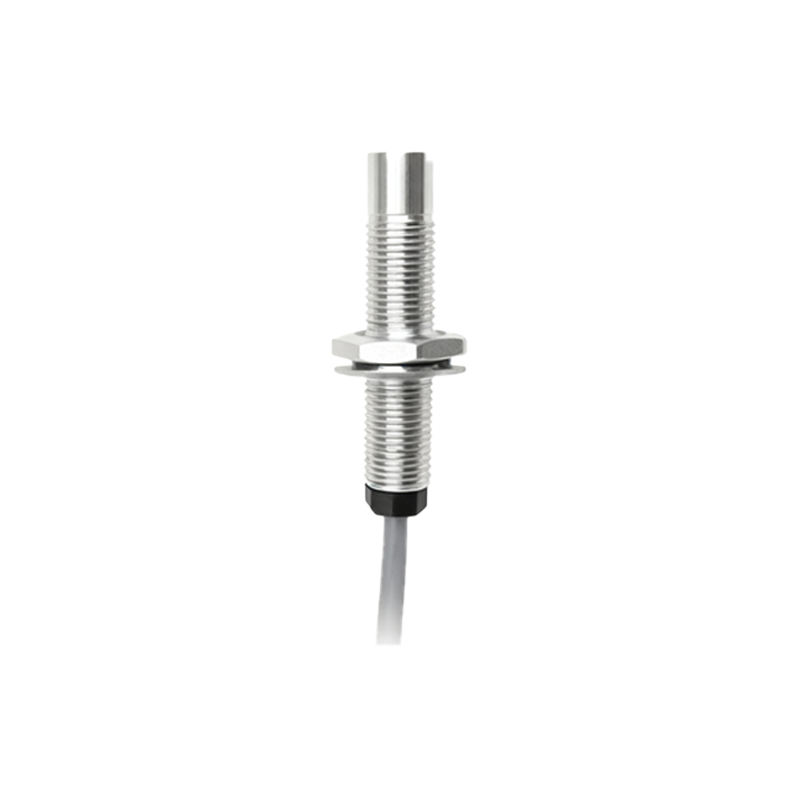
5. Diagnostic Indicators: Equipped with LED status lights to display power, input signal strength, and output state, facilitating quick installation and troubleshooting.
The integration of a dedicated amplifier significantly enhances system performance. It extends the effective sensing range, improves signal stability, and allows for the use of simpler, more cost-effective sensors. For instance, a basic two-wire inductive sensor connected to a high-gain amplifier can achieve detection capabilities approaching those of a more expensive, self-contained amplified sensor. Furthermore, amplifiers often provide functions like teach-in (auto-calibration), window mode (monitoring if a signal is within a set range), and time delays (on-delay, off-delay).
Choosing the correct amplifier depends on the sensor type and the application requirements. Key selection criteria include:
Compatibility: The amplifier's input circuit must match the sensor's technology (inductive/capacitive) and wiring (2-wire, 3-wire NPN/PNP).
Supply Voltage: Must operate within the available DC or AC voltage range of the control panel.
Output Type: The output (relay, transistor, analog) must be compatible with the load or controller input module.
Environmental Rating: The housing should have an appropriate IP (Ingress Protection) rating for the installation environment (dust, moisture, washdown).
Special Functions: Requirements for analog scaling, logic functions, or communication protocols (IO-Link) will dictate the amplifier model.
In modern smart factories, the role of the amplifier is evolving. Devices with IO-Link communication capability are becoming standard. An IO-Link amplifier not only provides a robust switched signal but also establishes a digital point-to-point connection. This enables bidirectional data exchange, allowing parameter setting, real-time monitoring of signal strength, and advanced diagnostics (e.g., contamination warnings, temperature monitoring) to be sent directly to the controller, paving the way for predictive maintenance.
In conclusion, the combination of a proximity sensor and a dedicated amplifier forms a powerful and flexible detection solution. The amplifier is not merely an accessory but a vital signal processor that ensures accuracy, reliability, and enhanced functionality. By understanding their operation and selection parameters, engineers can design more robust, adaptable, and intelligent automation systems, optimizing performance across countless applications from packaging and material handling to robotic assembly and automotive manufacturing.