In the realm of industrial automation and machine control, proximity sensors are indispensable components for non-contact object detection. Among the various configurations, the 3-wire proximity sensor stands out as one of the most common and versatile types. This article delves into the fundamentals, wiring schemes, operational principles, and key selection criteria for 3-wire DC proximity sensors, providing a comprehensive guide for engineers and technicians.
A 3-wire proximity sensor is a solid-state electronic device designed to detect the presence or absence of a target object without physical contact. It operates by generating an electromagnetic field or a beam of light. When a target enters this field, it causes a change in the sensor's oscillation or signal, which is then converted into an electrical output signal. The "3-wire" designation refers to the three essential conductors within the cable: one for DC power supply positive (typically brown wire), one for DC power supply negative or common (typically blue wire), and one for the output signal (typically black wire for NPN or black/white for PNP).
The core of its operation lies in its internal circuitry. Unlike 2-wire sensors that are wired in series with the load, 3-wire sensors have a separate path for power and output. This design offers significant advantages. The sensor's electronics are powered directly from the supply, leading to lower leakage current, more stable operation, and the ability to handle a wider range of load currents. The output is typically a transistor switch—either an NPN (sinking) or PNP (sourcing) type—that toggles state (ON/OFF) based on target detection.
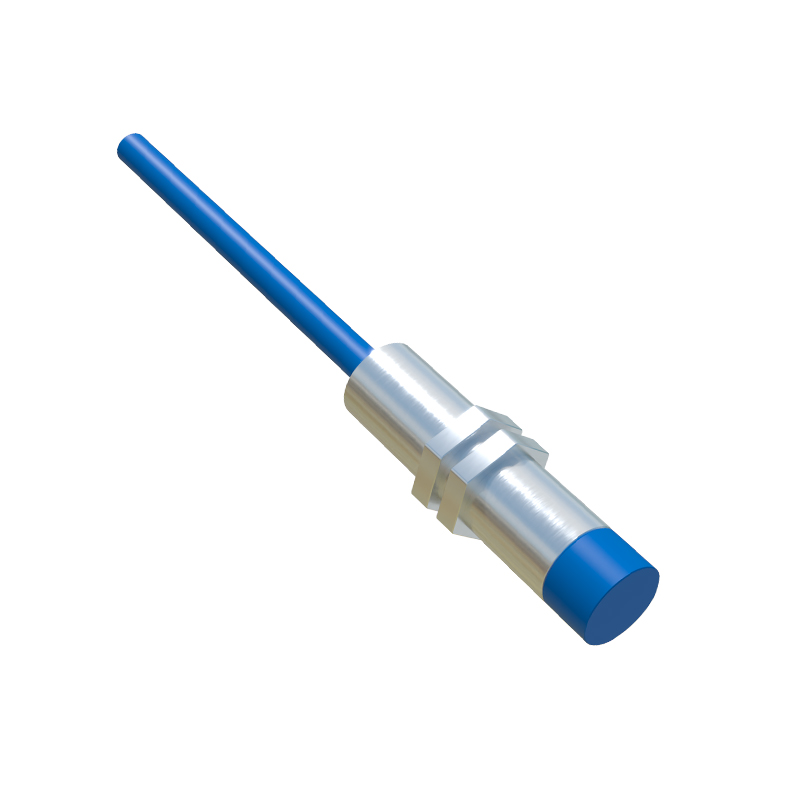
Wiring a 3-wire sensor correctly is paramount for system functionality and safety. For a standard DC sensor:
1. Connect the Brown wire to the positive terminal of your DC power supply (e.g., +24VDC).
2. Connect the Blue wire to the negative terminal (0VDC) of the same power supply.
3. Connect the Black (or Black/White) output wire to your load (e.g., a PLC input, relay coil, or indicator lamp).
For an NPN sensor: The load is connected between the output wire and the positive supply (+V). The sensor acts as a switch to ground (0V).
For a PNP sensor: The load is connected between the output wire and the negative supply (0V). The sensor acts as a switch to the positive supply (+V).
The choice between NPN and PNP is crucial and often depends on regional conventions or the control system's design. NPN (sinking) outputs are common in Asia and Europe, where the load is connected to positive voltage, and the sensor provides the path to ground. PNP (sourcing) outputs are frequently used in North America, where the sensor provides the positive voltage to the load.
When selecting a 3-wire proximity sensor, several technical parameters must be considered:
Sensing Technology: Inductive (for metals), Capacitive (for non-metals, liquids), or Photoelectric (for light-based detection).
Sensing Distance: The nominal range at which the sensor can reliably detect a standard target.
Output Type: NPN Normally Open (NO), NPN Normally Closed (NC), PNP NO, PNP NC.
Supply Voltage: Commonly 10-30VDC, but must match your control system.
Housing Material: Metal (e.g., stainless steel for rugged environments) or plastic (for chemical resistance).
Connection Style: Pre-wired cable or quick-disconnect (M12, M8 connectors).
Environmental Ratings: IP (Ingress Protection) rating for dust and water resistance, and temperature range.
The benefits of using 3-wire sensors are substantial. They offer fast switching speeds, high precision, and long operational life due to the absence of mechanical contacts. Their separate power and output lines prevent load current from affecting the sensor's internal electronics, ensuring stable performance. Troubleshooting is also relatively straightforward: check power supply voltage, verify the target is within range and of correct material, and use a multimeter to test if the output transistor is switching.
In conclusion, the 3-wire proximity sensor is a fundamental building block in modern electrical control systems. A clear understanding of its wiring, the distinction between NPN and PNP configurations, and a methodical approach to selection based on application requirements are essential for any engineer or technician working in automation, packaging, material handling, or automotive manufacturing. Proper implementation ensures reliable machine operation, enhances safety, and minimizes downtime.