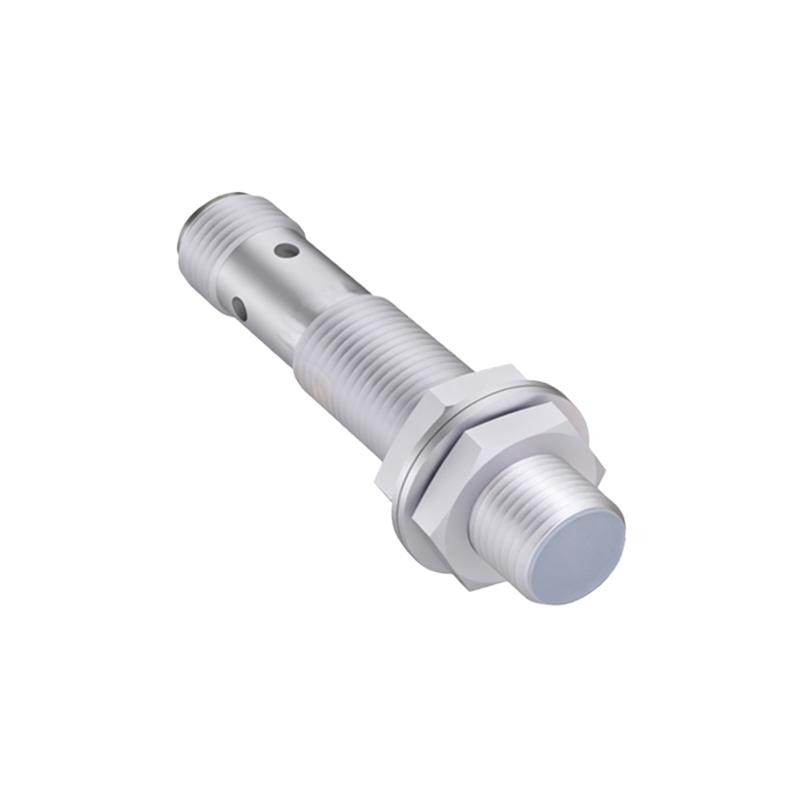
In the realm of industrial automation and precision control, the M5 micro proximity switch sensor with a stainless steel housing represents a pinnacle of reliability and compact design. Engineered for demanding environments, this sensor variant is a critical component in applications where space is at a premium, yet performance cannot be compromised. The core of its functionality lies in its ability to detect the presence or absence of metallic objects without physical contact, utilizing high-frequency oscillation or magnetic principles depending on the specific type—inductive, capacitive, or magnetic. The hallmark of this series is its diminutive M5 threaded barrel form factor, typically offering a sensing range from 0.5mm to 2mm, making it ideal for intricate machinery, robotic grippers, and high-density assembly lines.
The selection of a stainless steel housing, often grades like SUS303 or SUS304, is a deliberate and crucial engineering decision. This material provides exceptional resistance to corrosion, chemicals, oils, and coolants, which are omnipresent in manufacturing, food processing, and pharmaceutical settings. Unlike plastic or plated brass housings, stainless steel ensures long-term integrity when exposed to washdown procedures, temperature fluctuations, and mechanical stress. The housing not only protects the internal oscillator coil, amplifier, and output circuitry but also acts as a shield against electromagnetic interference (EMI), enhancing signal stability. Furthermore, the robust construction typically grants these sensors a high IP rating, such as IP67, signifying complete protection against dust ingress and the ability to withstand temporary immersion in water.
From an electrical performance perspective, these micro sensors are designed for seamless integration into control systems. Common output configurations include NPN (sinking) or PNP (sourcing) transistor outputs, alongside normally open (NO) or normally closed (NC) contact logic. Many models incorporate advanced features like short-circuit protection, reverse polarity protection, and LED status indicators for operational diagnostics. The operating voltage range is typically broad, from 10-30V DC, ensuring compatibility with standard industrial power supplies. Despite their small size, they offer switching frequencies high enough to keep pace with rapid production cycles.
Installation and application considerations are paramount. The M5 threaded body allows for easy mounting via a standard locknut, enabling precise adjustment of the sensing face position. Designers must account for the sensor's inherent blind zone and ensure adequate clearance from surrounding metal to prevent false triggering—a specification detailed in the sensor's datasheet as the "non-flush mountable" or "flush mountable" characteristic. Typical applications extend beyond simple object detection to include position verification of miniature components, end-of-travel sensing in compact cylinders, and counting tasks on high-speed conveyors. In packaging machinery, for instance, these sensors verify the presence of metallic foils or caps; in electronics assembly, they detect tiny screws or connectors.
The evolution of M5 micro proximity sensors continues, with trends leaning towards enhanced intelligence. Some modern iterations integrate IO-Link communication, enabling parameterization, real-time monitoring of switching distance, and predictive maintenance data directly onto the PLC. This digital transformation elevates the sensor from a simple binary switch to a smart node in the Industrial Internet of Things (IIoT) ecosystem.
In conclusion, the M5 micro proximity switch sensor with a stainless steel housing is far more than a miniature component. It is a testament to precision engineering, offering a durable, reliable, and versatile solution for modern automated systems. Its design directly addresses the challenges of harsh industrial environments while meeting the relentless demand for miniaturization and smart functionality. Specifying the correct model—paying close attention to sensing type, output configuration, housing material, and electrical requirements—is essential for optimizing system performance, reducing downtime, and ensuring long-term operational efficiency.