In the realm of industrial automation and control systems, proximity switches stand as fundamental components for non-contact object detection. Among the diverse array of models available, the M30 PNP normally open (NO) inductive proximity sensor represents a particularly common and versatile workhorse. This article delves into the technical specifications, operational principles, wiring configurations, and typical application scenarios for this essential sensor, providing a detailed guide for engineers, technicians, and procurement specialists.
Fundamental Operating Principle
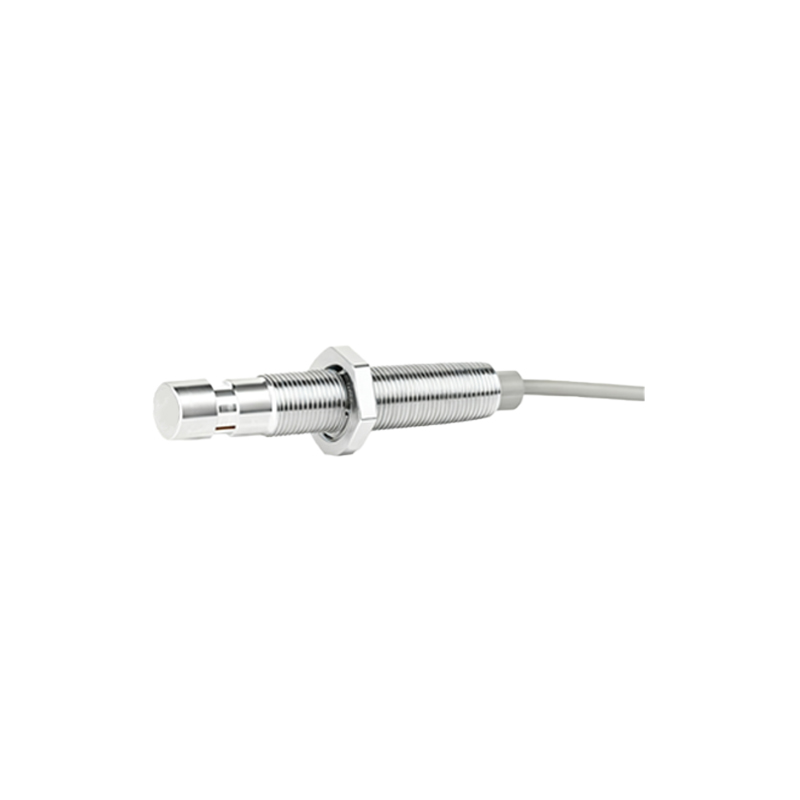
An M30 PNP normally open inductive proximity switch is designed to detect the presence of metallic objects without physical contact. The "M30" denotes the sensor's housing diameter—30 millimeters—a standard size offering a robust build and reliable sensing distances. The term "inductive" specifies its working principle: the sensor generates an oscillating electromagnetic field from its active face. When a ferrous or non-ferrous metal target enters this field, eddy currents are induced within the target, causing a change in the oscillation amplitude. The sensor's internal circuitry detects this change and triggers a switching action.
The "PNP" designation refers to the type of transistor output. In a PNP (sourcing) configuration, the output switch is connected between the positive supply voltage and the load. When an object is detected, the output transistor turns on, sourcing current from the positive supply (+V) to the load. Conversely, "NPN" (sinking) outputs connect the load to ground when active. The "normally open" (NO) characteristic means that in the absence of a target, the output signal is off (or at a low state, typically near 0V for PNP). Upon detection, the switch closes, and the output becomes active (sourcing +V to the load).
Key Technical Specifications and Parameters
Understanding the datasheet is crucial for proper selection. Key parameters for a typical M30 PNP NO sensor include:
Sensing Distance (Sn): For an M30 inductive sensor, this is typically 10mm or 15mm. This is the nominal operating distance. A safety factor (often 0.8 x Sn) is applied in practice to account for temperature fluctuations and supply voltage variations.
Output Configuration: PNP, normally open (NO), 3-wire design.
Supply Voltage (Ue): Commonly operates within a range of 10-30V DC, making it compatible with standard PLC and control cabinet voltages.
Output Current (Ia): The maximum continuous current the switch can handle, often up to 200mA. This is sufficient to drive relays, PLC input modules, or small solenoids directly.
Switching Frequency: Indicates how many on/off cycles per second the sensor can perform, crucial for high-speed counting applications.
Housing Material: Usually constructed from nickel-plated brass or stainless steel (e.g., V2A/AISI 304, V4A/AISI 316) for durability in harsh environments.
Protection Rating: Typically IP67 or higher, indicating dust-tightness and protection against temporary immersion, suitable for washdown areas.
Wiring and Connection Diagram
A standard 3-wire M30 PNP NO proximity switch has three distinct leads, often color-coded as follows:
Brown Wire: Connect to the positive DC supply voltage (+V, e.g., +24V).
Blue Wire: Connect to the negative DC supply voltage (0V, Ground).
Black Wire: This is the switched output signal line. In the NO configuration, it remains at a high-impedance state (effectively disconnected from +V) when no target is present. When a target is detected, it sources +24V.
A typical circuit involves connecting the brown wire to +24V, the blue wire to 0V, and the black wire to one terminal of the load (e.g., a PLC digital input). The other terminal of the PLC input is connected to 0V. When the sensor activates, the black wire supplies +24V to the PLC input, completing the circuit and signaling a "TRUE" or "1" state.
Advantages and Application Considerations
The M30 PNP NO configuration offers several advantages. Its sourcing (PNP) output is often intuitively aligned with the positive logic of many modern PLCs. The normally open function is ideal for applications where an active-high signal indicates presence, such as triggering an action when a part arrives at a workstation. Common industrial applications include:
Position Verification: Confirming a cylinder has fully extended or retracted.
Parts Counting on Conveyors: Detecting metal objects passing a specific point.
Rotational