Laser sensors represent a critical category of non-contact measurement and detection devices within the field of industrial automation and control. Fundamentally, a laser sensor is an optoelectronic instrument that utilizes laser light as its primary medium for gathering information about a target object. It belongs to the broader family of photoelectric sensors but distinguishes itself through the use of coherent, highly focused light beams generated by laser diodes. This technological foundation places laser sensors squarely within the realm of advanced sensing solutions, interfacing with disciplines like optics, electronics, and precision mechanics.
The core principle of operation involves emitting a laser beam towards a target. The sensor then analyzes the properties of the reflected or scattered light. Different measurement methodologies define specific sub-types. For instance, laser distance sensors, often based on time-of-flight (ToF) or triangulation principles, calculate distance by measuring the time delay or the angle of the reflected beam. Laser contrast sensors are designed to detect marks or differences in surface color by evaluating the intensity of the returned light. Furthermore, laser profile sensors project a line of laser light onto an object to capture a precise 2D cross-sectional profile for dimensional analysis, placing them in the category of vision-based metrology tools.

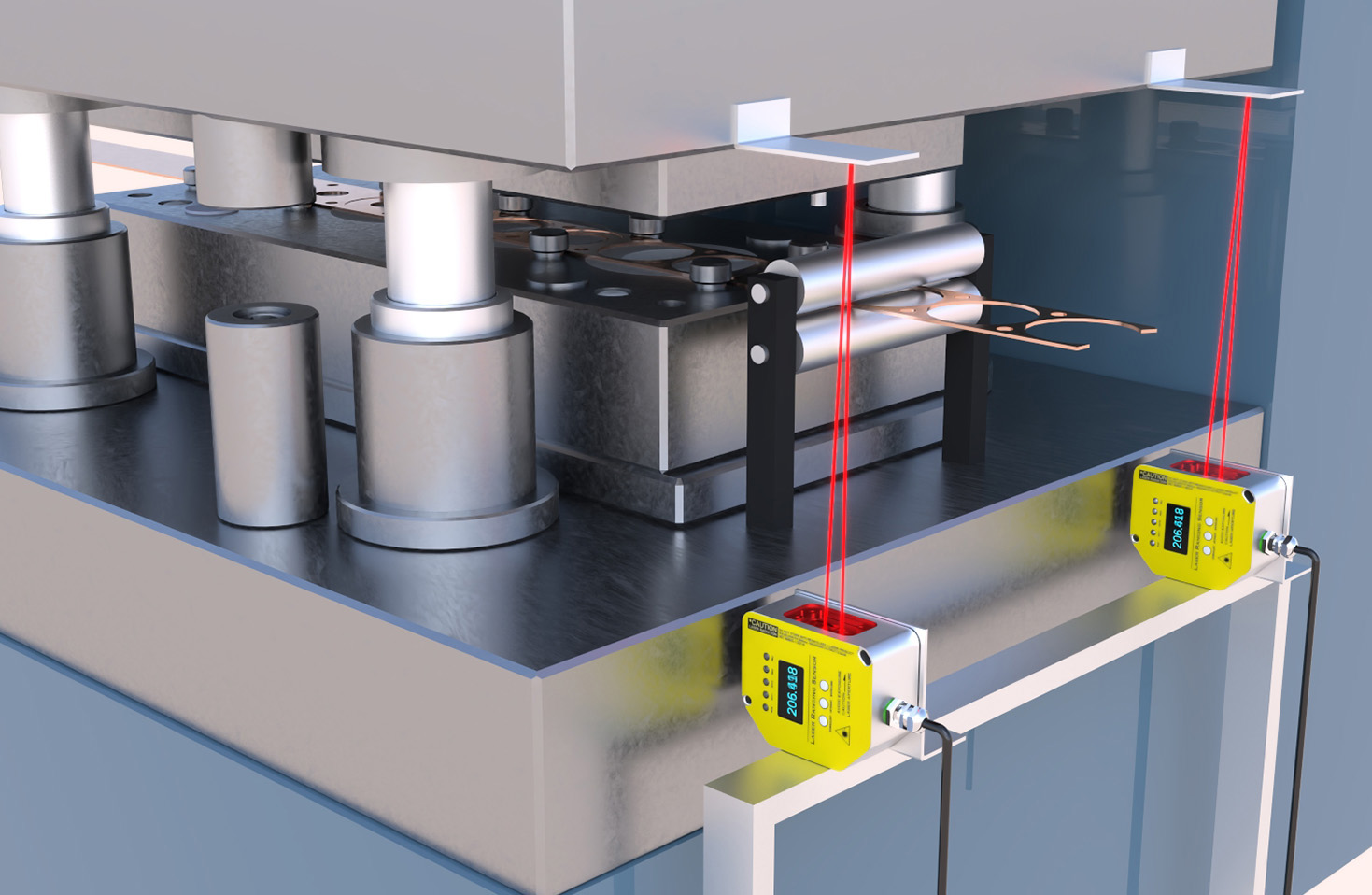
In practical industrial applications, this classification dictates their widespread deployment. On automated production lines, laser sensors are indispensable for precise positioning, dimensional gauging, and presence detection of components. They ensure robotic arms manipulate parts with micron-level accuracy. In logistics and packaging, they count items, measure box dimensions, and control fill levels. Quality control processes heavily rely on them for inspecting surface defects, verifying assembly completeness, and monitoring tolerances. Their non-contact nature makes them ideal for handling delicate, hot, or fast-moving objects where physical probes would fail.

The advantages that cement their position in this category are numerous. The high directivity and low divergence of laser beams enable exceptional resolution and accuracy over long working distances. They provide fast response times, suitable for high-speed automation. Their performance is generally less affected by ambient light or the material's color compared to standard LED-based photoelectric sensors, though highly reflective or absorbent surfaces can pose challenges. Modern laser sensors integrate sophisticated electronics for signal processing, often featuring programmability, digital interfaces (like IO-Link), and robust housing for harsh industrial environments (IP67/IP69K ratings).
When selecting a laser sensor, understanding its classification guides the specification process. Key parameters include measurement range, resolution, spot size, response time, and the required output type (analog, digital, or serial data). The choice between a diffuse, retro-reflective, or through-beam mode depends on the specific detection task. Integration into larger control systems, such as PLCs or PC-based systems, is streamlined through standard industrial communication protocols.
Looking forward, laser sensor technology continues to evolve, further deepening its role in smart manufacturing and Industry 4.0. Miniaturization, enhanced safety features (aligned with laser Class regulations), lower power consumption, and increased intelligence with embedded analytics are key trends. Their integration with machine vision systems and IoT platforms is creating more adaptive and data-rich production environments. In conclusion, laser sensors are not merely components; they are essential, high-precision perceptual organs for modern automated systems, belonging to the sophisticated tier of sensors that enable accuracy, efficiency, and intelligence in industrial operations.