In demanding industrial environments where high temperatures are a constant factor, standard proximity sensors often fail. High temperature proximity sensors are specifically engineered to withstand these extreme conditions, providing reliable non-contact detection and measurement. This article explores the primary types of high temperature proximity sensors, their operating principles, key applications, and critical factors for selection.
The fundamental challenge in high-temperature sensing is protecting the sensor's internal electronics and ensuring stable performance. Standard sensors typically have an operational limit around 70-80°C (158-176°F). Beyond this point, components degrade, signals drift, and permanent failure becomes likely. High-temperature variants are designed with specialized materials, construction techniques, and sometimes active cooling to push these limits significantly.
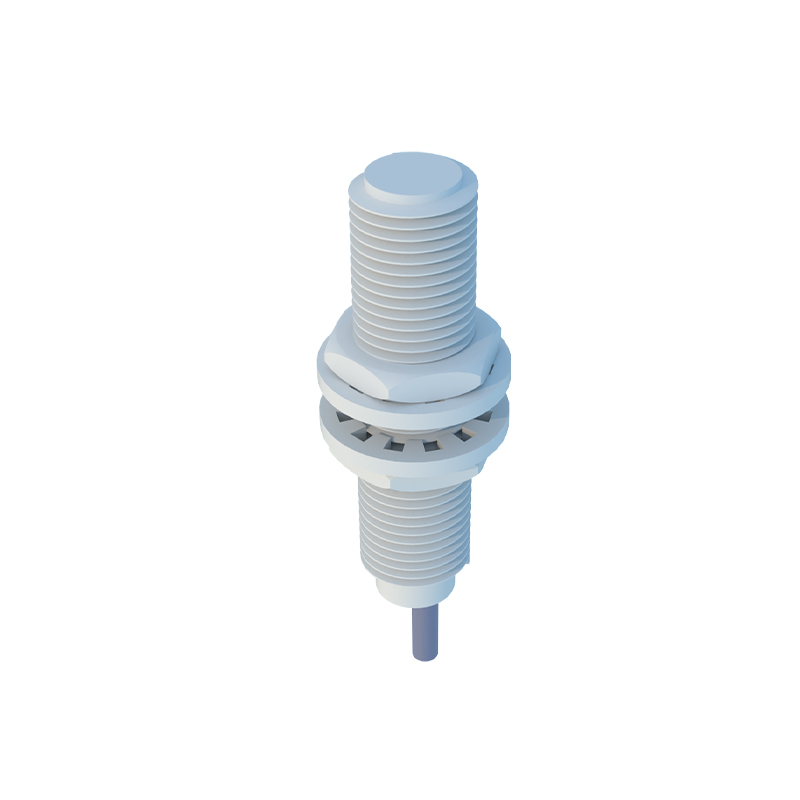
Several sensor technologies are adapted for high-temperature duty. Inductive proximity sensors are among the most common for detecting metallic objects. High-temperature inductive sensors utilize high-temperature-rated wire for the coil, high-temperature potting compounds to protect the oscillator and amplifier circuitry, and ceramic faces instead of plastic. They can often operate in ambient temperatures up to 120-150°C (248-302°F) and withstand even higher short-term exposure from hot targets. For non-metallic object detection, capacitive proximity sensors are adapted similarly. They are crucial in industries like plastics or wood processing where hot non-metallic materials must be sensed.
Photoelectric sensors, which use light beams, present a unique challenge. The core electronic components are highly sensitive to heat. Solutions for high-temperature environments often involve separating the sensing head from the amplifier (electronics unit). The sensing head, containing just the LED and phototransistor, is connected via a fiber optic cable to an amplifier located in a cooler area. This allows the sensing point to endure temperatures exceeding 200°C (392°F) while the electronics remain safe. These are invaluable in glass manufacturing, metallurgy, and ceramic kilns.
Ultrasonic sensors, which use sound waves, also see high-temperature versions. Key considerations include using piezoelectric crystals with high Curie temperatures and designing the housing to manage thermal expansion. They are used for level detection in hot liquid tanks or distance measurement in hot environments.
Beyond these common types, specialized sensors like High-Temperature Limit Switches (mechanical) or sensors based on eddy current principles are used in extreme applications such as gas turbine monitoring or inside combustion chambers, where temperatures can exceed 500°C (932°F).
The applications for these robust sensors are widespread across heavy industry. In metal casting and forging, they detect the position of red-hot billets, ingots, or molds on production lines. In the glass industry, they monitor the position of molten glass gobs or finished bottles exiting annealing lehrs. Automotive manufacturing employs them near painting ovens and curing processes. They are essential in semiconductor fabrication for wafer handling in high-temperature process chambers. In plastic injection molding, they verify the ejection of hot parts. Power generation plants use them for turbine clearance control and boiler level monitoring.
Selecting the right high-temperature proximity sensor requires careful analysis of several parameters. The first and most critical is the Ambient Temperature Rating. This is the continuous temperature the sensor body can withstand. Equally important is the Target Temperature and the required sensing distance, as radiant heat from a very hot target can affect the sensor even if the air is cooler. The Thermal Shock rating indicates the sensor's ability to handle rapid temperature changes, common when a hot target passes by intermittently.
Construction materials are vital. Look for housings made of stainless steel (like V4A/AISI 316), high-temperature PEEK plastics, or ceramics. Sealing should be robust (typically IP67 or IP69K) to withstand not just heat but also associated washdowns, coolants, or abrasive dust. Output type (PNP/NPN, analog, IO-Link) must be compatible with the control system, considering that long cable runs from hot zones to control cabinets may be necessary. Electrical connection types, such as high-temperature rated cables or connectors, are also a key selection criterion.
Finally, consider the cooling method. For the most extreme applications, sensors may be equipped with passive heat sinks, water-cooling jackets, or even air purge systems that create a protective barrier of cool air across the sensor face. While adding complexity, these methods can extend a sensor's life dramatically in punishing environments.
In conclusion, high-temperature proximity sensors are not merely "ruggedized" versions of standard sensors but are purpose-built solutions for critical points in high-heat processes. Their correct selection and application ensure process reliability, safety, and efficiency, preventing costly downtime in industries where the heat is always on. Understanding the technology differences and meticulously matching sensor specifications to the actual environmental and application demands is the cornerstone of a successful implementation.