In the realm of industrial automation and control systems, the ability to detect the presence, absence, or position of an object without physical contact is paramount. Among the various non-contact sensing technologies, photoelectric proximity sensors stand out for their versatility, precision, and reliability. This article delves into the fundamental concepts, operational principles, and diverse applications of these critical components in modern electrical and automation engineering.
At its core, a photoelectric proximity sensor operates on the principle of light beam modulation. The basic configuration consists of two main elements: an emitter (light source) and a receiver (photodetector). The emitter generates a beam of light, typically in the visible red or infrared spectrum. The receiver is designed to detect this light. The presence of an object within the sensor's detection range is determined by how it affects this light beam. There are three primary sensing modes: through-beam, retro-reflective, and diffuse (proximity) mode.
In the through-beam mode, also known as the opposed mode, the emitter and receiver are housed in separate units facing each other. An object is detected when it interrupts the light beam traveling from the emitter to the receiver. This mode offers the longest sensing distances and highest reliability, as it is less susceptible to the object's color, texture, or surface angle. It is ideal for precise detection in high-speed counting or registration applications.
The retro-reflective mode places both the emitter and receiver in the same housing. The unit projects a light beam towards a specially designed reflector, which bounces the beam directly back to the receiver. An object is detected when it blocks this reflected beam. This mode simplifies installation compared to through-beam sensors, as only one device and a reflector need to be wired and mounted. However, it can be confused by highly reflective objects that might mimic the reflector.
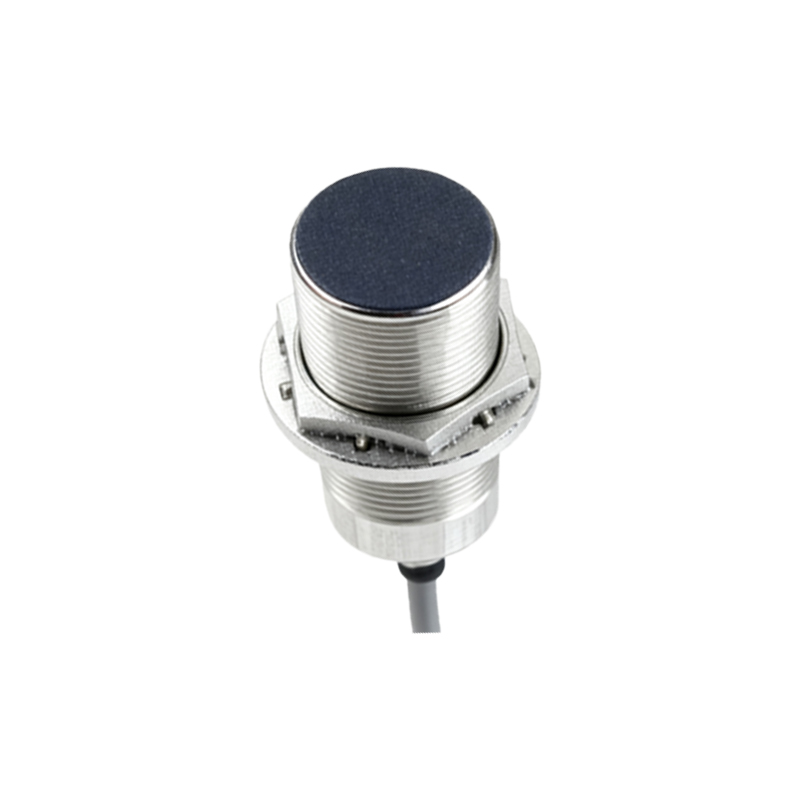
The diffuse mode, the true "proximity" sensing method, integrates the emitter and receiver in a single unit. The sensor detects an object by measuring the light reflected directly off the object's surface back to the receiver. The detection distance is shorter and highly dependent on the object's color, reflectivity, and surface properties. Dark, matte surfaces reflect less light than bright, shiny ones. Advanced diffuse sensors incorporate background suppression or fixed-field teaching to ignore objects beyond a set distance, enhancing their utility in complex environments.
The choice of light source is crucial. Light-Emitting Diodes (LEDs) are the most common due to their long life, compact size, and resistance to shock and vibration. Infrared LEDs are popular for their immunity to ambient visible light. Laser diodes are used for applications requiring extremely small spot sizes or very long sensing ranges. The receiver is usually a phototransistor or photodiode that converts the received light intensity into an electrical signal, which is then processed by internal circuitry to produce a clean, digital output signal (e.g., PNP/NPN, NO/NC).
The advantages of photoelectric sensors are numerous. They offer non-contact sensing, eliminating mechanical wear and allowing detection of fragile objects. They provide fast response times, suitable for high-speed production lines. Their sensing range can vary from a few millimeters to several hundred meters, depending on the type and model. Furthermore, they can detect a wide variety of materials, including glass, plastic, metal, and liquid, provided the object affects the light beam.
In industrial applications, photoelectric proximity sensors are ubiquitous. They are deployed for object detection on conveyor belts, bottle/can counting in packaging, jam detection in machinery, edge guiding in web processing, and level sensing in silos. In automated assembly, they verify the presence of components. In material handling, they position robotic arms or automated guided vehicles (AGVs). Safety systems use them as light curtains to protect personnel around hazardous machinery.
When selecting a photoelectric sensor, engineers must consider several factors: the required sensing distance, the size and material of the target object, the environmental conditions (presence of dust, fog, or ambient light interference), the required output type, and the mounting constraints. Proper alignment, regular lens cleaning to prevent contamination, and shielding from intense ambient light are essential for maintaining optimal performance.
In conclusion, photoelectric proximity sensors are indispensable tools in the electrical engineer's arsenal for automation. Their principle of converting light modulation into an electrical signal enables sophisticated, reliable, and efficient control in countless industrial processes. As technology advances, we see the integration of smarter features like IO-Link communication for parameter setting and diagnostics, further solidifying their role in the evolving landscape of Industry 4.0 and the Industrial Internet of Things (IIoT). Understanding their operation and application criteria is fundamental for designing robust and efficient automated systems.